Tit for Tat? This is what responsible creativity looks like in a high-risk digital environment…
| From the desk of Miles Everson: Welcome to “Gorillas of Guerrilla Marketing!” I hope you’re all having a great day. For those of you who aren’t familiar with guerrilla marketing, this is based on the notion that marketing doesn’t always have to be boxed. The goal is to engage with a brand’s target market in the most interactive way possible. Today, let’s talk about a clever and purposeful guerrilla marketing campaign. Read on to know more. |
Tit for Tat? This is what responsible creativity looks like in a high-risk digital environment… It often starts quietly… A scroll. A tap. A moment of boredom that turns into habit. In the digital age, influence doesn’t announce itself. It blends in, masquerading as entertainment, opportunity, or harmless fun. For young people especially, the line between play and peril has never been thinner. However, when powerful systems exploit that vulnerability at scale, fighting back requires more than warnings and regulations. It requires creativity that’s just as sharp, just as fast, and just as culturally fluent. That’s exactly where one of Southeast Asia’s most striking guerrilla marketing campaigns comes in—one that didn’t shout from the sidelines, but instead stepped directly into the arena and turned the rules of the game against itself. The Growing Crisis No One Sees Until It’s Too Late In Thailand, online gambling has quietly escalated into a national concern. Despite being illegal, it continues to flourish—especially among the youth. In fact, more than three million Thai children, roughly one-third of the country’s young population, are actively engaged in online gambling. Of these, over 1.4 million are at risk of addiction. Sad… The problem intensifies during school breaks, when idle time and unrestricted screen access collide. Gambling platforms capitalize on this window with hyper-targeted social media ads—slick, playful, and engineered to look indistinguishable from games or casual entertainment. Blocking these ads has proven ineffective; they adapt faster than platforms can shut them down. The result? MASSIVE youth debt totaling over 6.4 billion baht, and a ripple effect of social consequences—from petty theft to more serious crimes. Unfortunately, traditional awareness campaigns were simply no match for the sophistication and scale of the gambling industry’s digital playbook. So, instead of trying to silence the noise, one organization decided to speak in the same language… Tit for Tat: Fighting Influence With Influence The Stop Gambling Foundation, together with the Thai Health Promotion Foundation, partnered with Dentsu Creative Thailand to confront the issue head-on—not by avoiding gambling ads, but by becoming them. The insight was bold yet deceptively simple: If gambling platforms are successfully targeting youth using specific creative styles, formats, and algorithms, why not use the exact same tactics to expose the truth? Thus, “Tit for Tat: Stop Online Gambling” was born.
Rather than creating conventional public service announcements (PSAs), the campaign repurposed gambling-style ads—mirroring their visuals, tone, pacing, and emotional hooks. At first glance, the content looked like yet another enticing promotion. … but instead of promising easy money or quick thrills, the ads ended with something far more confronting: Real stories of young lives damaged by gambling addiction .
The trap was intentional. The reveal was the message. BOOM ! What makes “Tit for Tat” a masterclass in guerrilla marketing isn’t its shock value but its strategic empathy. Dentsu Creative Thailand immersed itself in understanding how gambling ads infiltrate youth feeds. The team studied content patterns, platform loopholes, and behavioral triggers. The result was not just counter-messaging, but also counter-programming. The campaign was deployed primarily on TikTok, the platform most frequented by Thai youth and the same space where gambling ads thrive. By operating within the same ecosystem—and using the same distribution logic—the campaign ensured its warnings would reach those most at risk, without feeling like a lecture from authority figures. This wasn’t about moralizing but about interruption. By hijacking familiarity and subverting expectations, the campaign forced young viewers to pause, rethink, and question the content they normally consume without a second thought. Results: When Creativity Cuts Through the Noise The impact of the campaign was immediate AND measurable. Compared to TikTok account benchmarks, the campaign delivered a surge in engagement:
Beyond the numbers, “Tit for Tat” sparked widespread conversation. The campaign didn’t just raise awareness; it also reframed how online gambling is perceived, exposing its consequences through the very formats that once glamorized it. For a cause-driven initiative operating without the financial muscle of gambling giants, the results proved one thing clearly: Creative strategy can outperform budget when it’s rooted in insight and courage. Kudos to the entire campaign team for pulling this off effectively! *Claps* At its core, “Tit for Tat” is a reminder of what advertising can be when it chooses responsibility over comfort. By flipping deceptive ads into tools for truth, Dentsu Creative Thailand and The Stop Gambling Foundation demonstrated that systemic problems don’t always need louder opposition—they simply need smarter confrontation. The campaign didn’t ask young people to disengage from digital culture. It met them exactly where they were, speaking in a language they already understood . In doing so, it transformed a mechanism of harm into a channel for protection. … and perhaps, that’s the most powerful lesson of all: When influence is unavoidable, the only option left is to redirect it— with intention, integrity, and imagination. Hope you’ve found this week’s guerrilla marketing insight interesting and helpful. Stay tuned for next Thursday’s Gorillas of Guerrilla Marketing! Do you want to know how the iconic Louvre museum became the victim of a heist in 2025? See it in next week’s article! |


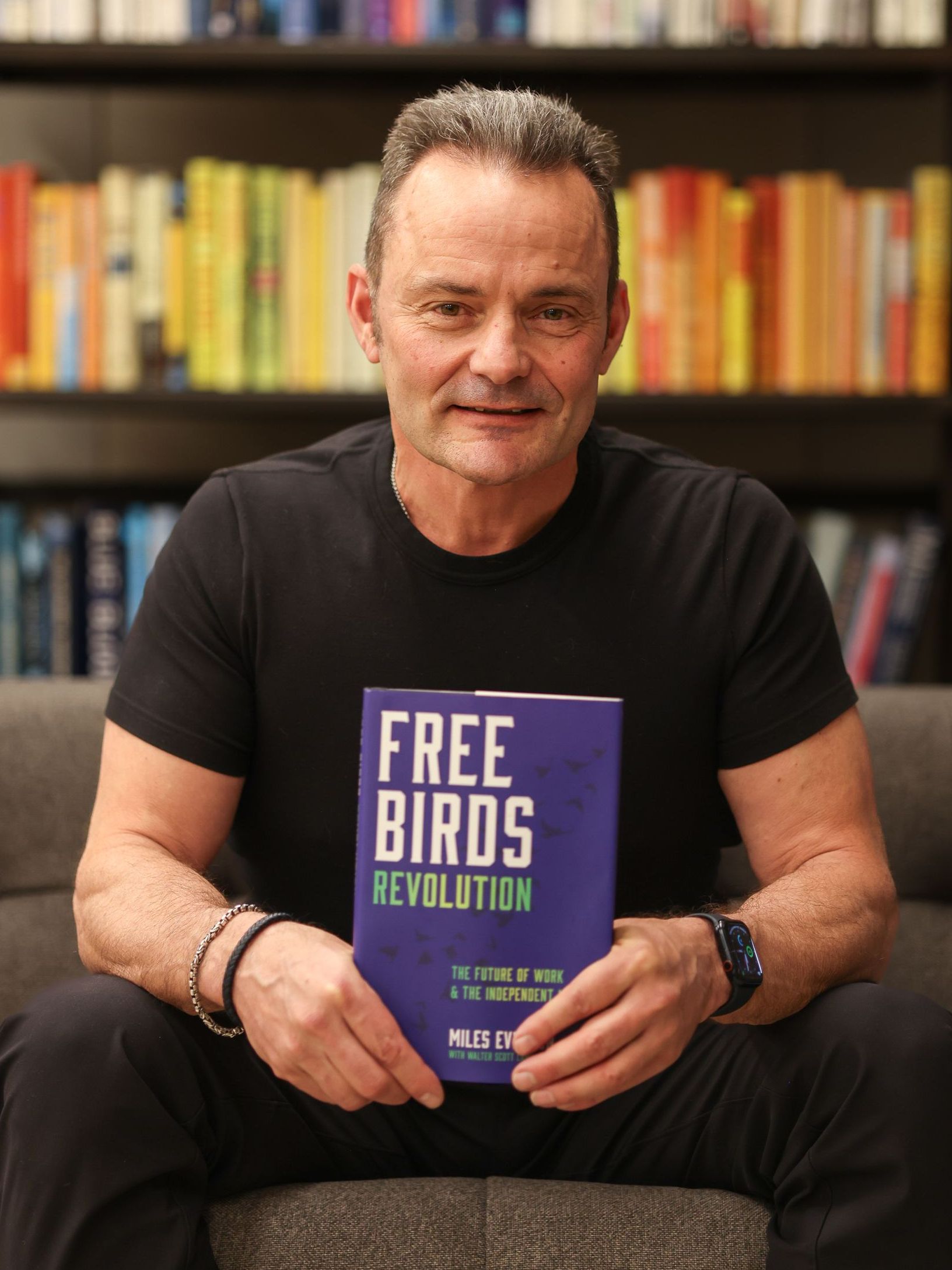
Miles Everson
CEO of MBO Partners and former Global Advisory and Consulting CEO at PwC, Everson has worked with many of the world's largest and most prominent organizations, specializing in executive management. He helps companies balance growth, reduce risk, maximize return, and excel in strategic business priorities.
He is a sought-after public speaker and contributor and has been a case study for success from Harvard Business School.
Everson is a Certified Public Accountant, a member of the American Institute of Certified Public Accountants and Minnesota Society of Certified Public Accountants. He graduated from St. Cloud State University with a B.S. in Accounting.