In America, there's a quiet cash machine the market isn't talking about…
| From the desk of Miles Everson: Happy Wednesday! I hope you’re all pumped up today. Every midweek, I publish basic investing-related insights with hopes to help you boost your financial portfolios in the long run. Today, let’s tackle an important topic my friend and colleague, Professor Joel Litman, presented to his workforce at Valens Research. Keep reading the article below to know about this behind-the-scenes boom that started about last year. |
The warning signs are rarely loud. Sometimes, they arrive as a missed email… a quiet clause buried in a contract… a policy no one rereads. … and sometimes, nearly a year later, they still echo not because of the personal tragedy involved, but because of the structural truth they revealed. When Professor Joel Litman, Chairman and CEO of Valens Research and Chief Investment Officer of Altimetry Financial Research, addressed investors in 2025, he wasn’t simply recounting an unfortunate story; he was dissecting a business model. As we move into mid-2026, the lessons he outlined have only become more relevant for investment professionals. His analysis of the self-storage industry was not about sentiment but about structural durability. Almost a year later, the structural case still stands. A Personal Story, An Economic Reality
Professor Litman began with a case that captured attention: A New York man who stored priceless family heirlooms—including an 18th-century French writing desk passed down through generations—in a Queens facility operated by Extra Space Storage. After more than a decade of payments, illness led to one missed bill. Under standard lien laws, the contents were auctioned. The winning bid was a fraction of their underlying value. It was heartbreaking. However, from an investor’s standpoint, Professor Litman highlighted something deeper: PREDICTABILITY. After all, storage operators operate within clear legal frameworks. Missed payments trigger standardized processes. Units are liquidated quickly. Revenue is recurring. Defaults are monetized. The model is operationally simple and economically powerful. Nearly a year removed from that discussion, nothing about that framework has changed. The U.S. self-storage market was valued at roughly USD 57 billion in 2023. By mid-2026, demographic tailwinds—not speculative hype—continue to underpin demand. The drivers are structural:
Cities like Austin and Phoenix, which experienced significant population growth over the past decade, remain central nodes in this expansion. Population growth does not unwind quickly. Once migration patterns establish themselves, infrastructure demand follows. Self-storage monetizes transition… and transition is constant. For investors recalibrating portfolios in 2026 amid shifting interest-rate expectations and macro uncertainty, that constancy matters. One of the underappreciated advantages Professor Litman emphasized was the month-to-month lease structure common in self-storage. In 2026, that flexibility continues to distinguish the sector from other areas of commercial real estate. This is because short lease durations allow operators to:
Traditional long-term commercial leases often lock in fixed escalators that lag inflation. Storage operators don’t face that constraint. What’s more? Most major storage operators are structured as REITs, which require distributing at least 90% of taxable income to shareholders. In a market where investors are once again reassessing yield stability, this matters. Extra Space Storage has grown its dividend significantly over the past decade, historically offering yields that exceeded benchmarks such as the S&P 500 Index. However, Professor Litman’s focus was never just dividend optics. Using Uniform Accounting, the analytical lens applied at Valens Research, Professor Litman’s team adjusts for accounting distortions that can understate true economic returns. Under that framework, several self-storage REITs exhibit stronger return profiles than traditional GAAP metrics suggest. For institutional allocators, that accounting gap can create opportunity especially when capital markets become more selective. Until today, the defensive attributes Professor Litman highlighted for the self-storage industry remain intact:
More importantly, demand for storage is often linked to life events rather than economic exuberance. Relocation. Divorce. Inheritance. Job transitions. These catalysts do not disappear in slowdowns. In some cases, they intensify. … and in an environment where investors are increasingly scrutinizing cyclicality risk, that behavioral underpinning offers resilience. The 2026 Perspective: What Endures What makes Professor Litman’s 2025 commentary relevant in 2026 is not the anecdote itself; it is the framework. While markets rotate between AI exuberance, rate speculation, and geopolitical narratives, the economics of self-storage continue operating quietly in the background. No dramatic technological disruption… … no speculative bubble… … just recurring cash flow, disciplined capital allocation, and demographic tailwinds. For investment professionals, the takeaway is broader than any single REIT: It is about studying incentives, understanding legal structures, and recognizing when accounting obscures rather than clarifies economic strength . The bigger lesson for investors? It was never “chase storage” but this:
After all, the most compelling opportunities aren’t found in front-page innovation stories; they’re found in industries quietly compounding returns, month after month, behind rows of roll-up metal doors. … and for investors willing to look past the noise of 2026, that behind-the-scenes boom may still be hiding in plain sight. Hope you’ve found this week’s insights interesting and helpful. Stay tuned for next Wednesday’s The Independent Investor! For decades, Japan's financial system looked like a haven of stability. Learn more about the USD 2.3 trillion stress test Japan is facing in next week’s article! |


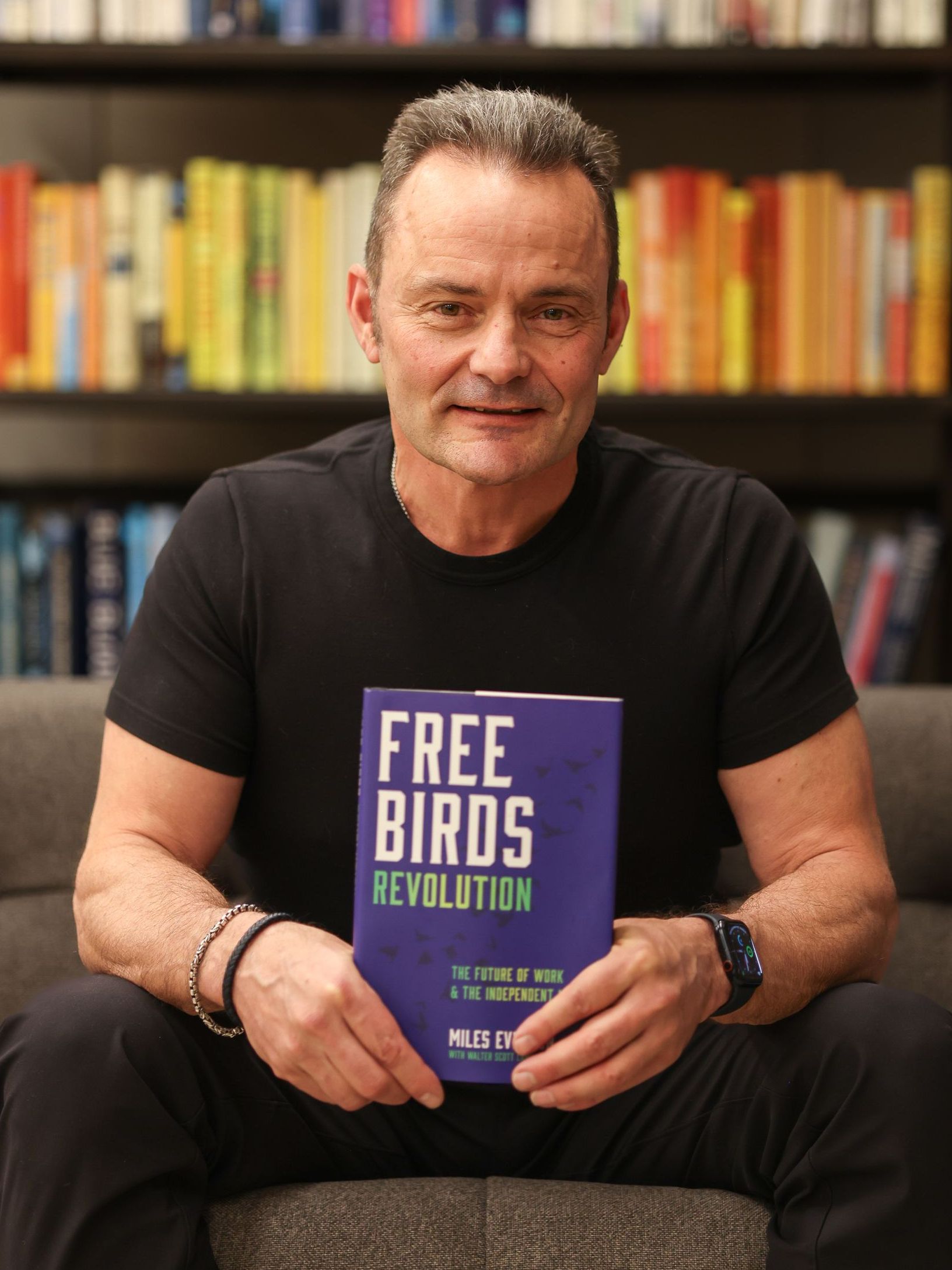
Miles Everson
CEO of MBO Partners and former Global Advisory and Consulting CEO at PwC, Everson has worked with many of the world's largest and most prominent organizations, specializing in executive management. He helps companies balance growth, reduce risk, maximize return, and excel in strategic business priorities.
He is a sought-after public speaker and contributor and has been a case study for success from Harvard Business School.
Everson is a Certified Public Accountant, a member of the American Institute of Certified Public Accountants and Minnesota Society of Certified Public Accountants. He graduated from St. Cloud State University with a B.S. in Accounting.