The Billion-Dollar Copy Error: Here's what this business case study teaches us about ethical wealth…
From the desk of Miles Everson:
Hi, everyone!
Welcome to today’s “Return Driven Strategy (RDS)!”
Quick context: RDS is a pyramid-shaped framework with 11 tenets and 3 foundations. When applied properly, these concepts help businesses achieve their organizational objectives.
For this article, let’s focus on one tenet of this framework through a particular business case study. Are you ready?
Read on below to know more.
The Billion-Dollar Copy Error: Here's what this business case study teaches us about ethical wealth…
There’s a strange paradox at the heart of modern business: The very moves that seem to promise quick wins can quietly plant the seeds of long-term decline.
A company can have iconic products, global recognition, and world-class innovation, yet still find its value eroded by decisions made far from the spotlight.
That is because sometimes, the biggest threat to a company isn’t competition or technology but in how faithfully a business sticks to its principles.
Few corporate stories illustrate this tension better than Xerox.
The Rise of an Icon
Xerox is one of the most recognizable names in the history of office technology. Founded in 1906 as The Haloid Photographic Company and later renamed Xerox Corporation, the company revolutionized how the world handles documents.
Its breakthrough invention, the plain-paper photocopier, transformed offices everywhere and became so ubiquitous that the brand name itself turned into a verb: To “xerox” something meant to copy it.
Beyond copying machines, Xerox built a reputation as an innovation powerhouse. Its Palo Alto Research Center (PARC) became legendary for pioneering technologies that would later shape personal computing, including graphical user interfaces and networking concepts.
Over time, Xerox expanded into printers, scanners, multifunction devices, and enterprise document solutions, serving businesses across industries and continents.
At its core, Xerox positioned itself as more than a hardware manufacturer. It aimed to be a document solutions company, helping organizations manage information more efficiently through a blend of equipment, software, and services.
The company’s business strategy evolved around a few central pillars.
First, recurring revenue through leasing and services . Rather than relying solely on one-time equipment sales, Xerox emphasized leasing models and long-term service contracts.
This approach created predictable revenue streams and deeper customer relationships. Clients didn’t just buy machines; they also entered ongoing partnerships for maintenance, upgrades, and workflow support.
Second, diversification into integrated solutions . Xerox expanded its offerings to include digital printing systems, production presses, and document management software.
The goal was to provide end-to-end solutions—from document creation to storage and distribution—positioning Xerox as a strategic partner rather than a commodity vendor.
Third, sustained investment in innovation . Through research initiatives like PARC, Xerox consistently sought to stay ahead of technological shifts.
Besides, innovation was not only about creating new products but also about shaping how organizations handled information in a rapidly digitizing world.
Amazing, right?
On paper, this strategy aligned well with long-term value creation. Xerox had a powerful brand, strong intellectual capital, and a business model designed to generate steady returns.
However, beneath this strategic architecture, a serious ethical breakdown was unfolding.
The 1997–2000 Accounting Controversy
Between 1997 and 2000, Xerox executives engaged in accounting practices that later drew intense scrutiny from regulators. In 2002, the U.S. Securities and Exchange Commission (SEC) accused the company of orchestrating what one regulator described as a “pattern of pervasive fraud.”
Oh no…
The core issue involved revenue recognition. Xerox accelerated the recording of revenue from equipment leases, booking income earlier than permitted under standard accounting principles.
Through a series of internal accounting maneuvers—sometimes referred to internally as “accounting actions”—the company inflated reported revenue by billions of dollars and significantly overstated earnings.
These actions were not minor technical adjustments. They painted a misleading picture of Xerox’s financial health, helping the company meet Wall Street expectations even when underlying performance was weaker.
Investors, relying on these reports, were given an inaccurate view of the company’s true condition.
The fallout was severe. Xerox was forced to restate its financial results and paid penalties to settle SEC charges. Several former executives also faced regulatory action. Although the company continued operating and later showed improvements in earnings power, the reputational damage was profound.
Even more than a decade later, Xerox’s stock price struggled to return to its previous peaks.
This episode demonstrated a harsh reality: Ethical misconduct can destroy value in ways that operational excellence alone cannot easily repair .
Connecting Xerox to Tenet 1 of Return Driven Strategy (RDS)
Professor Joel Litman and Dr. Mark L. Frigo ’s RDS begins with a foundational principle: Ethically Maximize Wealth.
This tenet asserts that organizations must pursue long-term value creation within clear ethical boundaries. This means wealth maximization is not just about profits; it is also about sustainable performance built on trust.
Xerox’s controversy offers a powerful case study of what happens when this tenet is violated.
- Misalignment with Ethical Wealth Creation
By manipulating financial reporting, Xerox prioritized short-term appearances over long-term integrity. The accounting scheme may have temporarily supported investor confidence, but it ultimately undermined the very wealth it sought to protect.
When the truth emerged, the company suffered reputational harm, regulatory penalties, and lasting investor skepticism.
Tenet 1 emphasizes that ethical conduct is NOT optional or secondary; it is a strategic necessity. Ethical breaches introduce risk that can outweigh years of operational success.
Xerox’s experience illustrates how unethical decisions at the executive level can erode shareholder value on a MASSIVE scale. - The Cost of Lost Trust
Trust is an intangible asset, yet it plays a central role in value creation. Investors, employees, and customers rely on transparent and honest communication. When that trust is broken, recovery is slow and uncertain.
Despite Xerox’s strong brand and continued innovation, the scandal cast a long shadow. The company’s struggle to regain its former market valuation underscores a key insight of the RDS framework: Ethical lapses can have enduring economic consequences .
Wealth maximization cannot be separated from ethical behavior because markets ultimately penalize deception. - Strategy Without Ethics Is Fragile
Xerox’s business strategy—diversified solutions, recurring service revenue, and innovation—had many strengths. Unfortunately, strategy alone could not shield the company from the fallout of unethical conduct.
Tenet 1 serves as the foundation for all other strategic elements in the RDS framework. Without it, even well-designed strategies become fragile.
The Xerox case demonstrates that ethical governance is not merely a compliance issue but a core component of strategic resilience. Companies that embed ethical considerations into decision-making are better positioned to sustain long-term value.
Lessons from Xerox’s Story
There is no denying that Xerox remains an important player in document technology, and its history is filled with remarkable achievements. However, its late-1990s controversy stands as a cautionary tale for leaders and organizations.
First , short-term financial engineering cannot substitute for genuine performance. Attempts to mask underlying challenges often amplify long-term damage.
Second , ethical leadership is inseparable from strategic success. The pursuit of wealth MUST be guided by transparent and principled decision-making.
Finally , Xerox’s experience reinforces the central message of Tenet 1 of RDS: Sustainable value creation begins with an unwavering commitment to ethical conduct.
In the end, the story is not just about one company but also about a universal business truth.
Organizations may rise on the strength of innovation and strategy, but they endure only when those strengths are anchored in integrity.
—
If you’re looking to gain a better understanding of Return Driven Strategy and Career Driven Strategy, we highly recommend checking out “Driven” by Professor Litman and Dr. Frigo.
Click here to get your copy and learn how this framework can help you in your business strategies and ultimately, in ethically maximizing wealth for your firm.
Hope you found this week’s insights interesting and helpful.
Stay tuned for next Tuesday’s Return Driven Strategy!
This brand doesn’t just sell beauty products; it makes offerings that people actually want to buy.
Learn more about this beauty giant in next week’s article!
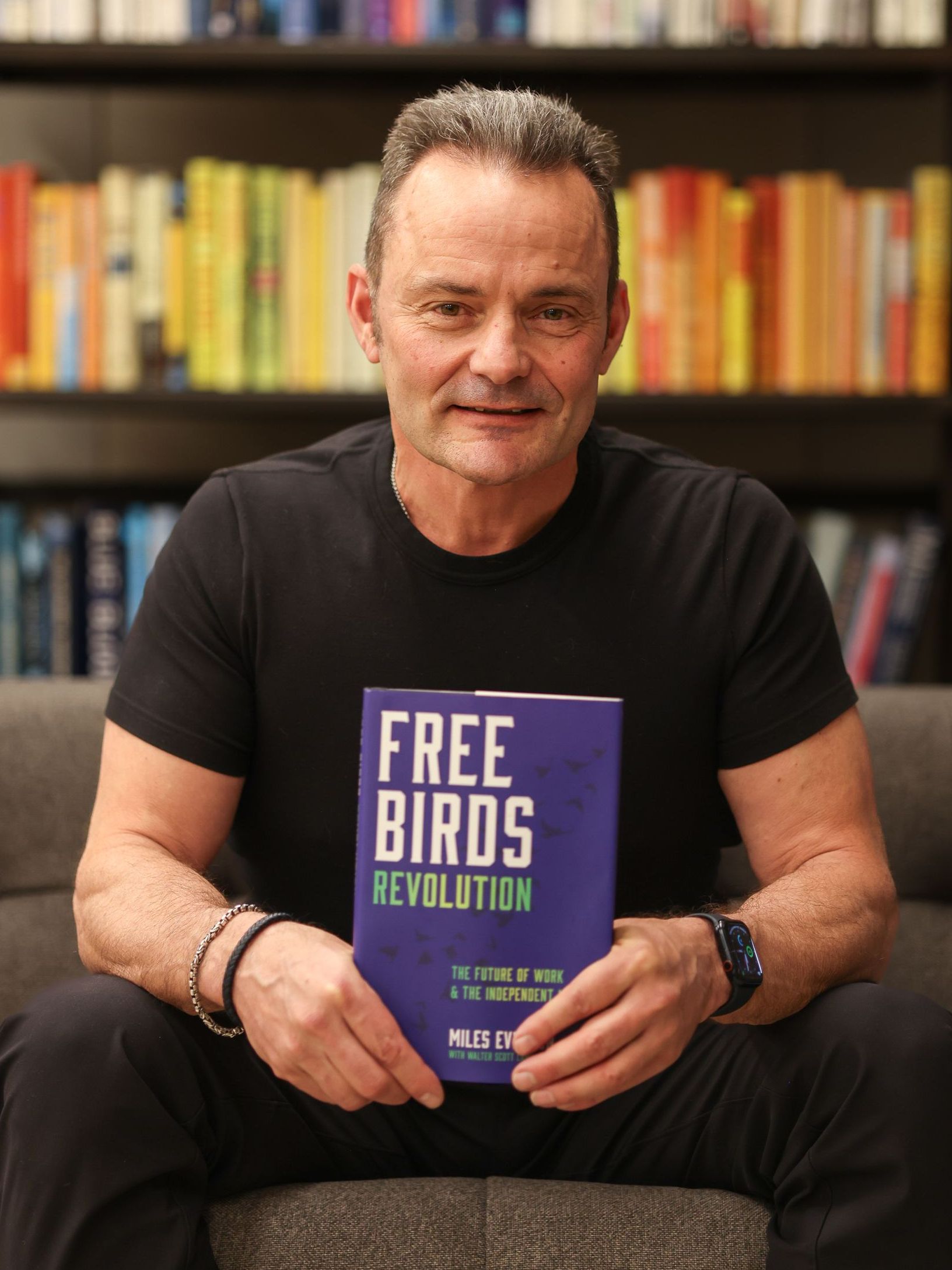
Miles Everson
CEO of MBO Partners and former Global Advisory and Consulting CEO at PwC, Everson has worked with many of the world's largest and most prominent organizations, specializing in executive management. He helps companies balance growth, reduce risk, maximize return, and excel in strategic business priorities.
He is a sought-after public speaker and contributor and has been a case study for success from Harvard Business School.
Everson is a Certified Public Accountant, a member of the American Institute of Certified Public Accountants and Minnesota Society of Certified Public Accountants. He graduated from St. Cloud State University with a B.S. in Accounting.