How did this soap brand teach AI to see REAL beauty—one click at a time?
| From the desk of Miles Everson: Hi, everyone! Welcome to today’s “Gorillas of Guerrilla Marketing!” For those of you who don’t know this yet, guerrilla marketing is based on the idea that marketing doesn’t always have to be too formal, traditional, or conventional. Its goal is to engage with a brand’s target market in an almost organic way. Today, let me share with you a guerrilla marketing strategy that is equal parts clever and empowering. Curious? Keep reading below to know more! |
Scrolling through your feed, it’s easy to feel like you’re living in a world designed to make you feel “not enough.” Images, videos, and ads flash by, showcasing perfection that feels almost impossible to attain. What’s even worse? Nowadays, artificial intelligence (AI) is amplifying that pressure—creating flawless but utterly unrealistic representations of beauty. For decades, brands have tried to combat these pressures with messages of inclusivity and authenticity… but what happens when the very technology shaping our online experiences starts reinforcing outdated ideals? Enter Dove , the beauty brand that has long championed real women in all their diversity. Faced with a new challenge—AI-generated imagery propagating narrow beauty standards—Dove launched a groundbreaking campaign to ensure the next generation of digital media reflects true diversity and authenticity.
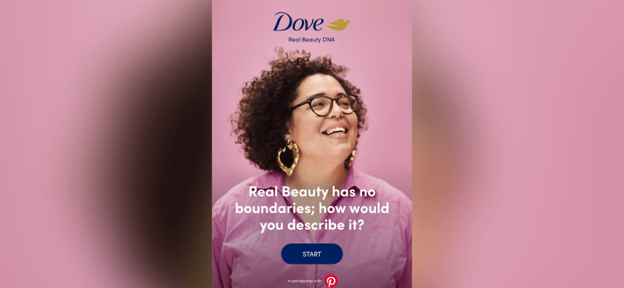
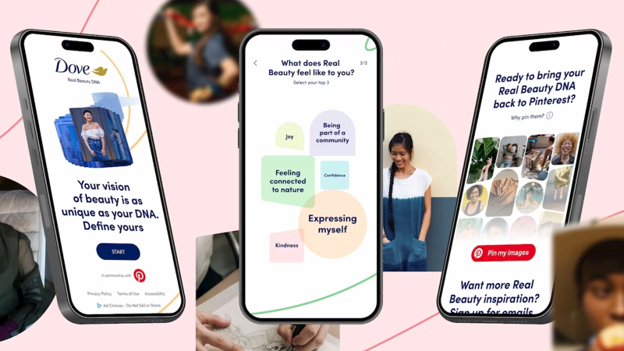
Confronting the AI Beauty Bias AI models, trained on massive online archives, have an unfortunate side effect: They often reproduce stereotypes . For women around the world, this translates to pressure to edit, alter, or even erase their natural appearance to conform to unrealistic ideals. In fact, a global study revealed that 1 in 3 women felt compelled to change their looks because of these online standards. Dove recognized the stakes. It knew it had to maintain its legacy of inclusive beauty while taking an active role in shaping AI technologies that increasingly influence how people perceive themselves. So, what did the brand do? Celebrating the 20th anniversary of its Real Beauty Pledge in 2025, Dove created a campaign designed to fight back against AI’s skewed portrayal of women. The centerpiece? The innovative “Real Beauty DNA Tool,” launched in partnership with Pinterest . The tool gave women the power to define beauty on their own terms. Users could select from a variety of diverse images and choose attributes like “Brave” or “Creative.”
These selections generated personalized, shareable videos and, crucially, retrained Pinterest’s AI algorithms to produce feeds reflecting authentic diversity rather than artificial stereotypes. Dove’s research revealed a fascinating insight: Simply including the phrase “according to Dove real beauty campaign” in AI prompts resulted in more inclusive imagery . This subtle but powerful intervention proved that brands could positively influence AI learning models, guiding technology towards fairness and representation rather than narrow ideals. That was nothing short of AWESOME! What’s more? Dove’s commitment to authenticity didn’t stop at AI tools The campaign also extended across out-of-home (OOH), TV, print, social media, and video. By combining these channels with the interactive Pinterest experience, Dove ensured millions of women were not only aware of AI’s impact on beauty perceptions but also empowered to redefine it themselves. Clearly, this wasn’t just marketing but also a movement . Dove positioned itself at the intersection of technology, culture, and social responsibility, showing how brands can leverage innovation to create meaningful change. The Impact: Measurable, Meaningful, and Monumental The results of Dove’s campaign speak volumes:
Perhaps most importantly, the campaign transformed how women interact with AI-powered search and feeds. By reshaping Pinterest’s algorithm, Dove reinforced its position as a trailblazer in inclusive beauty and established a new standard for responsible AI-driven content. Great job on this, Dove! *Applause* A Blueprint for the Future Dove’s “Real Beauty Redefined for the AI Era” campaign proves that brands can do more than sell products—they can also challenge harmful societal norms, influence technology for the better, and empower audiences with tools to define their own narratives. For marketers today, the lessons are clear: Authenticity isn’t optional; it’s a strategic advantage . By understanding how technology shapes perception, embracing inclusivity, and creating interactive, meaningful experiences, brands can not only engage audiences but also drive positive cultural change. Dove shows that when marketing meets purpose, campaigns resonate deeper, generate measurable impact, and build lasting trust. Besides, in a world increasingly curated by algorithms, authenticity, intentionality, and empowerment aren’t just values but also strategies. … and in doing so, Dove reaffirms that real beauty isn’t about perfection; it’s about representation, choice, and the meaningful connections brands create with their audiences. Hope you’ve found this week’s guerrilla marketing insight interesting and helpful. Stay tuned for next Thursday’s Gorillas of Guerrilla Marketing! Do you want to know how Samsung redefined what it means to unbox a new device in 2024 ? See it in next week’s article! |


Miles Everson
CEO of MBO Partners and former Global Advisory and Consulting CEO at PwC, Everson has worked with many of the world's largest and most prominent organizations, specializing in executive management. He helps companies balance growth, reduce risk, maximize return, and excel in strategic business priorities.
He is a sought-after public speaker and contributor and has been a case study for success from Harvard Business School.
Everson is a Certified Public Accountant, a member of the American Institute of Certified Public Accountants and Minnesota Society of Certified Public Accountants. He graduated from St. Cloud State University with a B.S. in Accounting.