Did you know your career is one of your life's greatest creations? Here's how and why…
| From the desk of Miles Everson: Hello, everyone! Welcome to “Return Driven Strategy (RDS)!” For those of you who are new to this term, RDS is a pyramid-shaped framework with 11 tenets and 3 foundations. When applied properly, these concepts help businesses and individuals achieve their professional and organizational goals. Today, let’s talk about this framework through a particular individual’s endeavors. Keep reading to see how his ventures align with the principles of Career Driven Strategy (CDS), the counterpart of RDS when applied to people’s careers. |
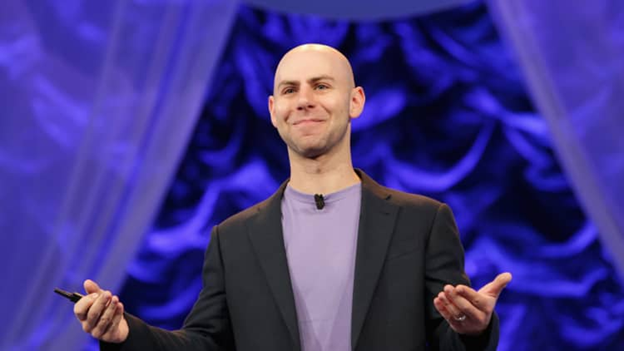
Sometimes your career feels like a series of accidents disguised as opportunities. —a random conversation that nudges you into a new direction, a talent you didn’t know you had turning into something important, or a setback that forces you to rethink everything. You look back years later and realize your path wasn’t linear at all… yet somehow, the puzzle pieces fit perfectly. However, what if these turns don’t have to be accidental? What if the “puzzle” can be designed strategically, creatively, AND intentionally? That’s exactly where one person’s story becomes a masterclass. The Organizational Psychologist Who Made Rethinking His Superpower Adam Grant is one of those rare thinkers who blends academic rigor, real-world practicality, and personality. Today, he’s one of the world’s most influential organizational psychologists, bestselling authors, and professors at Wharton
… but if you trace his path backward, the threads of his career reveal something far more interesting: A strategic, intentional evolution that mirrors Professor Joel Litman and Dr. Mark L. Frigo ’s Career Driven Strategy (CDS) . To understand why his story matters, you have to know the person behind the research… Long before Grant became a globally recognized thought leader, he was a kid who loved understanding people, but not in the way psychologists typically begin. He was a magician. Yes, literally. You know, sleight-of-hand tricks at birthday parties and all that. He was also a Junior Olympic springboard diver, which taught him discipline, resilience, and the courage to try new things even when failure looked embarrassing. These two unlikely pursuits planted the seeds of skills he would later cultivate:
Without knowing it, young Grant was building the “genuine assets” —innate strengths and learned capabilities—that Professor Litman and Dr. Frigo describe at the base of CDS. Later on, Grant went to Harvard for his undergrad degree and later pursued a Ph.D. in organizational psychology at the University of Michigan. However, his early academic career was shaped by a surprising emotion: self-doubt . He questioned his own abilities, worried about not measuring up, and was more introverted and cautious than the image most people see today. Fortunately, this exact mindset would later become one of his greatest strengths. “Rethinking,” the core idea in his book “Think Again,” started as something he had to practice personally. This is where CDS fits beautifully:
According to CDS: Your unique experiences + the unmet needs in your environment = your strategic career path. … and Grant is a living example of that. By age 28, Grant became the youngest tenured professor in Wharton history. How? Not by trying to impress people but by serving them! This is where his “giver” philosophy (from his book, “Give and Take” ) was born. Here, he studied the behavioral patterns of people who help others without expecting anything in return. He learned that givers, when strategic and supported, often outperform takers and matchers over the long term. In CDS terms:
See? What makes Grant fascinating isn’t only his intellect but also his strategic clarity. Every chapter of his life is a demonstration of the CDS philosophy:
In other words… Grant didn’t just build a career. He designed one intentionally, ethically, AND intelligently—things Professor Litman and Dr. Frigo teach as part of CDS. The BIG lesson here? A great career isn’t discovered; it’s designed. After all, success doesn’t come from waiting for your path to open; it comes from understanding what the world needs and then offering the best version of what only you can give. Grant proves that your early quirks, doubts, failures, and passions are not detours; they’re the building blocks of a career you can craft deliberately. That’s the power of CDS. … and that’s the brilliance of Grant’s journey—a story of purpose, mastery, rethinking, and value creation that you can learn from. — If you’re looking to gain a better understanding of Return Driven Strategy and Career Driven Strategy, we highly recommend checking out “Driven” by Professor Litman and Dr. Frigo Click here to get your copy and learn how this framework can help you in your business strategies and ultimately, in ethically maximizing wealth for your firm. Hope you found this week’s insights interesting and helpful. Stay tuned for next Tuesday’s Return Driven Strategy! This power generation company turned itself into a key cog for the artificial intelligence boom. Learn more about the impact of fulfilling unmet needs and innovating offerings in next week’s article! |

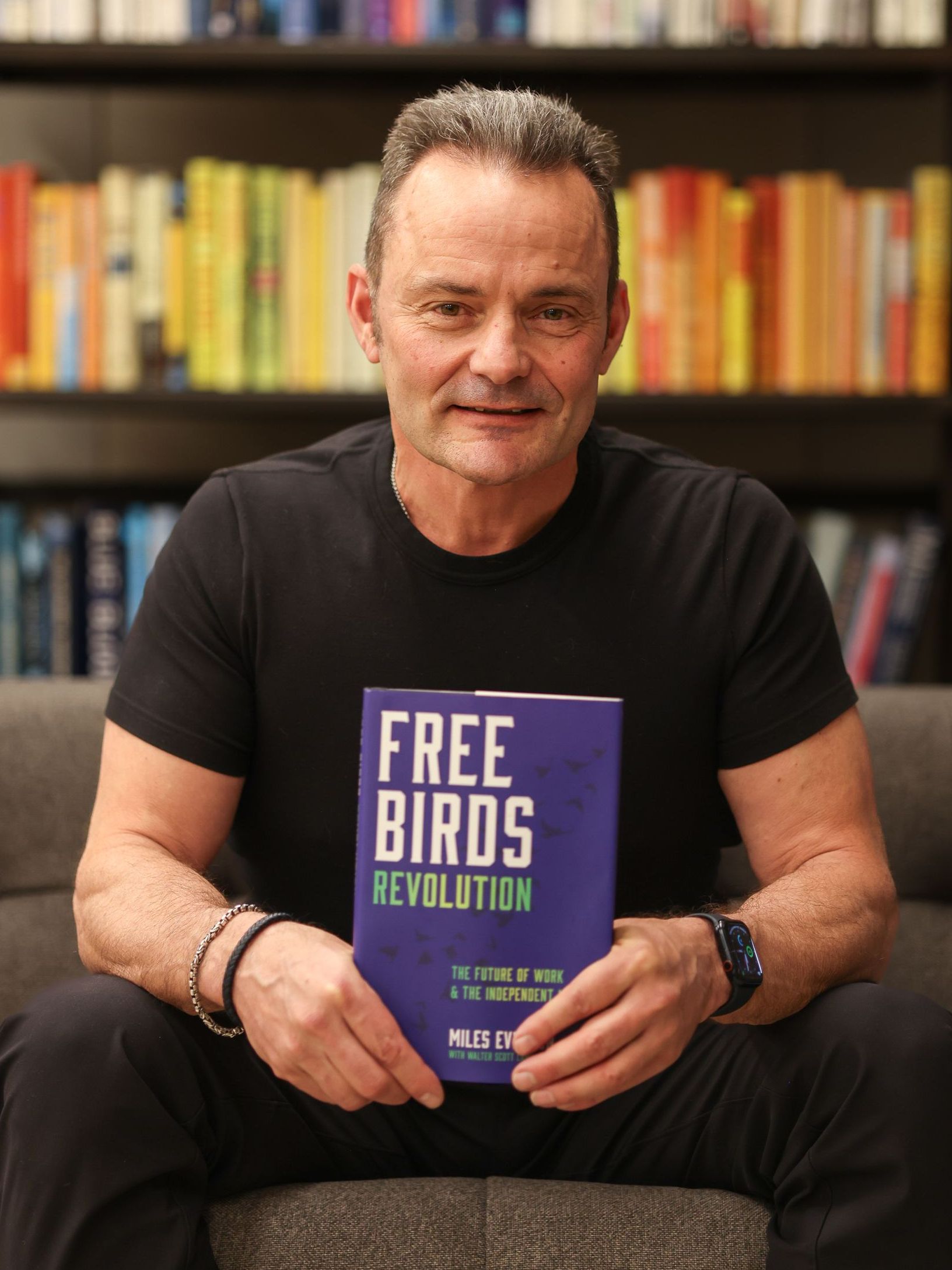
Miles Everson
CEO of MBO Partners and former Global Advisory and Consulting CEO at PwC, Everson has worked with many of the world's largest and most prominent organizations, specializing in executive management. He helps companies balance growth, reduce risk, maximize return, and excel in strategic business priorities.
He is a sought-after public speaker and contributor and has been a case study for success from Harvard Business School.
Everson is a Certified Public Accountant, a member of the American Institute of Certified Public Accountants and Minnesota Society of Certified Public Accountants. He graduated from St. Cloud State University with a B.S. in Accounting.