Luxury without Loyalty: Learn what this iconic luxury brand's missteps reveal…
|
|
| Now, let’s talk about a coaching comment my friend and colleague, Professor Joel Litman, presented to his workforce at Valens Research. Keep reading to know about this USD 2 million mistake that shook an iconic luxury brand. Luxury without Loyalty: Learn what this iconic luxury brand's missteps reveal… There’s a moment every investor dreads… and no, it’s not the headline-grabbing collapse, but the quiet miscalculation. The kind that doesn’t tank a stock overnight, yet slowly erodes trust, loyalty, and long-term returns. These are the mistakes that rarely make front-page news, but they linger in the financials, surface in consumer behavior, and ultimately show up where it hurts most: Future cash flows. According to Professor Joel Litman, Chairman and CEO of Valens Research and Chief Investment Officer of Altimetry Financial Research, one of the world’s most admired luxury conglomerates may be experiencing that kind of reckoning.
A Landmark Acquisition with Unintended Consequences In 2021, LVMH Moët Hennessy completed one of the most high-profile deals in luxury retail history: A USD 16 billion acquisition of Tiffany & Co. The move was widely celebrated as a strategic masterstroke—an opportunity to transform a 187-year-old American jeweler into a modern global powerhouse and strengthen LVMH’s foothold in the U.S. luxury market. Initially, the plan appeared flawless. Ultra-high-net-worth consumers rushed to acquire rare, high-margin offerings, including a limited-edition Patek Philippe Nautilus 5711 featuring Tiffany’s iconic robin’s-egg blue dial. Priced around USD 52,000 at launch, the watch later fetched as much as USD 6.5 million at auction—an apparent validation of LVMH’s strategy to elevate exclusivity and pricing power.
However, as Professor Litman explains, headline success doesn’t always translate into sustainable value creation. In fact, behind the scenes, cracks were already forming. Longtime Tiffany clients began expressing frustration with opaque purchasing rules and inconsistent access to coveted products. Some customers sued. Others quietly took their spending elsewhere. Turns out, what was meant to reinforce exclusivity instead fostered resentment and distrust. The most damaging consequence came from within the supply chain itself. Patek Philippe—one of the most revered names in Swiss watchmaking—ended its 170-year partnership with Tiffany. The reasons were structural, not emotional. Tiffany restricted access to the blue-dial watch to customers who spent between USD 2 million and USD 3 million on other jewelry, yet offered no waitlists or guarantees. Compounding the issue, Tiffany refused to share customer data with Patek Philippe, undermining the watchmaker’s ability to manage relationships and brand integrity. For Patek Philippe, that was the final straw. The brand pulled out of all but one Tiffany location, effectively dissolving a partnership that had endured for generations. To Professor Litman, this episode wasn’t just a public relations issue; it was also a strategic failure with measurable financial consequences. Since the acquisition, Tiffany’s share of the global luxury jewelry market has slipped by approximately one percentage point. In isolation, that figure might seem trivial. However, in a market of this scale, it translates into more than USD 500 million in lost value since LVMH took control. That lost ground hasn’t disappeared—it’s been claimed by competitors. Nowhere is this more evident than in China, a region that historically accounts for more than one-third of global luxury demand. Western luxury brands have felt mounting pressure there, with sales declining by roughly 20% in 2024. At the same time, domestic Chinese brands like Laopu and Mao Geping have surged. By emphasizing local craftsmanship, cultural identity, and national pride, they’ve resonated with consumers who are becoming increasingly selective. Laopu alone sold 200,000 pieces of gold jewelry in the first half of 2025 and achieved a market capitalization of USD 15 billion. As Professor Litman notes, this shift underscores a critical reality for investors: Wealth doesn’t eliminate discernment. Even the ultra-rich are rethinking where—and why—they spend . Luxury Is No Longer a Guaranteed Moat LVMH remains the largest luxury goods company in the world, with an unmatched portfolio of iconic brands. … but as Professor Litman emphasizes, scale and heritage alone no longer guarantee pricing power or profitability. Today’s luxury consumers expect transparency, personalization, and flawless execution across every touchpoint. When those expectations aren’t met, loyalty evaporates regardless of brand prestige. Market expectations for LVMH have moderated since the pandemic surge, yet investors may still be underestimating how fragile the company’s luxury moat has become. If discretionary demand continues to soften and strategic missteps persist, profitability could deteriorate further. The lesson for investors is clear: Even the most glittering brands are not immune to erosion . Beneath the polished storefronts and record-setting auctions, fundamentals still matter and ignoring the warning signs could prove costly. For now, the shine remains. However, as Professor Litman cautions, investors should be wise to tread carefully before assuming it will last. Hope you’ve found this week’s insights interesting and helpful. Stay tuned for next Wednesday’s The Independent Investor! Artificial intelligence (AI) are two words that can make or break industries and businesses in today’s market. Learn more about the implications of AI in next week’s article! |


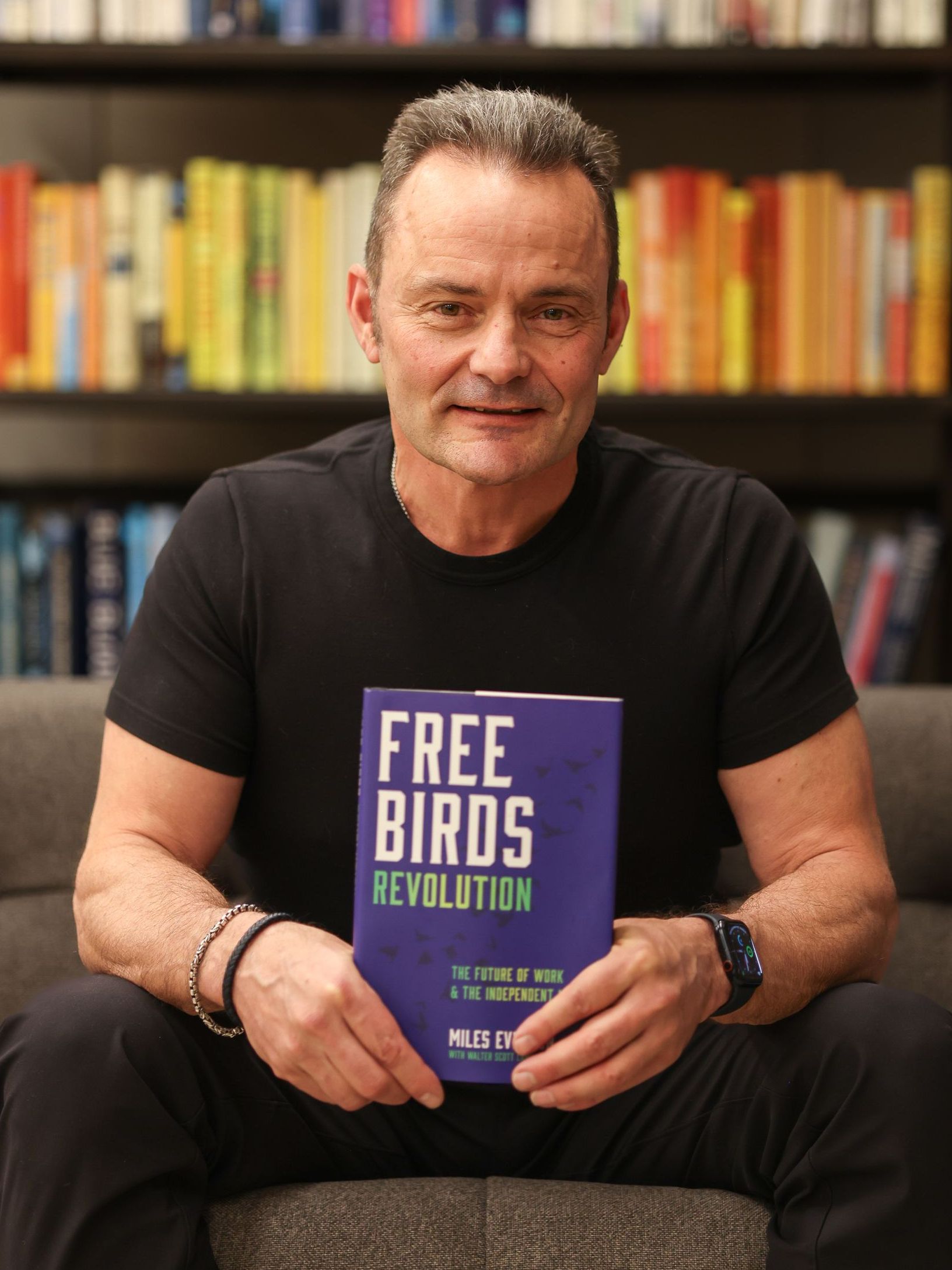
Miles Everson
CEO of MBO Partners and former Global Advisory and Consulting CEO at PwC, Everson has worked with many of the world's largest and most prominent organizations, specializing in executive management. He helps companies balance growth, reduce risk, maximize return, and excel in strategic business priorities.
He is a sought-after public speaker and contributor and has been a case study for success from Harvard Business School.
Everson is a Certified Public Accountant, a member of the American Institute of Certified Public Accountants and Minnesota Society of Certified Public Accountants. He graduated from St. Cloud State University with a B.S. in Accounting.