What's this psychologist's secret to sustainable success? Hint: It's not just hard work!
|
|
| For this article, let’s focus on a particular individual’s professional endeavors. Read on to see how her ventures align with the principles of Career Driven Strategy (CDS), the application of RDS to individuals and their careers. What's this psychologist's secret to sustainable success? Hint: It's not just hard work! There’s something magnetic about people who just don’t quit. You’ve seen them—the ones who keep showing up long after others have called it a day. They stumble, recalibrate, and still find a way forward. It’s not because they’re the smartest in the room or the most talented. It’s because they’ve decided that setbacks are temporary, and progress, no matter how small, is non-negotiable. What exactly fuels that kind of perseverance? More importantly, how can we—in our own careers and lives—channel that same drive with direction, not just determination? Well, that’s where psychology meets strategy. … and few embody that intersection more powerfully than Angela Duckworth, the celebrated psychologist and author of “Grit: The Power of Passion and Perseverance.” Her life’s work—and even her life story—mirrors the very essence of Professor Joel Litman and Dr. Mark L. Frigo ’s Career Driven Strategy (CDS) framework, a system for aligning purpose, persistence, and performance into a fulfilling and impactful career.
The Making of a Mindset Duckworth didn’t set out to become a world-renowned psychologist. In fact, she started out teaching math and science in public schools in New York, San Francisco, and Philadelphia. It was there, in the chaos of real classrooms, that she started noticing something profound: Intelligence alone didn’t determine success. Some of her students—not necessarily the most gifted—consistently outperformed others simply because they refused to give up. They worked harder, stayed longer, and cared deeper. That observation planted the seed for what would later become her life’s defining concept: GRIT. Duckworth left teaching to pursue a PhD in psychology at the University of Pennsylvania, where she began researching why some people achieve more than others, even when talent levels are similar. Her studies of West Point cadets, spelling bee finalists, and high-achieving professionals all pointed to one defining factor: The combination of passion and perseverance for long-term goals . Her 2016 bestseller, “Grit,” catapulted the concept into the global spotlight… but beyond the buzzword lies something far more substantial: A guide to building sustainable success from within . At first glance, Duckworth’s grit might sound like sheer willpower. However, her research and her life suggest it’s actually a strategic form of persistence. That’s exactly where her philosophy intersects with Professor Litman and Dr. Frigo’s Career Driven Strategy (CDS). While Duckworth’s grit explores the psychology of sustained effort, CDS maps out a structured way to direct that effort towards meaningful, ethical, and high-value career growth. Both recognize that success isn’t random—it’s the result of aligning one’s purpose, discipline, and decisions with long-term goals. Let’s break down how the two connect…
In essence, Duckworth’s story is proof that grit without direction can lead to burnout, but grit with strategy leads to greatness. Her path mirrors CDS in almost every dimension: purpose , persistence , ethics , and impact . She didn’t just study grit; she also lived it. From leaving a high-paying consulting job to teaching in underfunded schools, and from facing academic setbacks to pioneering a global conversation about resilience, every step of her career has been a masterclass in aligning purpose with perseverance. So… if grit is the engine that keeps you going, then strategy is the map that ensures you’re headed somewhere worth going. Duckworth’s work gives you the psychological fuel; Professor Litman and Dr. Frigo’s framework gives you the structure. Together, they create a blueprint for a career—and a life—driven not just by effort, but also by meaningful direction. Now, if you’ve ever wondered how to stay committed to your goals while ensuring those goals truly matter, remember this: Grit gets you there. Strategy keeps you there. Ethics define why you’re there. … and when those three align? That’s when perseverance becomes purpose, and purpose becomes legacy. — If you’re looking to gain a better understanding of Return Driven Strategy and Career Driven Strategy, we highly recommend checking out “Driven” by Professor Litman and Dr. Frigo. Hope you found this week’s insights interesting and helpful. Stay tuned for next Tuesday’s Return Driven Strategy! Meta and Alphabet were recently found liable for intentionally building addictive social media platforms. Learn more about the lawsuit’s potential implications in next week’s article! |


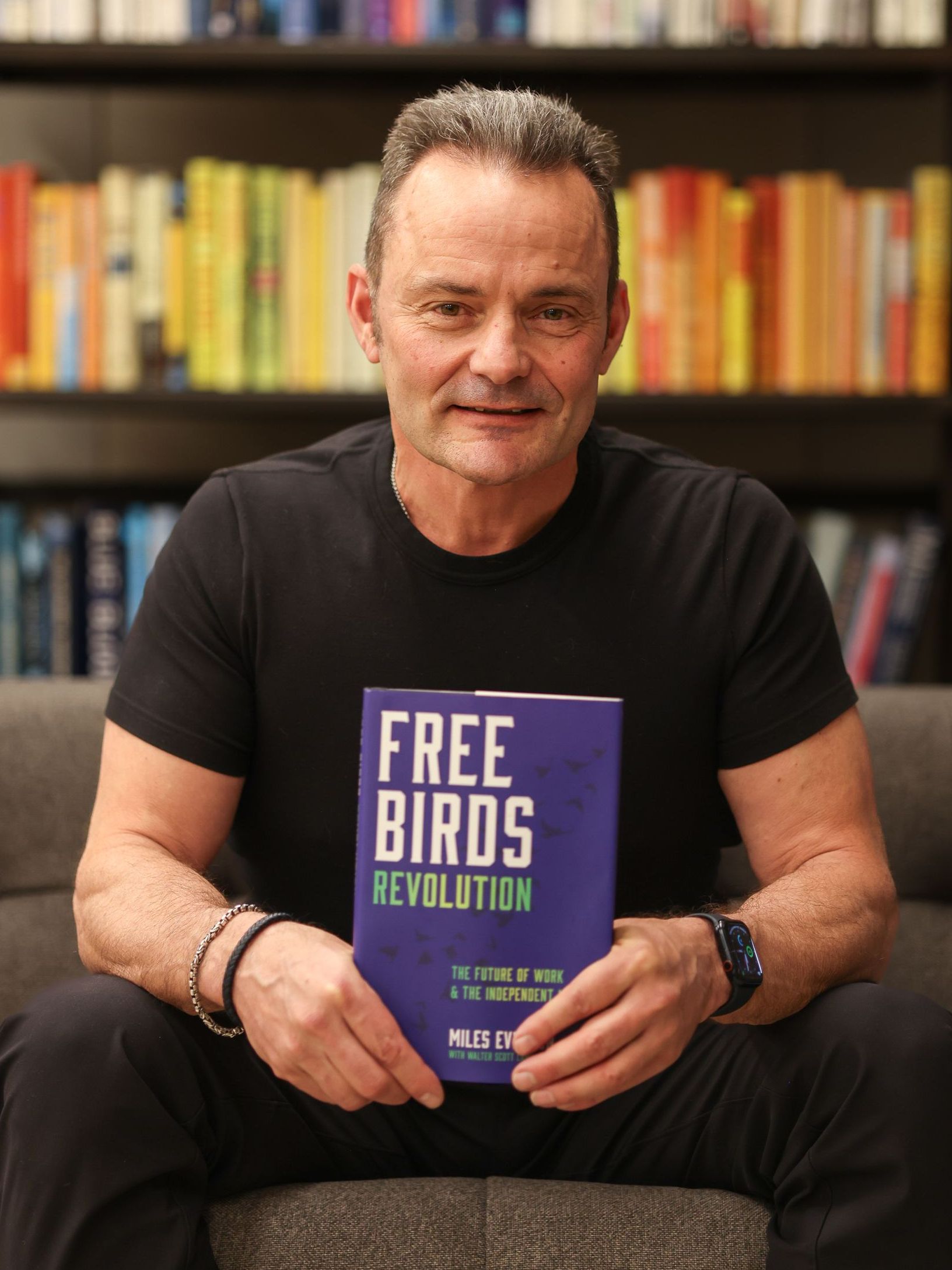
Miles Everson
CEO of MBO Partners and former Global Advisory and Consulting CEO at PwC, Everson has worked with many of the world's largest and most prominent organizations, specializing in executive management. He helps companies balance growth, reduce risk, maximize return, and excel in strategic business priorities.
He is a sought-after public speaker and contributor and has been a case study for success from Harvard Business School.
Everson is a Certified Public Accountant, a member of the American Institute of Certified Public Accountants and Minnesota Society of Certified Public Accountants. He graduated from St. Cloud State University with a B.S. in Accounting.