AI is changing how companies operate. Here’s how it has reshaped the work thus far.
| From the desk of Miles Everson: Hi! I’m excited to talk about another insight in the world of business for “Return Driven Strategy (RDS).” For those of you who may not be familiar yet, RDS is a pyramid-shaped framework with 11 tenets and 3 foundations. When applied properly, these principles help businesses attain high levels of performance. Today, we’re going to talk about how AI has changed the workforce thus far. Continue reading below. |
AI is changing how companies operate. Here’s how it has reshaped the work thus far. Corporations are already at a point where employees no longer need to hide their usage of artificial intelligence (AI) tools. In a growing number of white collar roles, AI is becoming a necessity the same way spreadsheets and word processors once did—workers are expected to know it and expected to use it. With AI utilization transitioning from an experimentation phase into daily usage, leaders and managers are forced to rethink how they look at and define their workforce. As advanced AI models and agents advance rapidly, more and more tasks will be automated and ideally, will enable employees and organizations to become more productive. Thus far, many organizations have responded to the AI boom by racing for efficiency, adopting the latest and the greatest in available models in an effort to raise overall productivity.
An example of this is consulting giant McKinsey. The company recently began trials for new hires that require them to use the company’s AI system called Lilli to help solve a case study. Candidates in the pilot had to use Lilli to analyze a case, refine conclusions, and show they could prompt effectively and apply judgment to the output. That’s a clear sign that the consulting firm is treating AI as part of the job. Aside from requiring candidates to use its AI system, McKinsey has created 25,000 AI agents over the past two years and aims to scale its agentic capabilities to at least one agent per human employee. McKinsey isn’t just racing towards efficiency; it’s also attempting to redefine how it defines its workforce as a whole. The firm’s CEO Bob Sternfels described a “workforce” that includes tens of thousands of agents on top of roughly 40,000 staff, with the explicit goal of reaching one agent per human in the near term. Meanwhile, Accenture has recently informed its senior staff that AI utilization will play a role in their eligibility for leadership positions. Moreover, the company has partnered with AI startup Anthropic to train its 30,000 employees on Claude’s AI tools. These examples of strategic changes demonstrate just how much AI is reshaping the business landscape. However, the shift being ushered in by AI isn’t just limited to maximizing efficiency and building knowhow. Retail giant IKEA, for example, has adopted a more intentional approach to AI adoption. Before adopting new AI tools, leaders need to answer whether these simplify or complicate the work and identify if these can enable workers to do more meaningful work. Aside from crafting these steps, the company invested time in ensuring that its leadership and management teams had AI literacy before AI usage was scaled across all layers of its workforce. These examples make it clear that AI is here to stay and that it has vastly transformed the workforce in just a few short years. While the companies we mentioned differ in how they’ve approached AI adoption, what’s similar among all of them is their acceptance of AI’s inevitability. The far-reaching implications don’t end there, though. As AI models continue to advance, companies will be forced to redefine their workforce and change how they view organizational and employee productivity entirely. The RDS Connection AI’s rapid disruption of Corporate America and how businesses have responded is best explained by Return Driven Strategy (RDS). According to Professor Joel Litman and Dr. Mark L. Frigo in the book, “Driven,” forces of change like scientific and technological breakthroughs can and will alter how a business operates. When such changes take place, business models and strategies must adapt to the wave of change that’s happening. However, those aren’t the only things that leaders must do. They need to change how they engage with their employees, and map and redesign their processes accordingly. The examples we’ve highlighted above showcase the principles Professor Litman and Dr. Frigo emphasized. McKinsey, Accenture, and IKEA all positioned themselves to adopt the benefits ushered in by AI. They’ve also taken steps to ensure they engage with their employees and redesign their processes accordingly. Even though AI has brought disruptions to human labor and how companies operate, it’s definitely here to stay. Therefore, companies must adapt in the wake of these changes and disruptions, or risk stagnation entirely. Adaptation isn’t just about adoption of new technologies; it’s also reliant on employee engagement and remapping of processes. — If you’re looking to gain a better understanding of Return Driven Strategy and Career Driven Strategy, we highly recommend checking out “Driven” by Professor Litman and Dr. Frigo. Click here to get your copy and learn how this framework can help you in your business strategies and ultimately, in ethically maximizing wealth for your firm. Hope you found this week’s insights interesting and helpful. Stay tuned for next Tuesday’s Return Driven Strategy! We’ve all been there—stuck on a glitchy video call where the screen freezes mid-sentence, audio lags behind, and you’re left nodding politely while wondering what on earth was just said. Learn more about Zoom through the lens of RDS in next week’s article! |


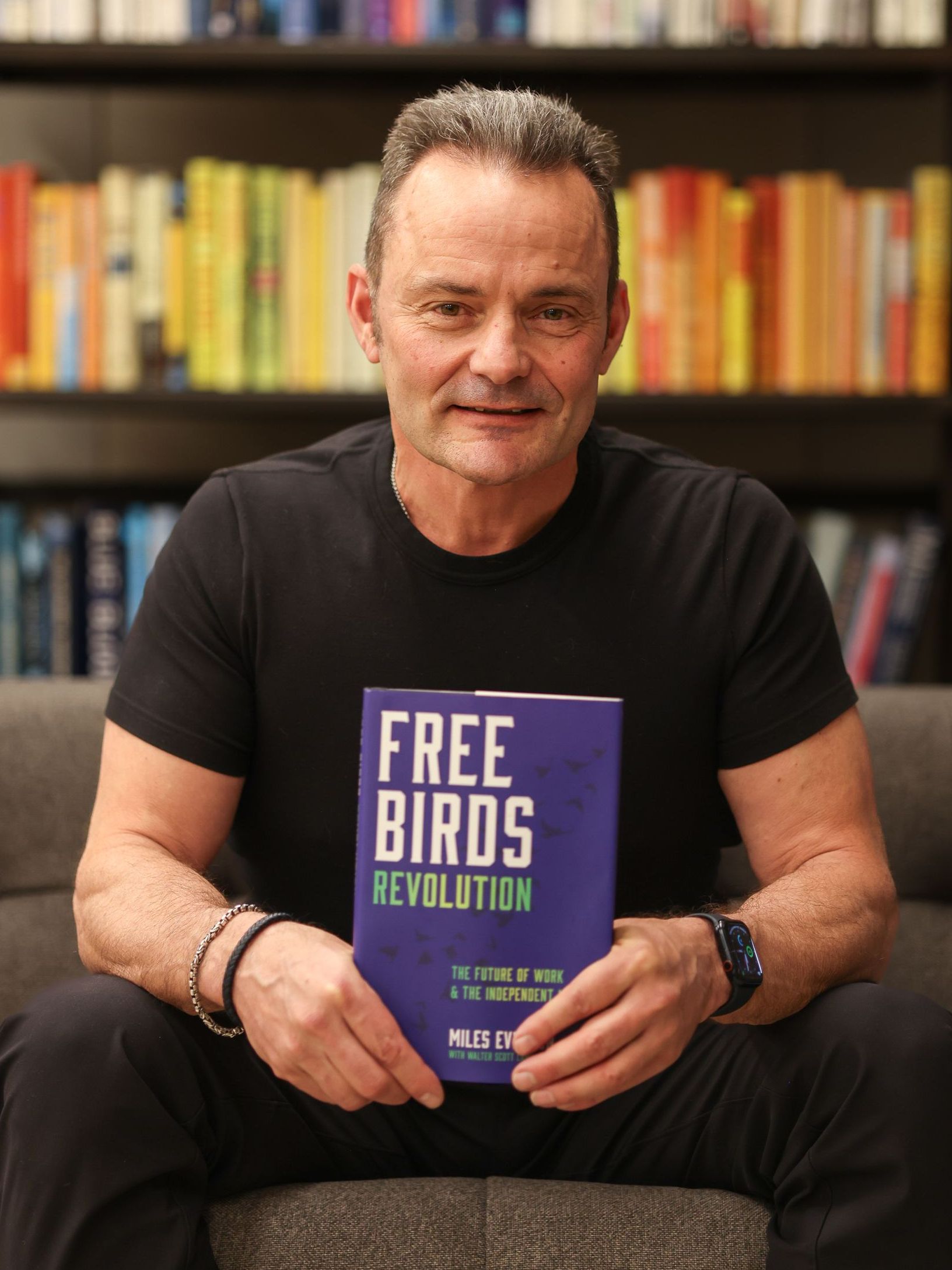
Miles Everson
CEO of MBO Partners and former Global Advisory and Consulting CEO at PwC, Everson has worked with many of the world's largest and most prominent organizations, specializing in executive management. He helps companies balance growth, reduce risk, maximize return, and excel in strategic business priorities.
He is a sought-after public speaker and contributor and has been a case study for success from Harvard Business School.
Everson is a Certified Public Accountant, a member of the American Institute of Certified Public Accountants and Minnesota Society of Certified Public Accountants. He graduated from St. Cloud State University with a B.S. in Accounting.