Here’s how this household appliances brand effectively built an empire in a crowded market!
|
|
| Today, we’re going to reveal how this 31-year-old household appliances firm built its brand equity and became competitive in a highly-competitive market. Continue reading below! Here’s how this household appliances brand effectively built an empire in a crowded market! The U.S. has a highly mature household appliances market and is composed of big and recognizable brands like KitchenAid, General Electric, Electrolux, and Dyson, among others. As a result, consumers have so many brands to choose from, making securing a market share in this space a big ordeal for new entrants and even some established companies. Despite this, SharkNinja, a 31-year-old firm has managed to build brand equity in a highly mature and crowded market. In fact, after separating from its parent company JS Global in 2023, it went public and now has a market cap of USD 16 billion. What’s more? SharkNinja has even been named by TIME Magazine as one of the 100 most influential companies of 2025! To understand how this firm pulled off those feats, we need to take a close look at its humble beginnings first. From Vacuum Cleaners to Kitchenware and Beauty Products
SharkNinja traces its origins to Euro-Pro Operating LLC, a company that was run by Mark Rosenzweig and his family, selling steam cleaners and vacuums. By 2007, the Shark brand was founded with vacuum products as the core offerings. Two years later, Mark Barrocas, SharkNinja’s current CEO, joined the company and launched the Ninja brand. The company currently operates two brands and sells a wide variety of products. Its Shark brand includes vacuums, hair dryers, air purifiers, carpet extractors, and mops, among others. Its offerings recently expanded to include skincare products marketed primarily towards women. Meanwhile, the Ninja brand sells kitchen appliances that include blenders, food processors, coffee machines, air fryers, juicers, grills, ovens, waffle makers, and others. As mentioned before, the American household appliances market is a highly mature space, making it harder for new entrants and even established brands to steal market share away from big players. SharkNinja closed this gap through a combination of product diversification and pricing strategies that enabled it to capture more customers from well-known brands. However, what truly propelled the brand forward was its savvy use of social media in its wide array of marketing products. SharkNinja grew its brand equity through social media platforms like TikTok by producing well-made short-form content for its products like its facial masks, ice cream makers, and food processors. Aside from these well-made promotional content, the company gained traction through user-generated content… and more often than not, these short-form content tend to go viral. Simply put, SharkNinja has taken market share by using the power of marketing to draw customer attention to its vast selection of competitively-priced products. … and with today’s consumers being more digitally native and value-oriented than ever, SharkNinja has been able to put its brand front and center whenever household appliances are brought up in online spaces, leading to purchases! Last year, the company raked in USD 5.5 billion in revenues and during the third quarter of 2025, it managed to generate USD 1.6 billion amid the volatility introduced by inflation and tariffs. The Importance of Branding Offerings Creating reliable and competitively-priced offerings are just part of the equation for SharkNinja’s success. It’s because what pushed the brand forward was its ability to market and create a brand image that customers formed a positive attachment to. This is best explained through RDS’ 6th tenet: Brand Offerings. In the book, “Driven,” Professor Joel Litman and Dr. Mark L. Frigo emphasized the importance of branding. According to them, branding is a core component of any high-performing firm, arguing that branding activities “build an indelible connection in the mind of customers between their explicitly understood need and the offering that uniquely fulfills it.” In the case of SharkNinja, it positioned itself as a manufacturer of well-made and competitively-priced products. This brand image was subsequently amplified through the company’s clever use of social media marketing. As a result, it ended up creating an identity that its target audience could easily latch onto and actively patronize. So, the next time you think of a way to put your brand or offering out there, consider taking a page from SharkNinja’s playbook! — If you’re looking to gain a better understanding of Return Driven Strategy and Career Driven Strategy, we highly recommend checking out “Driven” by Professor Litman and Dr. Frigo. Click here to get your copy and learn how this framework can help you in your business strategies and ultimately, in ethically maximizing wealth for your firm. Hope you found this week’s insights interesting and helpful. Stay tuned for next Tuesday’s Return Driven Strategy! Picture this: A high-powered executive sits in a corner office with a framed MBA, a sharp suit, and a five-year plan that looks great on paper. Learn more about how this researcher and author’s contributions to the world of work are connected to Career Driven Strategy (CDS) in next week’s article! |


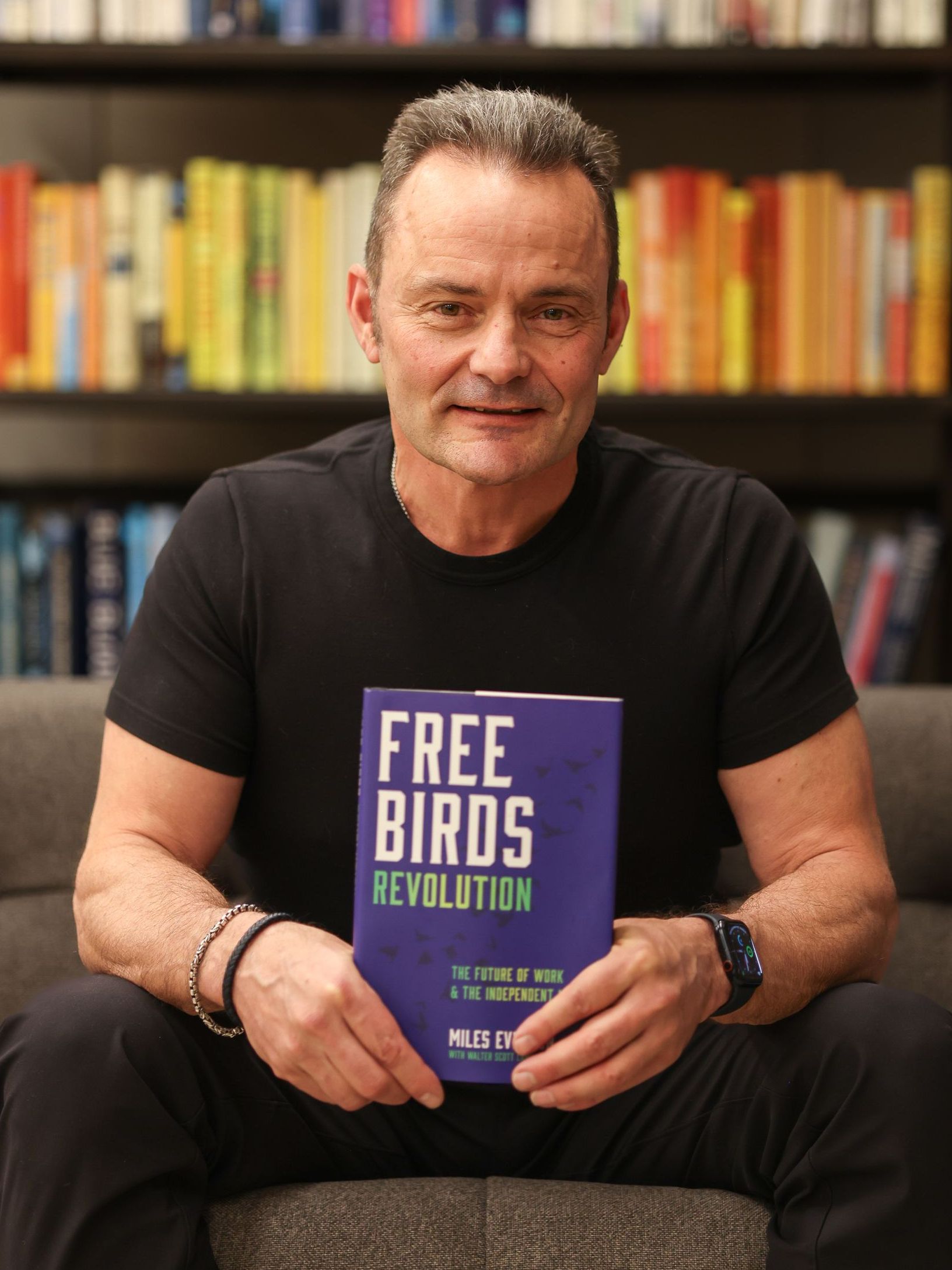
Miles Everson
CEO of MBO Partners and former Global Advisory and Consulting CEO at PwC, Everson has worked with many of the world's largest and most prominent organizations, specializing in executive management. He helps companies balance growth, reduce risk, maximize return, and excel in strategic business priorities.
He is a sought-after public speaker and contributor and has been a case study for success from Harvard Business School.
Everson is a Certified Public Accountant, a member of the American Institute of Certified Public Accountants and Minnesota Society of Certified Public Accountants. He graduated from St. Cloud State University with a B.S. in Accounting.