Can you really change careers without starting all over again? Know the answer to that question here!
Today, let’s focus on the career adaptation of RDS. Keep reading to see how this framework plays an important role in the lives of individuals choosing to shift careers. |
|
Can you really change careers without starting all over again? Know the answer to that question here! Picture this: You’ve spent years climbing the corporate ladder, ticking off all the boxes that were supposed to equal success—steady promotions, impressive titles, maybe even the corner office view. On paper, it looks perfect. However, something feels off. The excitement that once fueled your work has dimmed, replaced by the quiet hum of routine. Then one day, you meet someone who stepped off the very path you’re on—and not only survived, but thrived. Suddenly, the idea of changing direction no longer seems reckless. It feels… strategic. This isn’t just a story of people chasing dreams. It’s about professionals who deliberately reframe their careers the way a CEO rethinks a company’s strategy. At the core of that shift? A powerful principle known as the Career Driven Strategy (CDS) framework, developed by Professor Joel Litman and Dr. Mark L. Frigo.
Why Career Shifts Aren’t About “Starting Over” Corporate professionals who pivot to new industries or roles aren’t hitting the reset button. They’re redirecting the momentum they’ve built. Much like a business diversifies to adapt to market shifts, these individuals are diversifying their careers to maximize both value and purpose. Take the example of a finance executive who transitions into sustainability leadership… To the untrained eye, it’s a leap, but in reality, it’s a recalibration. That professional isn’t abandoning his or her skills; he or she is deploying them in a way that serves emerging needs, aligns with personal values, and ensures long-term relevance. What makes these shifts strategic rather than impulsive? There are three key traits:
In other words, they treat their career like a business: They evaluate assets, scan the market, mitigate risks, and pursue opportunities that create sustainable returns. Enter Career Driven Strategy (CDS)… Professor Litman and Dr. Frigo’s Return Driven Strategy (RDS) has long been used in the corporate world to align actions with value creation. When translated to careers, this becomes Career Driven Strategy (CDS)—a roadmap for professionals to steer their careers with the same discipline as organizations steer their growth. Here’s how it connects:
Think about the professionals you admire who’ve taken bold leaps: The lawyer turned tech entrepreneur… … the corporate VP turned nonprofit leader… … or the marketer who became a thought leader in AI. Clearly, their success wasn’t accidental. It came from applying structured thinking—the kind CDS champions—to deeply personal decisions. Instead of asking, “What am I leaving behind?” they ask: “What am I moving toward, and how does it create value for me and others?” Lessons for Today’s Professionals You see, the corporate landscape is evolving faster than ever. Automation, shifting industries, and new work models are rewriting the rules. For professionals, the real risk isn’t moving but standing STILL. Strategic career shifts, guided by CDS, show us that:
Besides, the most successful career shifters aren’t rebels; they’re actually strategists. They’re not abandoning the corporate world but redesigning their place within it. By thinking like a CEO of their own careers and leveraging CDS, they don’t just navigate change but also harness it. … because in the end, a career isn’t defined by how straight the ladder climbs; it’s defined by how smartly—and purposefully—you choose your next step. If you’re looking to gain a better understanding of Return Driven Strategy and Career Driven Strategy, we highly recommend checking out “Driven” by Professor Litman and Dr. Frigo. Click here to get your copy and learn how this framework can help you in your business strategies and ultimately, in ethically maximizing wealth for your firm. Hope you found this week’s insights interesting and helpful. Stay tuned for next Tuesday’s Return Driven Strategy! AI is rewriting how work is getting done in so many ways. Leadership teams in Corporate America now have to rethink how each role is defined in their organizations. Learn more about this shift in the workforce next week’s article! |


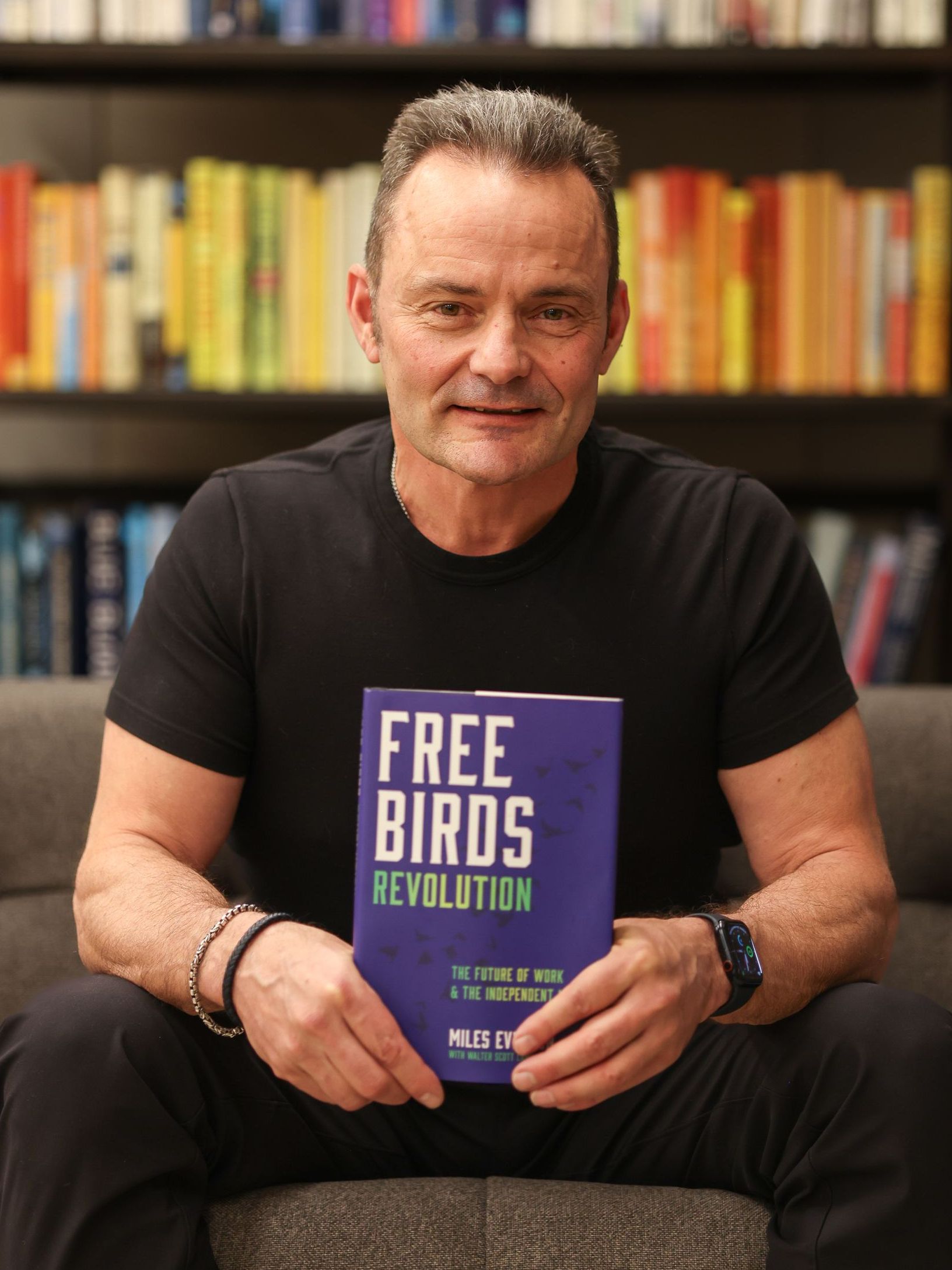
Miles Everson
CEO of MBO Partners and former Global Advisory and Consulting CEO at PwC, Everson has worked with many of the world's largest and most prominent organizations, specializing in executive management. He helps companies balance growth, reduce risk, maximize return, and excel in strategic business priorities.
He is a sought-after public speaker and contributor and has been a case study for success from Harvard Business School.
Everson is a Certified Public Accountant, a member of the American Institute of Certified Public Accountants and Minnesota Society of Certified Public Accountants. He graduated from St. Cloud State University with a B.S. in Accounting.