When "Less is More" becomes a global strategy, you see the billion-dollar power of customer focus!
| From the desk of Miles Everson: Hello! Welcome to “Return Driven Strategy (RDS)!” For those of you who haven’t heard of this yet, RDS is a pyramid-shaped framework with 11 tenets and 3 foundations. When applied properly, these principles help businesses achieve their objectives. Today, let’s discuss Tenet 3 of this framework through a particular business case study. Continue reading to know what lessons you can learn from this company. |
Walk into any business strategy meeting and you’ll hear a familiar phrase: “We want to grow our customer base.” More customers. More markets. More opportunities. More everything. It sounds logical. After all, growth should come from reaching as many people as possible, right? Not exactly. Some of the most successful companies in the world didn’t grow because they served everyone. They grew because they chose very specific customers with very specific needs , and then became exceptionally good at serving them. One of the most compelling examples of this approach comes from a global technology company that quietly built a multi-billion-dollar empire by doing one thing extraordinarily well: Helping large organizations manage their technology operations more efficiently . That company is Infosys Limited, and its story illustrates one of the most important ideas in the Return Driven Strategy (RDS) framework developed by Professor Joel Litman and Dr. Mark L. Frigo : Target Appropriate Customer Groups (Tenet 3).
Infosys Limited was founded in 1981 in Bengaluru, India by a small group of engineers led by N. R. Narayana Murthy. At the time, India’s technology sector was still in its infancy. The country had a large pool of engineering talent but very little global recognition in the software industry. Murthy and his co-founders believed something different. They saw an opportunity to connect India’s growing technical workforce with the rising global demand for software development and IT services. What began as a modest startup eventually became one of the world’s largest IT consulting and outsourcing firms. Today, Infosys provides services that include:
The company works with large enterprises across finance, retail, healthcare, telecommunications, and manufacturing, helping them build and maintain complex digital systems. Over time, Infosys grew into a company with tens of thousands of employees worldwide and tens of billions of dollars in market value. Its success wasn’t accidental; it was the result of a highly focused strategy centered on serving the right customers. A Strategy Built Around Strategic Outsourcing In their book “Driven,” Professor Litman and Dr. Frigo highlight Infosys as a powerful example of a company that aligned its strategy with a rapidly growing market need. During the late 1990s and early 2000s, businesses around the world faced a technological dilemma. They needed to:
At the same time, technology talent was becoming expensive in many developed economies. This created the ideal environment for strategic outsourcing —a model where companies hire specialized external partners to handle technology development and management. … and Infosys recognized this opportunity early. So, instead of trying to become a general technology company that did everything for everyone, it positioned itself as a trusted outsourcing partner for large global enterprises. One of Infosys’ most important innovations was its Global Delivery Model, which allowed the company to distribute work across international teams while centralizing much of its engineering talent in India. The advantages were significant:
This combination allowed Infosys to offer something extremely attractive to large corporations: High-quality technology services at lower costs with faster delivery . The Connection to Tenet 3 of RDS The story of Infosys aligns closely with Tenet 3 of RDS, which is “Target Appropriate Customer Groups.” According to Professor Litman and Dr. Frigo, companies achieve sustainable growth when they deliberately identify customer segments where they can create the most value. Besides, not all customers are equally valuable. Some markets are highly competitive, have low margins, and offer little long-term growth, while others present opportunities for companies that can deliver unique advantages. Infosys did exactly this. Instead of targeting every possible technology customer, the company focused on large global enterprises with complex IT needs. Such organizations required:
These made them the ideal customers for Infosys’ outsourcing model. What else? By focusing on this specific group, Infosys was able to:
In other words, the company wasn’t trying to serve every technology user; it was focusing on the customers where it had the strongest strategic advantage. Lessons Businesses Can Learn from Infosys The story of Infosys offers valuable insights for leaders, entrepreneurs, and marketers alike:
See? Infosys may not have the flashy brand recognition of some technology companies, but its strategic discipline tells a powerful story. Instead of chasing every opportunity, the company focused on the right customers , right capabilities , and right market timing . That approach allowed a small startup founded in Bengaluru to grow into a global technology powerhouse! … and perhaps most importantly, it demonstrates the enduring wisdom behind one of the key ideas in RDS: Success rarely comes from serving everyone . Instead, it comes from serving the RIGHT customers exceptionally well. — If you’re looking to gain a better understanding of Return Driven Strategy and Career Driven Strategy, we highly recommend checking out “Driven” by Professor Litman and Dr. Frigo. Click here to get your copy and learn how this framework can help you in your business strategies and ultimately, in ethically maximizing wealth for your firm. Hope you found this week’s insights interesting and helpful. Stay tuned for next Tuesday’s Return Driven Strategy! The video game industry has transformed into a market worth over USD 500 billion. Learn more about Steam in next week’s article! |


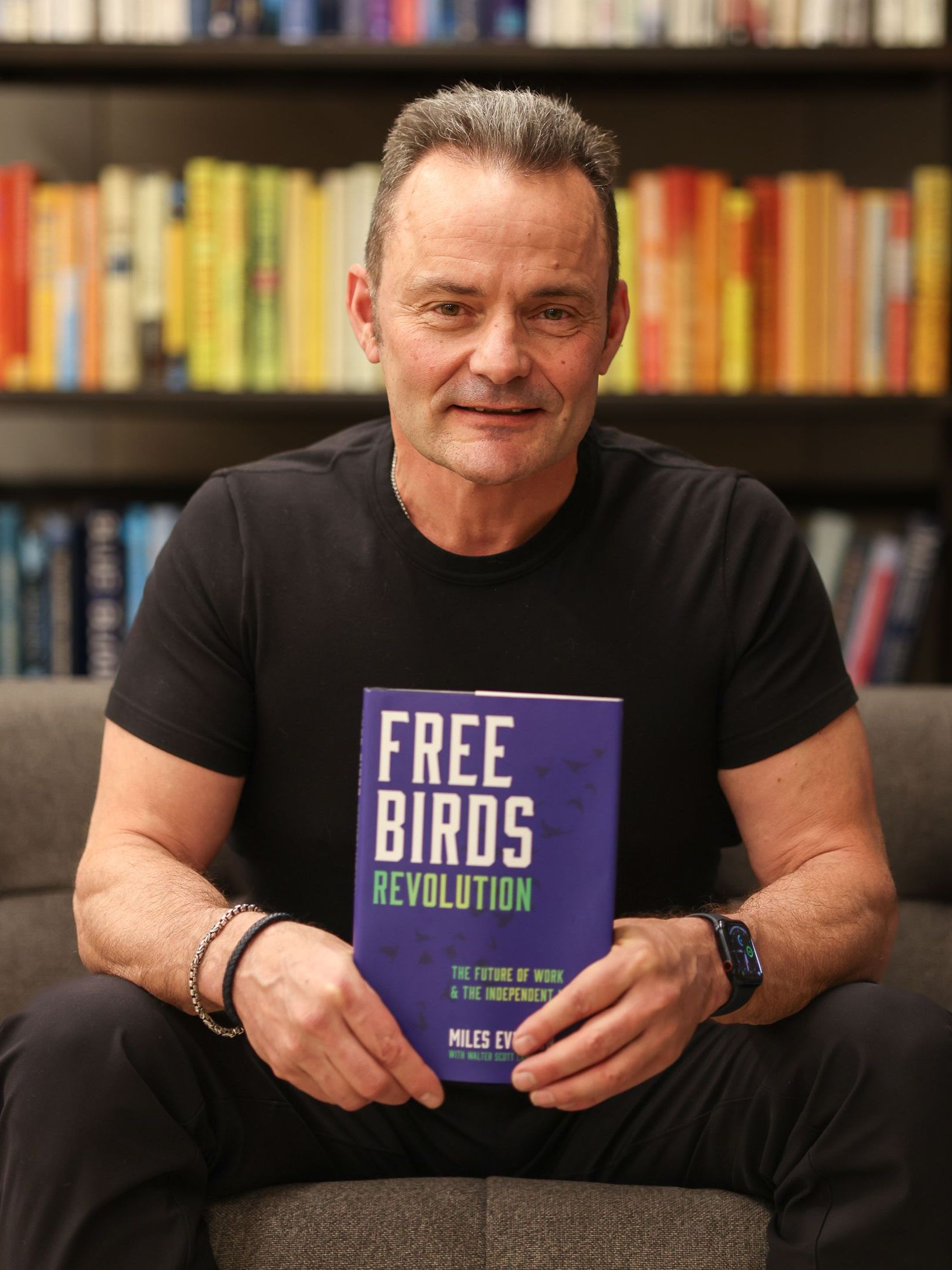
Miles Everson
CEO of MBO Partners and former Global Advisory and Consulting CEO at PwC, Everson has worked with many of the world's largest and most prominent organizations, specializing in executive management. He helps companies balance growth, reduce risk, maximize return, and excel in strategic business priorities.
He is a sought-after public speaker and contributor and has been a case study for success from Harvard Business School.
Everson is a Certified Public Accountant, a member of the American Institute of Certified Public Accountants and Minnesota Society of Certified Public Accountants. He graduated from St. Cloud State University with a B.S. in Accounting.