Here's what a classic New York Deli can teach you about beating the market…
| From the desk of Miles Everson: Happy midweek! I hope you’re all doing and feeling well today. Every Wednesday, I publish “The Independent Investor” articles, which are investing-related insights that will help you make wise investment decisions and achieve financial freedom in the long run. Today, let’s talk about a coaching comment my friend and colleague, Professor Joel Litman, presented to his workforce at Valens Research. Read on to know the lessons you can learn from this New York deli. |
There’s a moment—usually subtle and almost forgettable—when noise turns into signal. It doesn’t come with a headline—no breaking news alert, no viral tweet. Just a quiet realization, somewhere between data points and instinct, that what’s been working might keep working. Most investors miss that moment , not because they lack intelligence or access but because they’ve been trained to look for turning points instead of trajectories. As markets continue to digest years of volatility, innovation cycles, and shifting macro narratives, Professor Joel Litman , Chairman and CEO of Valens Research and Chief Investment Officer of Altimetry Financial Research, has been pointing investors towards a different kind of edge. It’s NOT the next big thing, but THE thing that’s already proving it can last. The Deli That Quietly Explained the Market In reflecting on timeless market behaviors, Professor Litman often revisits an unlikely origin story—one that began not on Wall Street, but in a bustling New York delicatessen. Lindy’s Delicatessen wasn’t just a place to eat; it was a proving ground.
Aspiring comedians gathered there, trading jokes not just with each other but also with notoriously sharp-witted waiters who had built reputations for challenging even the funniest performers. If a comedian could hold their own in that environment, it was often seen as a sign they might make it. However, as Professor Litman emphasizes, early flashes of brilliance didn’t necessarily translate into staying power. Drawing from observations chronicled by American academic and author Albert Goldman, many comedians who quickly landed television spots burned out just as fast. Their material—limited and rapidly consumed—couldn’t sustain long-term success. Goldman’s conclusion became known as “Lindy’s Law”: Longevity, not early success, was the REAL predictor of endurance. That idea didn’t stay confined to the entertainment industry. Decades later, Lebanese-American professor Nassim Nicholas Taleb expanded it into what’s now widely known as the Lindy Effect —the principle that the longer something non-perishable has existed, the longer it’s likely to continue existing. Professor Litman reframes this concept for modern investors with striking clarity: Markets, at their core, reward DURABILITY (not hype nor novelty). A company that has consistently delivered through cycles, disruptions, and reinvention signals something far more valuable than short-term upside: It signals survivability . The good news? Survivability compounds. In Professor Litman’s analysis, the Lindy Effect isn’t just a philosophical lens; it’s also a practical investment signal. In fact, he positions it as a refined way of understanding one of the most empirically supported phenomena in finance: MOMENTUM. For decades, academic and institutional research has shown that past winners tend to keep winning, at least over intermediate time horizons. Yet, many investors remain skeptical, often viewing momentum as speculative or disconnected from fundamentals. Professor Litman challenges that assumption. He believes that momentum, when paired with real economic strength, isn’t speculation but confirmation. It means the market is recognizing something that’s already working. According to Professor Litman, where many momentum strategies fall short is in failing to distinguish between perceived performance and real performance. Traditional accounting metrics can distort reality. Earnings may look strong while underlying economic productivity weakens or vice versa. This is where Professor Litman’s work at Valens Research becomes central. By applying Uniform Accounting, his firm aims to strip away accounting noise and reveal a company’s true earning power. When investors combine this clearer lens with momentum signals, they begin to see a more powerful pattern emerge: Companies that are not just rising but also deserve to be rising . Take IBM for instance…
Founded in 1911, it has survived and adapted through multiple technological revolutions: mainframes, personal computing, cloud infrastructure, and now, AI. Its path hasn’t been linear—few enduring companies ever are. However, its continued relevance underscores a key insight: Longevity itself is evidence of adaptability, strategic evolution, and embedded market trust. For investors, THAT MATTERS. … because while newer companies may promise exponential growth, older ones have already demonstrated something arguably more valuable: the ability to persist . Today’s market environment makes Professor Litman’s perspective even more compelling. Besides, investors are navigating:
In this landscape, the temptation to chase novelty is stronger than ever. However, Professor Litman’s framework offers a counterbalance. Instead of asking: “What’s new?” He encourages investors to ask: “What has proven it can last—and why?” After all, the intersection of momentum, durability, and real earnings power is where the most compelling opportunities often lie. It’s not about blindly following past performance; it’s about understanding what that performance represents.
When those answers align, momentum stops being a gamble and starts becoming a signal. The Quiet Edge The lesson Professor Litman draws from Lindy’s Delicatessen isn’t flashy. It won’t dominate headlines or trends on social media. However, for those willing to pay attention , it offers something far more valuable: A repeatable edge grounded in time-tested principles . Just like the comedians at Lindy’s, early success might get you noticed… but in markets—as in careers—what matters most is staying power. … and for investors or people like you looking ahead, this may be the most underappreciated advantage of all. Hope you’ve found this week’s insights interesting and helpful. Stay tuned for next Wednesday’s The Independent Investor! PayPal revolutionized digital payments at the turn of the century. Learn more about how it reshaped the payments space in next week’s article! |


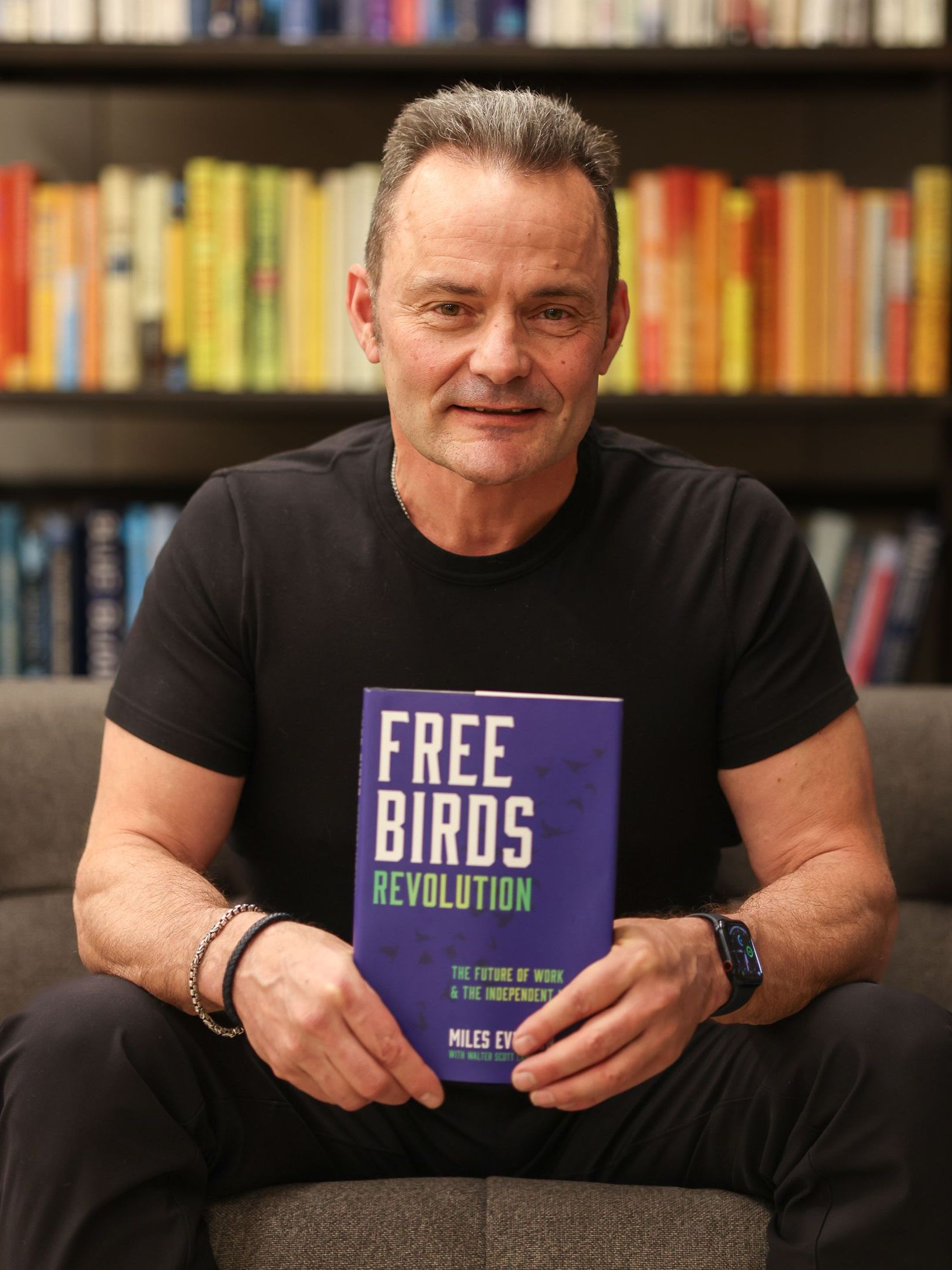
Miles Everson
CEO of MBO Partners and former Global Advisory and Consulting CEO at PwC, Everson has worked with many of the world's largest and most prominent organizations, specializing in executive management. He helps companies balance growth, reduce risk, maximize return, and excel in strategic business priorities.
He is a sought-after public speaker and contributor and has been a case study for success from Harvard Business School.
Everson is a Certified Public Accountant, a member of the American Institute of Certified Public Accountants and Minnesota Society of Certified Public Accountants. He graduated from St. Cloud State University with a B.S. in Accounting.