Learn why selling "More of the Same" made this bank stand out from its competitors…
| From the desk of Miles Everson: Happy Tuesday! Welcome to today’s “Return Driven Strategy (RDS)!” For those of you who aren’t familiar with this yet, RDS is a pyramid-shaped framework with 11 tenets and 3 foundations. When applied properly, these concepts help businesses achieve their objectives. Today, let’s focus on Tenet 2 of this framework through a particular business case study. Ready? Read on below to know more. |
Think about this: You probably don’t wake up excited about a checking account. You don’t dream about a mortgage. You don’t tell your friends about a new savings product over coffee. However, you do care about not juggling five different apps. You care about not repeating your personal information 10 times. You care about saving time, reducing friction, and feeling like your financial life isn’t scattered across institutions. Well, guess what? Such a subtle but powerful human desire— convenience —has quietly shaped the strategy of one of America’s most influential financial institutions! Let’s talk about Wells Fargo —what it is, where it came from, and how its strategy became a textbook example of Tenet 2 in the Return Driven Strategy (RDS) framework developed by Professor Joel Litman and Dr. Mark L. Frigo in their book, “Driven.”
Wells Fargo was founded in 1852 during the California Gold Rush. Originally, it wasn’t just a bank; it was also an express delivery company moving gold, freight, and mail across the American West. Over time, the firm evolved into a full-scale financial services powerhouse. Today, Wells Fargo operates as one of the largest diversified banking institutions in the U.S., offering:
On the surface, none of these products are revolutionary. A checking account at one major bank looks remarkably similar to a checking account at another. A mortgage is structured similarly across institutions. Credit cards differ in perks, but not fundamentally in function. This raises the strategic tension: “If the products are commodities… how do you win?” The Strategic Insight In “Driven,” Professor Litman and Dr. Frigo explain that superior returns don’t come from simply selling more products. Instead, they come from fulfilling otherwise unmet customer needs —Tenet 2 of Return Driven Strategy. Tenet 2 states that organizations create superior wealth by addressing customer needs that competitors fail to fully satisfy. Wells Fargo’s strategic insight in this area was elegant: Individual banking products may be commoditized… but the grouping, packaging, marketing, and delivery of them does not have to be. So, instead of asking: “How do we sell more checking accounts?” Wells Fargo asked: “How do we become the customer’s primary financial home?” As a result, Wells Fargo built its strategy around deepening customer relationships by encouraging customers to hold multiple products within the bank. This became known as a cross-sell strategy but at its best, it was more than aggressive selling. It was an attempt to solve a real pain point:
By bundling services—checking, savings, mortgage, credit card, and investment accounts—into a single integrated relationship, the bank addressed a powerful unmet need: Convenience and time savings. Such a simplicity translated into something powerful in financial terms: high Uniform Return on Equity (Uniform ROE) . Why Uniform ROE Matters In most industries, performance is measured by return on assets (ROA). However, financial institutions are different. Since banks use leverage and manage capital structures heavily, earning power is better evaluated through Uniform ROE—a cleaner measure of return on shareholder equity. From 1985 to 1995, Wells Fargo:
This was a remarkable combination: growth + strong earning power . Why? That i s because deep customer relationships:
Simply said, when customers consolidate multiple services within one institution, the economic impact compounds. That’s RDS’ Tenet 2 in action. … but wait, there’s more! Later on, the data showed something instructive. Uniform ROE levels remained high but stopped increasing. Growth rates slowed and market valuations followed. This illustrates another principle embedded in the RDS framework: Superior returns are NOT permanent by default. They require continuous renewal of unmet customer needs. Once competitors replicate elements of your strategy, or once customer penetration reaches maturity, incremental growth becomes harder. The same bundling strategy that once differentiated you becomes industry standard. That is why strategic advantage is dynamic, NOT static. Wells Fargo recognized that in a commoditized industry, differentiation could emerge not only from product innovation but also from relationship integration . A reminder, though: Wealth must be created ethically AND sustainably. According to Professor Litman and Dr. Frigo, Tenet 2 works only when unmet needs are genuinely fulfilled, NOT artificially manufactured. — From stagecoach deliveries in the 1800s to bundled financial ecosystems in the modern era, Wells Fargo’s evolution reflects a consistent theme: Success doesn’t always come from reinventing the wheel. Sometimes, it comes from redesigning the road. Through the lens of Professor Litman and Dr. Frigo’s RDS, Wells Fargo serves as a compelling illustration of Tenet 2: Fulfill otherwise unmet customer needs, and superior returns will follow. —not because the product is different, but because the experience is. If you’re looking to gain a better understanding of Return Driven Strategy and Career Driven Strategy, we highly recommend checking out “Driven” by Professor Litman and Dr. Frigo. Click here to get your copy and learn how this framework can help you in your business strategies and ultimately, in ethically maximizing wealth for your firm. Hope you found this week’s insights interesting and helpful. Stay tuned for next Tuesday’s Return Driven Strategy! This Japanese carmaker went from dominating its domestic market to being one of the biggest automakers in the world. Learn more about how Toyota became a globally-recognized brand in next week’s article! |


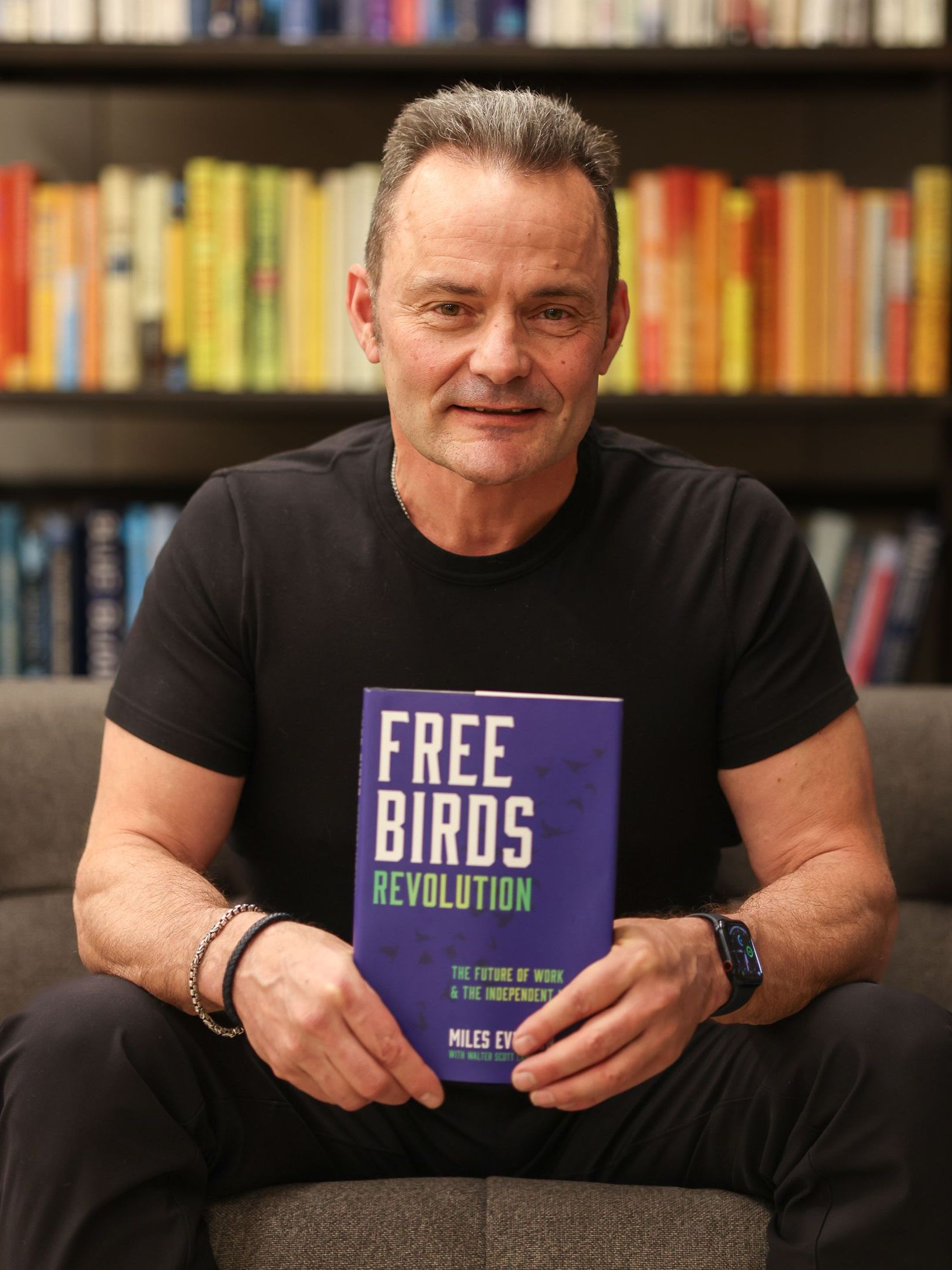
Miles Everson
CEO of MBO Partners and former Global Advisory and Consulting CEO at PwC, Everson has worked with many of the world's largest and most prominent organizations, specializing in executive management. He helps companies balance growth, reduce risk, maximize return, and excel in strategic business priorities.
He is a sought-after public speaker and contributor and has been a case study for success from Harvard Business School.
Everson is a Certified Public Accountant, a member of the American Institute of Certified Public Accountants and Minnesota Society of Certified Public Accountants. He graduated from St. Cloud State University with a B.S. in Accounting.