The Billion-Dollar Copy Error: Here's what this business case study teaches us about ethical wealth…
|
|
| Today, let’s talk about the future of AI. Read on to learn more about it. A missing cowboy hat? Here's what almost losing a movie revealed about the future of AI! In September 2025, Rob Spivey, Director of Research at Valens Research, revisited a now-famous story inside Pixar —one that has quietly become a case study in operational fragility. During the final stages of producing “Toy Story 2,” a single command triggered a catastrophic deletion event. Files didn’t just glitch; they vanished. Entire scenes, assets, and months of work began disappearing in real time. Within minutes, roughly 90% of the film was gone. Uh-oh… The studio scrambled. Systems were shut down. Recovery attempts failed. The release timeline loomed. Then, improbably, a solution emerged—not from cutting-edge infrastructure, but from something far less glamorous: a backup. A single, complete copy of the film—stored offsite on a workstation belonging to a team member working remotely—became the difference between collapse and completion. The film was restored. The crisis was averted. “Toy Story 2” went on to generate nearly USD 500 million globally. For Spivey, that story wasn’t about luck. It was about what the market consistently underestimates.
The Illusion of Progress: Faster Isn’t Always Safer Spivey’s core argument challenges a deeply embedded assumption in modern tech investing: that progress is defined by speed, scale, and cutting-edge performance. In reality, he suggests, resilience is often built on the opposite . While investors obsess over AI chips, model architectures, and compute power, the foundational layer enabling all of it— data storage —remains underappreciated and misunderstood. The industry’s push towards faster and smaller storage solutions has created a blind spot. These systems are optimized for performance, but not necessarily for durability, recoverability, or long-term reliability. That trade-off matters more than ever because in an AI-driven world, data isn’t just an input; it’s the asset. Spivey pointed to a staggering reality: the exponential growth of global data creation.
To put that into perspective, a single zettabyte equals one trillion gigabytes. This isn’t linear growth; it’s compounding at a pace that outstrips most infrastructure assumptions… and AI is the accelerant. From training large language models to powering real-time analytics and autonomous systems, AI requires vast amounts of data—not just to function, but also to improve. This means the real bottleneck isn’t just compute; it’s also storage. Here’s the thing: The spotlight has overwhelmingly focused on semiconductor leaders and model developers—companies designing chips or building algorithms. However, behind every breakthrough sits a less visible layer: systems responsible for storing, protecting, and retrieving data at scale. This is where the real tension lies. After all, not all storage is created equal. High-speed solutions dominate headlines, but slower, cheaper, and more reliable storage systems play a fundamentally different—and increasingly critical—role. They serve as the backbone for:
In other words, they are the insurance policy for the entire AI ecosystem… and as the “Toy Story 2” incident illustrates, insurance only matters when something goes wrong. Now, September 2026, and Spivey’s insights have only become more relevant. The AI race has intensified. Capital has poured into chips, cloud platforms, and generative models. Valuations in these segments have expanded rapidly. … but with growth has come complexity AND risk. The more data companies generate and depend on, the greater the consequences of loss, corruption, or inaccessibility. Yet, the market continues to price many storage-focused businesses as secondary players. Spivey sees this as a disconnect. That is because in a world where data is mission-critical, reliability isn’t optional; it’s existential. That creates an asymmetry investors should pay attention to:
Spivey didn’t position storage as a replacement for AI investments, but as a complement that the market has yet to fully appreciate. His framework encourages investors to shift their perspective. Instead of asking: “Who is building the smartest AI?” Ask: “Who is making sure that AI doesn’t fail?” That subtle shift reframes the opportunity and moves attention from innovation to infrastructure, from speed to stability, and from what’s visible to what’s essential. The Future of AI Hinges on the Unseen The near-erasure of “Toy Story 2” wasn’t just a production scare but also a preview—a reminder that even the most advanced systems can fail in the most basic ways. When they do, the winners aren’t the fastest or the flashiest. They’re the ones who planned for failure. Spivey’s message, as articulated in 2025 and even more relevant in 2026, is simple but powerful: The future of AI won’t just be determined by intelligence; it will be determined by resilience . … and for investors willing to look beyond the spotlight, that’s where some of the most compelling opportunities may be hiding—in the systems designed to protect everything else. Hope you’ve found this week’s insights interesting and helpful. Stay tuned for next Wednesday’s The Independent Investor! U.S. bond yields are on the rise. Some blame rising inflation as the culprit. However, that might not be the case. Learn more about the effects of ambition in the market in next week’s article! |


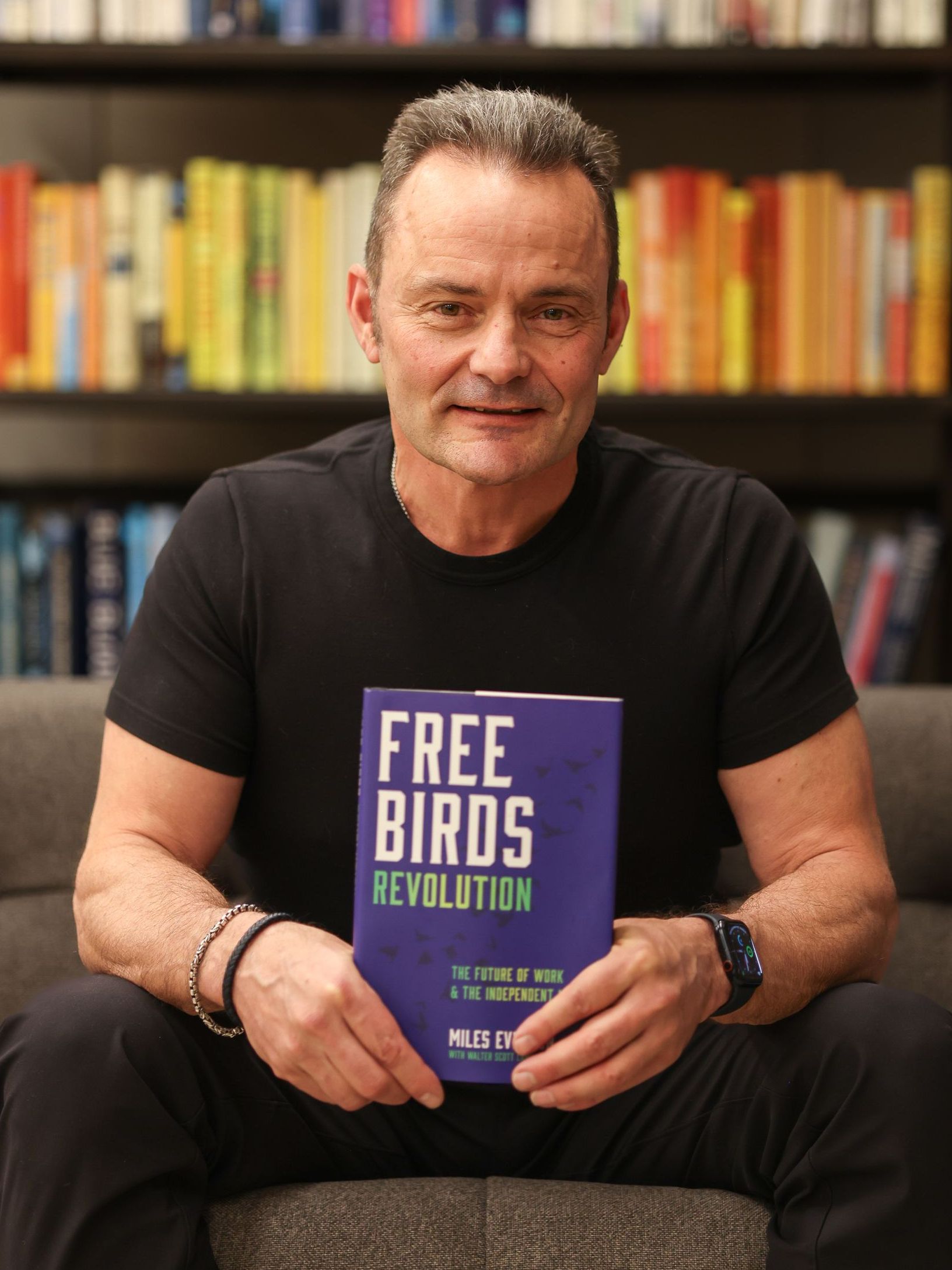
Miles Everson
CEO of MBO Partners and former Global Advisory and Consulting CEO at PwC, Everson has worked with many of the world's largest and most prominent organizations, specializing in executive management. He helps companies balance growth, reduce risk, maximize return, and excel in strategic business priorities.
He is a sought-after public speaker and contributor and has been a case study for success from Harvard Business School.
Everson is a Certified Public Accountant, a member of the American Institute of Certified Public Accountants and Minnesota Society of Certified Public Accountants. He graduated from St. Cloud State University with a B.S. in Accounting.