Learn more about the 1970s crime that led to the creation of an investment trend today!
| From the desk of Miles Everson: Happy midweek! I hope you’re all having a great day. Every Wednesday, I feature investing-related insights by my friend and colleague, Professor Joel Litman. My hope in these articles is to help you achieve financial stability in the long run. Today, let’s talk about one of the “strangest” mysteries in modern aviation history. Keep reading to know how structural shifts often lead to various investment opportunities. |
Recent years have been marked by breathtaking innovation. Artificial intelligence is accelerating faster than most analysts predicted. Digital identity systems are quietly reshaping how people moved through the world. Across the global economy, the systems designed to manage risk were becoming more sophisticated by the day. However, sometimes, understanding the future requires revisiting a moment when the world was far less secure, far less digitized, and far more vulnerable. Yes, you read that right. That was the premise behind a story referenced by Professor Joel Litman, Chairman and CEO of Valens Research and Chief Investment Officer of Altimetry Financial Research , when discussing how structural shifts in industries create powerful investment opportunities. The lesson came from one of the strangest mysteries in modern aviation history…
A Mystery That Defined an Era On the day before Thanksgiving in 1971, an ordinary-looking man purchased a USD 20 one-way ticket from Portland to Seattle. He signed the name, “Dan Cooper.” Nothing about him stood out. He wore a black suit and carried a briefcase. He ordered a bourbon and soda once he boarded the aircraft. To anyone observing him, he looked like just another traveler heading home for the holidays. Shortly after takeoff, the flight took a dramatic turn. Cooper passed a note to a flight attendant requesting that she sit beside him. The note contained a chilling message: He claimed to have a bomb. Oh no… His briefcase appeared to confirm it—filled with wires, batteries, and what looked like sticks of dynamite. His demands were precise. He wanted USD 200,000 in cash and four parachutes delivered when the plane landed in Seattle. The pilots complied. Once the aircraft landed, the passengers were released. The ransom money and parachutes were delivered. Then Cooper issued his final instruction: Refuel the plane and fly south toward Mexico at just 10,000 feet. About 30 minutes after takeoff, somewhere over the Pacific Northwest, Cooper opened the aircraft’s rear stairway. That distinction would soon matter—A LOT. Then he jumped… into the darkness… with the money… and he was never seen again. The man would become known as D.B. Cooper—the central figure in the only unsolved airplane hijacking in U.S. history. Decades later, the mystery remains unsolved. The Federal Bureau of Investigation (FBI) investigated the case for more than four decades before formally closing it in 2016. Only one clue ever surfaced: Several thousand dollars of the ransom money discovered years later along a riverbank north of Portland. No parachute, body, or a trace of Cooper himself. Why the World Changed After Cooper For investment professionals, Professor Litman emphasized that historic events can reshape entire industries. The Cooper hijacking was one of those moments. In the early 1970s, airport security was minimal. Passengers could board aircraft without screening procedures that modern travelers take for granted today. Incidents like Cooper’s forced regulators and airlines to rethink the entire system. Metal detectors began appearing in airports. Luggage screening became standard. Identity verification procedures grew stricter. … and after the terrorist attacks on September 11, 2001, aviation security transformed even more dramatically. New agencies, technologies, and processes emerged to protect passengers and prevent hijackings. As Professor Litman explained, these shifts demonstrate a critical reality of markets: When risk changes, entire industries evolve around managing it . The result is often the creation of entirely new categories of companies. One modern example of this structural shift is the growing industry around digital identity verification. Companies in this space aim to solve a simple but increasingly important problem: Confirming that a person is who they claim to be—quickly, securely, and at scale. Among the firms benefiting from this trend is Clear Secure , a company best known for its biometric identity verification systems. Travelers passing through major airports across the U.S. may already be familiar with its service. Members verify their identity using biometrics such as fingerprints or iris scans, allowing them to move through dedicated security lanes far more quickly than standard checkpoints. The concept is similar in spirit to programs like Transportation Security Administration ’s TSA PreCheck. However, Clear’s ambitions extend far beyond airports. The company has begun deploying identity verification lanes in sports arenas, entertainment venues, and other high-traffic locations where security and speed are equally important. For investors, this reflects a broader trend Professor Litman highlighted: Technologies initially developed for one industry frequently expand into multiple markets . A Lesson in Structural Investing In financial markets, structural changes driven by regulation, technology, or societal shifts often create long-term winners. Airport security is a prime example. Before the 1970s, the concept barely existed. Today, it represents a global ecosystem of government agencies, hardware providers, software developers, biometric technology firms, and identity platforms. Companies operating in these spaces are benefiting from powerful tailwinds. In the case of Clear Secure, strong adoption and expanding use cases have translated into notable stock performance in recent years. The company’s growth reflects increasing demand for frictionless but secure identity verification. … and the opportunity may be larger than many investors realize. Identity verification is rapidly becoming essential not only for travel, but also for banking, healthcare, online commerce, and digital platforms. In other words, what began as a solution to aviation security risks is evolving into a foundational layer of the modern economy. That’s why for Professor Litman, stories like the Cooper hijacking illustrate an important principle that serious investors should remember: Markets are not shaped solely by quarterly earnings or short-term headlines; they are shaped by structural shifts. Major events change behavior. Changing behavior creates new industries. New industries create opportunities for companies that develop the technologies needed to support them. In the decades since Cooper vanished into the night, aviation security has evolved beyond anything imaginable in 1971. Biometrics, digital identity systems, and advanced data analytics now sit at the center of the global security infrastructure. … and while the mystery of D.B. Cooper may never be solved, one conclusion has become clear: The world that allowed his escape no longer exists . For investors paying attention to long-term industry transformations, that reality carries a powerful implication: The companies building tomorrow’s security infrastructure could become some of the most important—and profitable—players in the modern economy. Hope you’ve found this week’s insights interesting and helpful. Stay tuned for next Wednesday’s The Independent Investor! Investors punished Tesla for spending too little on AI capex. Learn more about who/what’s being left behind in the AI spending race in next week’s article! |


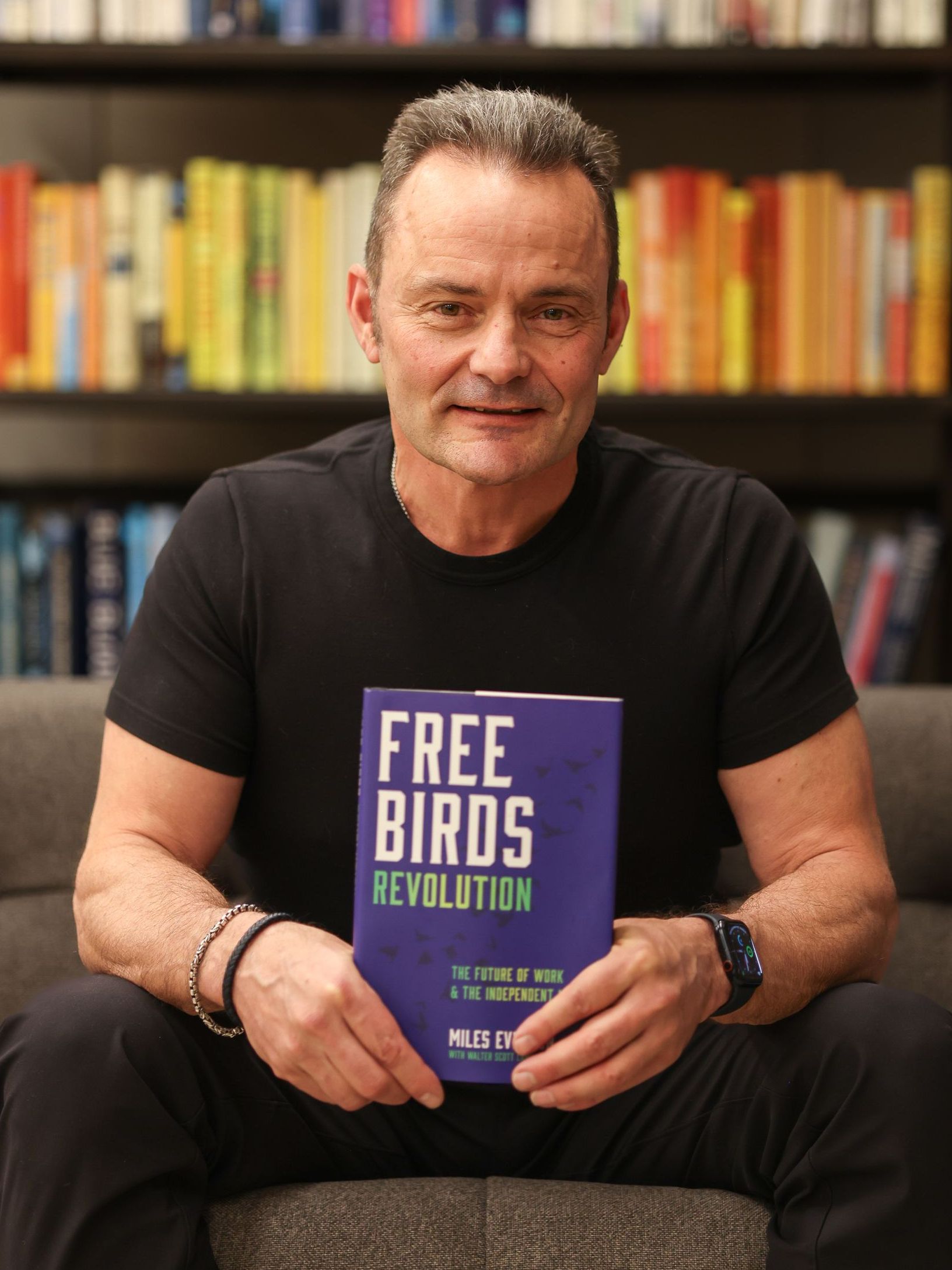
Miles Everson
CEO of MBO Partners and former Global Advisory and Consulting CEO at PwC, Everson has worked with many of the world's largest and most prominent organizations, specializing in executive management. He helps companies balance growth, reduce risk, maximize return, and excel in strategic business priorities.
He is a sought-after public speaker and contributor and has been a case study for success from Harvard Business School.
Everson is a Certified Public Accountant, a member of the American Institute of Certified Public Accountants and Minnesota Society of Certified Public Accountants. He graduated from St. Cloud State University with a B.S. in Accounting.