Performance OR principles? Here's the cost of ignoring the ONE RULE that matters most!
| From the desk of Miles Everson: Welcome to today’s edition of “Return Driven Strategy (RDS)!” For those of you who aren’t familiar with this yet, let me give you a quick background: RDS is a pyramid-shaped framework with 11 tenets and 3 foundations. When applied properly, these concepts help businesses achieve their organizational objectives. Today, let’s talk about this framework through a particular business case study. Ready? Keep reading to know more. |
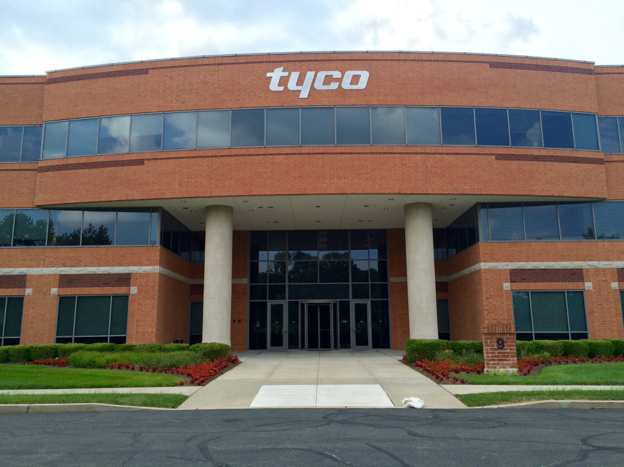
Imagine a company where at one point, it looked like the ultimate corporate success story… The numbers were up and to the right. Expansion was relentless. Wall Street was impressed. From the outside, everything signaled momentum, dominance, and brilliance. Customers were buying. Employees were building. Analysts were applauding. … and yet, almost overnight, it all unraveled . —not because the products suddenly failed, the customers vanished, or the employees stopped doing good work. The company collapsed because the very foundation of value creation was compromised . This is the story of Tyco International , and why its dramatic fall has become one of the most powerful real-world illustrations of Tenet 1 of the Return Driven Strategy (RDS) framework: Ethically Maximize Wealth .
Tyco International was once one of the largest and most diversified industrial conglomerates in the world. At its peak in the late 1990s and early 2000s, Tyco operated in over 100 countries and employed tens of thousands of people globally. Its portfolio spanned multiple industries, including:
Rather than being known for a single iconic consumer brand, Tyco built its reputation as a behind-the-scenes powerhouse, providing essential systems that kept buildings safe, businesses running, and infrastructure secure. From a strategic standpoint, Tyco appeared to be doing everything right. Tyco’s rise was not slow or incremental; it was fast, aggressive, and acquisition-driven. Throughout the 1990s, the company pursued a roll-up strategy, acquiring hundreds of other companies across its core sectors. The idea was simple but powerful:
… and for a while, it worked—spectacularly. Between 1997 and 2000, Tyco showed impressive improvements in earning power. Revenue climbed. Earnings expanded. The company’s market valuation soared On paper, Tyco looked like a masterclass in execution and corporate strategy. … but as Professor Joel Litman and Dr. Mark L. Frigo emphasize in their book, “Driven,” financial performance alone is NOT proof of sustainable value creation. That distinction would soon matter—A LOT. Tyco’s Business Strategy: Impressive, but Fragile Tyco’s strategy had several undeniable strengths:
From an RDS lens, many of Tyco’s operating businesses were delivering real customer value. Employees were productive. Customers remained loyal. The offerings themselves were not the problem. The problem lived elsewhere—at the very top. In 2002, Tyco’s success story took a sharp and public turn. Senior executives—most notably CEO Dennis Kozlowski and CFO Mark Swartz—were exposed for gross unethical and illegal conduct. The revelations shocked investors and the public alike. Among the violations were unauthorized executive loans and bonuses, misuse of corporate funds for personal luxury expenses, failure to properly disclose compensation and financial transactions, and financial manipulation that misled shareholders. This wasn’t a gray area nor a strategic miscalculation; it was a clear ethical breakdown. … and in the language of RDS, it was a direct and catastrophic violation of Tenet 1: Ethically Maximize Wealth . As Professor Litman and Dr. Frigo note in “Driven,” the consequences for Tyco were swift and devastating:
What’s most telling is why this happened.
However, trust evaporated … and once trust disappears, capital flees, valuations collapse, and strategic momentum dies. Clearly, Tenet 1 isn’t just philosophical; it’s also financial . The Deeper Lesson: Ethics Are Not a “Soft” Constraint One of the most important insights from the Tyco case is that ethical behavior is NOT a moral add-on to strategy; it is a strategic requirement. When viewed through RDS, Tyco becomes a powerful teaching example:
Tenet 1 is foundational because once it collapses, everything built on top of it becomes unstable, no matter how impressive it once looked. Tyco’s story is about a timeless truth in business strategy: You cannot sustainably create wealth unless you do so ethically. RDS doesn’t ask leaders to choose between performance and principles. It shows that the two are inseparable . Tyco’s rise proves how powerful strategy and execution can be. Meanwhile, its fall proves how fragile value becomes when ethics are ignored. That’s why, decades later, Tyco remains one of the clearest real-world warnings of what happens when Tenet 1 is treated as optional instead of essential. After all, the primary purpose of a business is to ethically create and maximize long-term wealth. Not short-term stock spikes. Not executive enrichment. Not financial engineering divorced from integrity. — If you’re looking to gain a better understanding of Return Driven Strategy and Career Driven Strategy, we highly recommend checking out “Driven” by Professor Litman and Dr. Frigo. Click here to get your copy and learn how this framework can help you in your business strategies and ultimately, in ethically maximizing wealth for your firm. Hope you found this week’s insights interesting and helpful. Stay tuned for next Tuesday’s Return Driven Strategy! Costco now sells vacations, gas, and soon enough… medicare plans. Learn more about why this company is positioning itself as a one-stop shop in next week’s article! |

Miles Everson
CEO of MBO Partners and former Global Advisory and Consulting CEO at PwC, Everson has worked with many of the world's largest and most prominent organizations, specializing in executive management. He helps companies balance growth, reduce risk, maximize return, and excel in strategic business priorities.
He is a sought-after public speaker and contributor and has been a case study for success from Harvard Business School.
Everson is a Certified Public Accountant, a member of the American Institute of Certified Public Accountants and Minnesota Society of Certified Public Accountants. He graduated from St. Cloud State University with a B.S. in Accounting.