The Great Deal Revival: Here's how U.S. dealmaking found its groove again!
| From the desk of Miles Everson: Happy midweek! I hope you’re all pumped up today. Each Wednesday, I publish basic investing-related insights with hopes to help you boost your financial portfolios in the long run. Today, let’s talk about a topic my friend and colleague, Professor Joel Litman, presented to his workforce at Valens Research. Ready? Read on to know more. |
The Great Deal Revival: Here's how U.S. dealmaking found its groove again! There are moments in markets when the turning point is invisible in real time… Activity slows, confidence wavers, and participants debate whether they are witnessing a temporary pause or the beginning of something structural. Only in hindsight does the inflection point become obvious—the quiet stretch that separated one era from the next. In August 2025, Professor Joel Litman, Chairman and CEO of Valens Research and Chief Investment Officer of Altimetry Financial Research, said the U.S. was standing at exactly such a pivot. He suggested that what many observers interpreted as a prolonged mergers-and-acquisitions drought was instead the calm before a renewed wave of strategic dealmaking. Nearly a year later, his analysis offers a useful framework for understanding how regulatory signals, executive confidence, and capital deployment interact to reshape investment landscapes. The Anatomy of the 2025 Deal Slowdown
When Professor Litman delivered his assessment in mid-2025, U.S. M&A activity had just emerged from one of its sharpest contractions in a decade. Deal momentum stalled in late 2024 and deteriorated through the first quarter of 2025, with total volume falling more than 40% year over year by April 2025. Professor Litman attributed much of that freeze to policy uncertainty. Early 2025 was marked by aggressive tariff discussions and shifting economic signals that complicated corporate planning. Even proposals that were not fully implemented created hesitation in executive suites. In capital-intensive decisions such as M&As, uncertainty itself can function as a deterrent. For investors watching from the sidelines, the slowdown raised uncomfortable questions: Was the decline cyclical? Was it reflecting temporary friction? Was it signaling a deeper retreat in corporate risk appetite? Professor Litman’s central argument was that the environment was already beginning to change. He highlighted a trio of policy developments that pointed towards a more facilitative regulatory climate. The signing of Executive Order 14192 emphasized deregulation and streamlined approval processes in sectors such as health care, energy, and industrials. Simultaneously, reforms to the Federal Acquisition Regulation framework reduced complexity in how government agencies engaged with private enterprises. These steps signaled an administrative preference for accelerating, rather than constraining, commercial activity. Equally important was the evolving role of tariffs . Professor Litman observed that tariffs were increasingly functioning as negotiation instruments rather than fixed structural barriers. As worst-case trade scenarios softened, corporate leaders regained clarity about cost structures and cross-border strategies. From his perspective, these signals collectively restored a critical ingredient for dealmaking: executive confidence. The months following Professor Litman’s August 2025 commentary validated his thesis about a near-term resurgence. Deal activity accelerated as corporations deployed substantial cash reserves into strategic acquisitions. High-profile transactions, including multibillion-dollar mergers in telecommunications and enterprise software, reflected a renewed appetite for scale and competitive repositioning. Banking consolidation, particularly among regional and midtier institutions, also reentered the spotlight as regulatory bottlenecks eased. Professor Litman interpreted this rebound not as a speculative burst, but as evidence that executives were once again willing to invest in long-term growth. In his framework, sustained M&A activity serves as a proxy for corporate optimism about future returns. Implications for Investment Professionals Viewed from mid-2026, Professor Litman’s August 2025 discussion reads as a case study in recognizing market inflection points. He framed the deal drought not as an endpoint, but as a transitional phase shaped by policy uncertainty and awaiting catalytic change. For investment professionals, the episode reinforces a broader lesson: Macro signals, regulatory direction, and executive behavior are deeply interconnected. Periods of hesitation can quickly give way to expansion when structural constraints ease and confidence returns. While no forecast is immune to evolving economic forces, Professor Litman’s emphasis on tracking the interaction between policy and corporate strategy remains instructive. Besides, markets rarely move in straight lines. They pivot when participants collectively reassess risk and opportunity. The resurgence of U.S. dealmaking that followed the 2025 slowdown illustrates how rapidly those reassessments can occur. It is also valuable for investors to recognize the turning point while it is still unfolding. Hope you’ve found this week’s insights interesting and helpful. Stay tuned for next Wednesday’s The Independent Investor! The AI boom harkens back to a lesson learned during World War II. Learn more about a World War II lesson about power independence in next week’s article! |


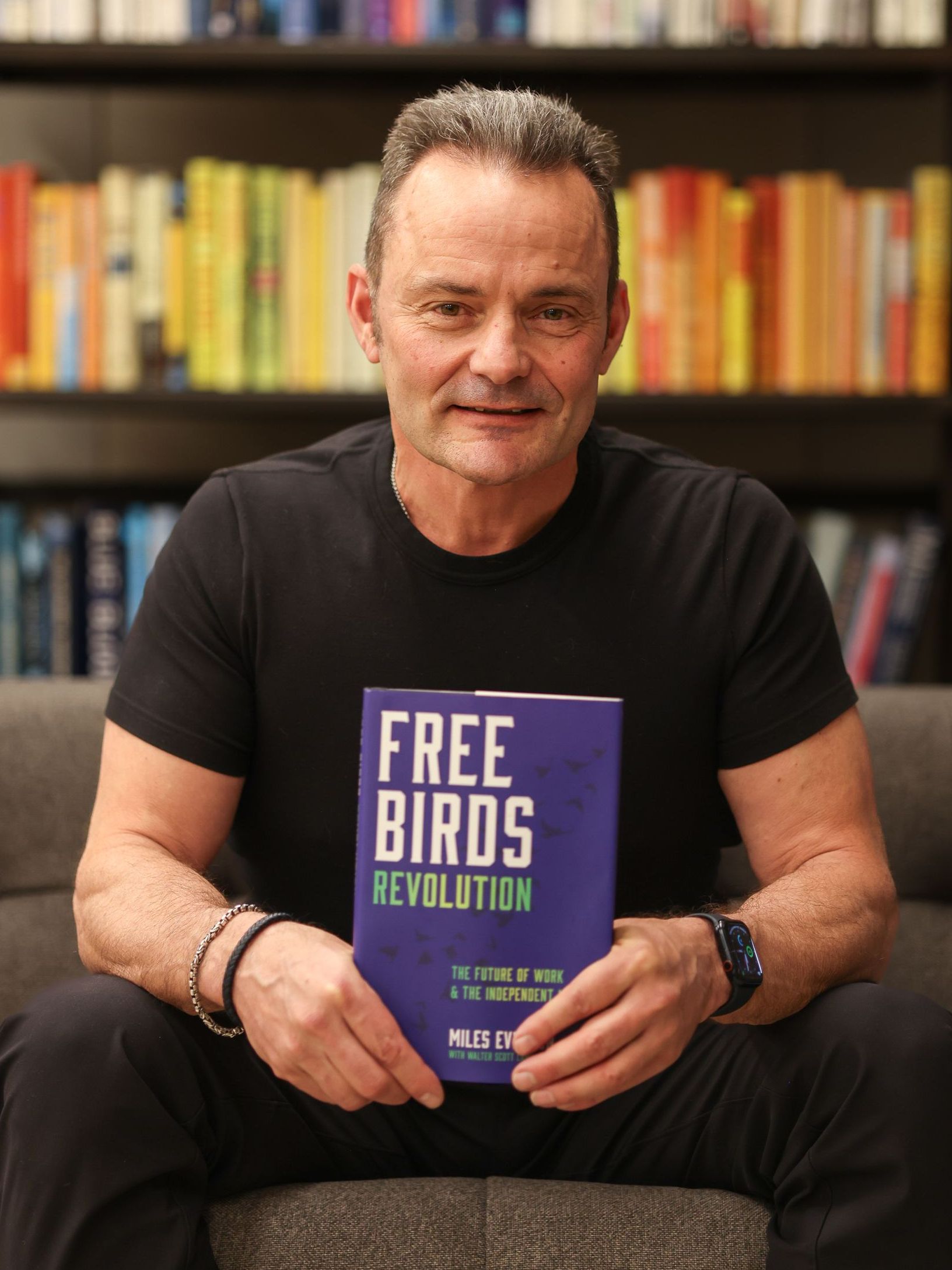
Miles Everson
CEO of MBO Partners and former Global Advisory and Consulting CEO at PwC, Everson has worked with many of the world's largest and most prominent organizations, specializing in executive management. He helps companies balance growth, reduce risk, maximize return, and excel in strategic business priorities.
He is a sought-after public speaker and contributor and has been a case study for success from Harvard Business School.
Everson is a Certified Public Accountant, a member of the American Institute of Certified Public Accountants and Minnesota Society of Certified Public Accountants. He graduated from St. Cloud State University with a B.S. in Accounting.