Learn about this streaming giant’s BLUEPRINT for how to navigate today’s AI-driven talent landscape!
| From the desk of Miles Everson: Hi! I’m excited to talk about another insight in the world of business for today’s issue of “Return Driven Strategy (RDS).” For those of you who are not yet familiar with it, RDS is a pyramid-shaped framework with 11 tenets and 3 foundations. When applied properly, these principles help businesses deliver high levels of performance. Today, we’re going to talk about AI automation and why it has only intensified competition for experienced and savvy talent. Curious? Continue reading below. |
Artificial intelligence (AI) adoption is gaining rapid momentum as companies continue to ramp up their use of various AI models. As revealed in McKinsey ’s “The State of AI in 2025” survey, 89% of organizations are using AI in one or more business functions. With AI adoption gaining steam, organizations operating in multiple industries have cut their workforce with AI being cited as one of the reasons. Data from Challenger , Gray & Christmas shows employers have collectively cut nearly 88,000 employees due to AI as of May 2026. This is well-above the 55,000 observed in 2025 and a massive jump from the 4,000 cuts seen in 2023—the year Challenger, Gray & Christmas started tracking this trend. Among the worst-hit industries is tech, with 38,000 layoffs.
These figures are eye-popping and for some, even anxiety-inducing. However, this doesn’t mean the jobs market is headed towards a meltdown. Rather, it’s a sign that Corporate America is grappling with the disruptions brought about by AI while actively trying to leverage everything it has to offer. Right now, this comes in the form of AI-driven restructuring and headcount reduction. … but even though companies are unlocking higher levels of productivity by automating roles away, this doesn’t mean the war for talent is over. As junior- and mid-level roles whittle away, firms across Corporate America will have to fight over the talent who can do things that AI cannot do. That’s a good thing for workers, but not necessarily for employers, as they’ll be forced to compete amongst each other to secure the best talent, forcing them to spend more money and time when AI costs are rising as well. So, what’s the best way to navigate this? Well, it seems streaming giant Spotify has found an answer to that question. Encouraging Growth
Spotify made headlines in 2023 after cutting 17% of its workforce. Since then, cuts for the streaming giant have been sporadic. Also, as of Q1 2026, Spotify has seen strong performance, with a 12% year-over-year jump to its monthly active users that have reached 761 million. Revenue grew by nearly 8% year-over-year as well, jumping to EUR 4.53 billion. In all, Spotify is having a great year so far, and it has even done so without cutting talent. Its employee attrition rate sits at between 4% to 6%, comparatively lower to the global average of 20%. So, what is the company doing to keep attrition rates down and keep employees engaged at the same time? Internal Mobility According to Spotify’s Chief Human Resources Officer (CHRO) Anna Lundström, the key has been internal mobility. Although she emphasized that her firm still hires external talent, it has made efforts to prioritize mobility within the company. In 2025, the company filled 40% of open roles in the organization with internal employees. It did it through an AI-powered internal talent marketplace called Echo . Through Echo, Spotify employees create profiles containing their experience and skills so they can be matched with open roles within the company. To further encourage the use of this platform, hiring managers were instructed to advertise open roles internally for weeks before hiring externally. Echo was built to address the problems of hiring externally and employee disengagement. Lundström said “when employees leave the company, one of the main reasons they give is, ‘I wasn’t able to grow and develop.’” Spotify’s approach to today’s AI-driven jobs landscape has worked for it thus far. What the streaming giant is doing is also best explained through the lens of RDS’ 9th tenet— Engage Employees and Others . According to Professor Joel Litman and Dr. Mark L. Frigo in the book, “Driven” : “High-performance firms treat their employees like customers, understanding exactly what services they would like to receive from employees, and designing incentive systems that fulfill employees’ needs in order to get those services.” Navigating the AI-Driven Talent Landscape For C-suite executives hiring managers and leaders, the lesson presented by Spotify’s case is clear: The impact of AI adoption isn’t just about headcount reduction and unlocking cost-savings through that measure. The organizations that will dominate today’s AI-driven jobs environment are those that recognize the importance of talent reallocation and rethinking how roles work within an organization. Talent isn’t as replaceable one might think. The war for human labor will still continue, that’s why companies must cultivate a more holistic talent strategy to thrive. — Are you ready to transform your business and/or career? Click here to get your copy of “Driven” by Professor Litman and Dr. Frigo and learn how RDS can help you innovate your strategies and ultimately, ethically maximize wealth for yourself or your firm. Hope you found this week’s insights interesting and helpful. Stay tuned for next Tuesday’s Return Driven Strategy! Usually in business, buying something almost always feels… transactional. You pay, you receive, end of story. Learn more about TOMS Shoes in next week’s article! |



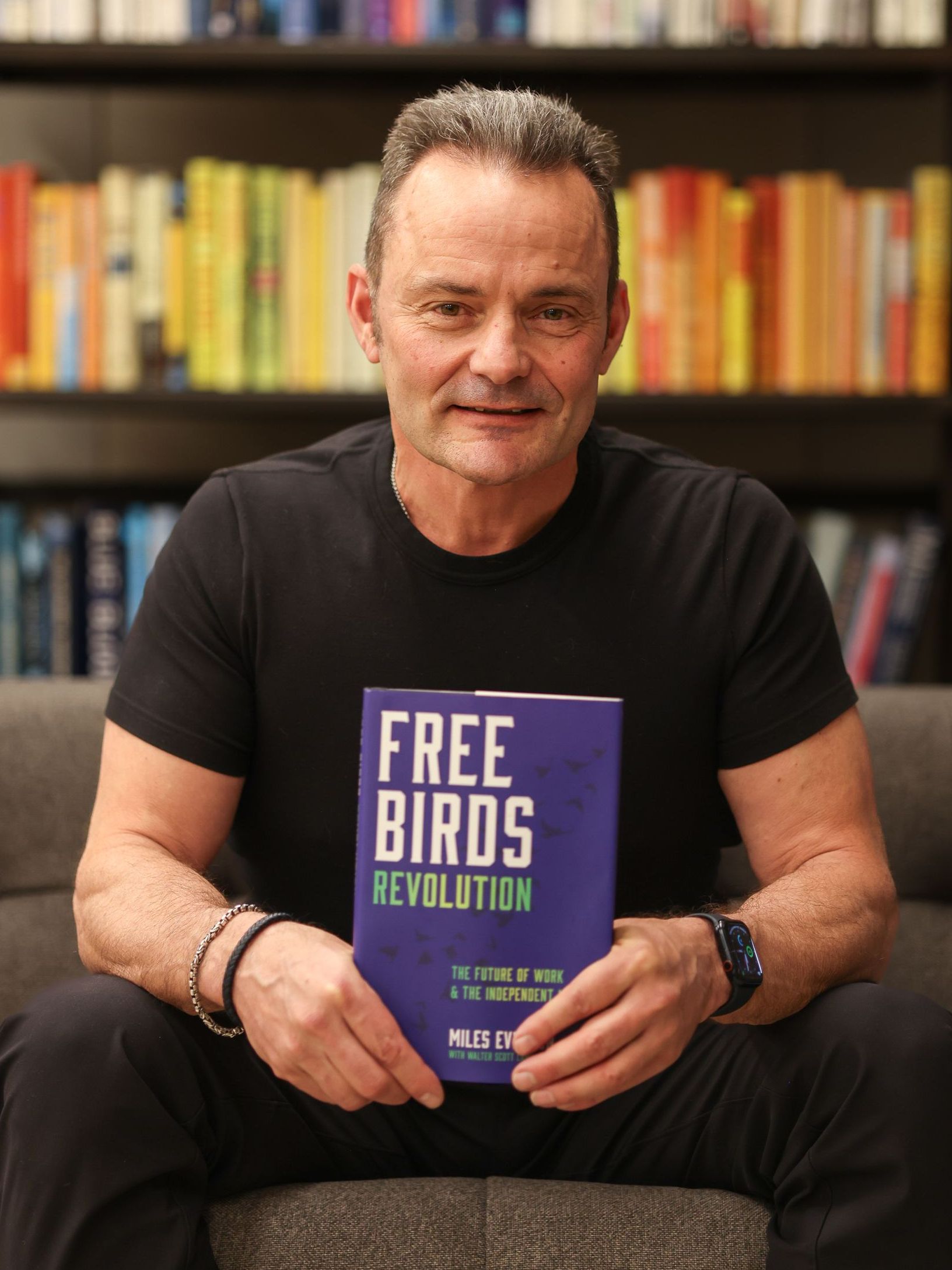
Miles Everson
CEO of MBO Partners and former Global Advisory and Consulting CEO at PwC, Everson has worked with many of the world's largest and most prominent organizations, specializing in executive management. He helps companies balance growth, reduce risk, maximize return, and excel in strategic business priorities.
He is a sought-after public speaker and contributor and has been a case study for success from Harvard Business School.
Everson is a Certified Public Accountant, a member of the American Institute of Certified Public Accountants and Minnesota Society of Certified Public Accountants. He graduated from St. Cloud State University with a B.S. in Accounting.