This firm transformed itself from a power management firm into a key player for the AI boom.
Today, we’re going to talk about a power generation firm that has become a key player in the artificial intelligence (AI) boom. Curious? Keep reading below. |
|
Nathan Ough co-founded VoltaGrid with a simple goal: Provide Texas-based energy companies with reliable access to power. That’s why VoltaGrid would drive trucks to a job site with generators and supporting equipment then deliver power where and when it was needed. It was a solid business for years, and the company could comfortably call the Texas energy industry its customer base.
Then, a much bigger client came calling: The Stargate Project. Stargate is a USD 500 billion data-center infrastructure project. It's supposed to cement the U.S. as the dominant force in AI development, and it's a joint venture between some of the biggest tech, AI, and investment companies. The project was met with much fanfare. On the first full day of his second term, President Donald Trump brought OpenAI CEO Sam Altman, Oracle Chair Larry Ellison, and Softbank CEO Masayoshi Son onstage to inaugurate Stargate and highlight its urgency. Stargate’s early sites are located in Texas. Several are already in development or up and running. It's expected to use 10 gigawatts (GW) of capacity once all is said and done. At the time of its grand announcement, Stargate was larger than all existing shared U.S. data centers combined.
That's the kind of firepower the U.S. needs to remain as the leader of the AI boom. However, when the agencies responsible for approving new energy projects saw what was being promised, they had one message for Stargate: Get in line. AI’s “Red Tape” Problem This buildout is running into the exact same issues as every other energy project. Utilities, permitting, equipment lead times, and local approvals all take time. In many regions, the grid is strained even before new data center loads arrive. A project can have land, capital, customers, and still sit idle, waiting for a connection to the power grid. The process has slowed to a crawl. Back in 2008, it took less than two years to connect to power after filing a request. It was up to three years by 2015. By 2023, it was five years. If that pace holds, some of today's projects won't be “lights on” until 2030 or later. However, VoltaGrid has a solution. In Texas, VoltaGrid's trucks and equipment were supporting the fracking industry. (Fracking involves injecting a mixture of fluids and sediment into shale to extract natural gas.) Those at Stargate asked VoltaGrid to provide something called “behind the meter” power. In other words, VoltaGrid will generate electricity on-site and feed it straight into the facility. Behind-the-meter power is a way to circumvent the long wait times that come with grid connection. In practice, it often looks like a “microgrid” built next to a data center. Microgrids can bring a data-center campus online years earlier than a traditional interconnection so AI development can start earlier instead of later. This solution is spreading fast. Just last year, the company hosted executives from oil majors like ExxonMobil and ConocoPhillips, senior officials from Oracle, and engineers from data center construction companies. Now, VoltaGrid is under contract to power one of Oracle's data centers for USD 1 billion per year. There are at least 46 behind-the-meter data centers in the U.S. About 90% of these projects were launched in 2025 alone. These projects have a combined 56 GW of planned capacity. That's roughly 30% of the total planned capacity for these sites. As more of these data centers pop up, companies like VoltaGrid are going to be positioned to scoop up demand and rake in revenue. AI is in the thick of an energy bottleneck… and that bottleneck is moving more power behind the grid and next to the data centers. VoltaGrid Seen Through the Lens of RDS This story can be seen through two of RDS’ tenets— fulfill otherwise unmet customer needs and innovate offerings. According to Professor Joel Litman and Dr. Mark L. Frigo in the book, “Driven,” high-performance businesses deliver offerings that fulfill unmet customer needs. VoltaGrid is a great example of this. It brought on-site energy generation to companies that couldn’t rely solely on the power grid. When opportunity came calling in the form of the AI boom, the company innovated its offerings further by catering to AI data center operators. This move immediately solved one of AI’s biggest bottlenecks: Energy. This subsequently positioned the company as a provider of an offering customers cannot easily get from competitors. VoltaGrid’s story shows the importance of fulfilling unmet customer needs with unique, difficult-to-replicate offerings, and how crucial it is for companies to continuously innovate to keep fulfilling unmet needs as they crop up. — If you’re looking to gain a better understanding of Return Driven Strategy and Career Driven Strategy, we highly recommend checking out “Driven” by Professor Litman and Dr. Frigo. Click here to get your copy and learn how this framework can help you in your business strategies and ultimately, in ethically maximizing wealth for your firm. Hope you found this week’s insights interesting and helpful. Stay tuned for next Tuesday’s Return Driven Strategy! Let’s be honest: Most of us have at least one tab open right now that we swear we’ll get back to… Learn more about Notion through the lens of RDS in next week’s article! |


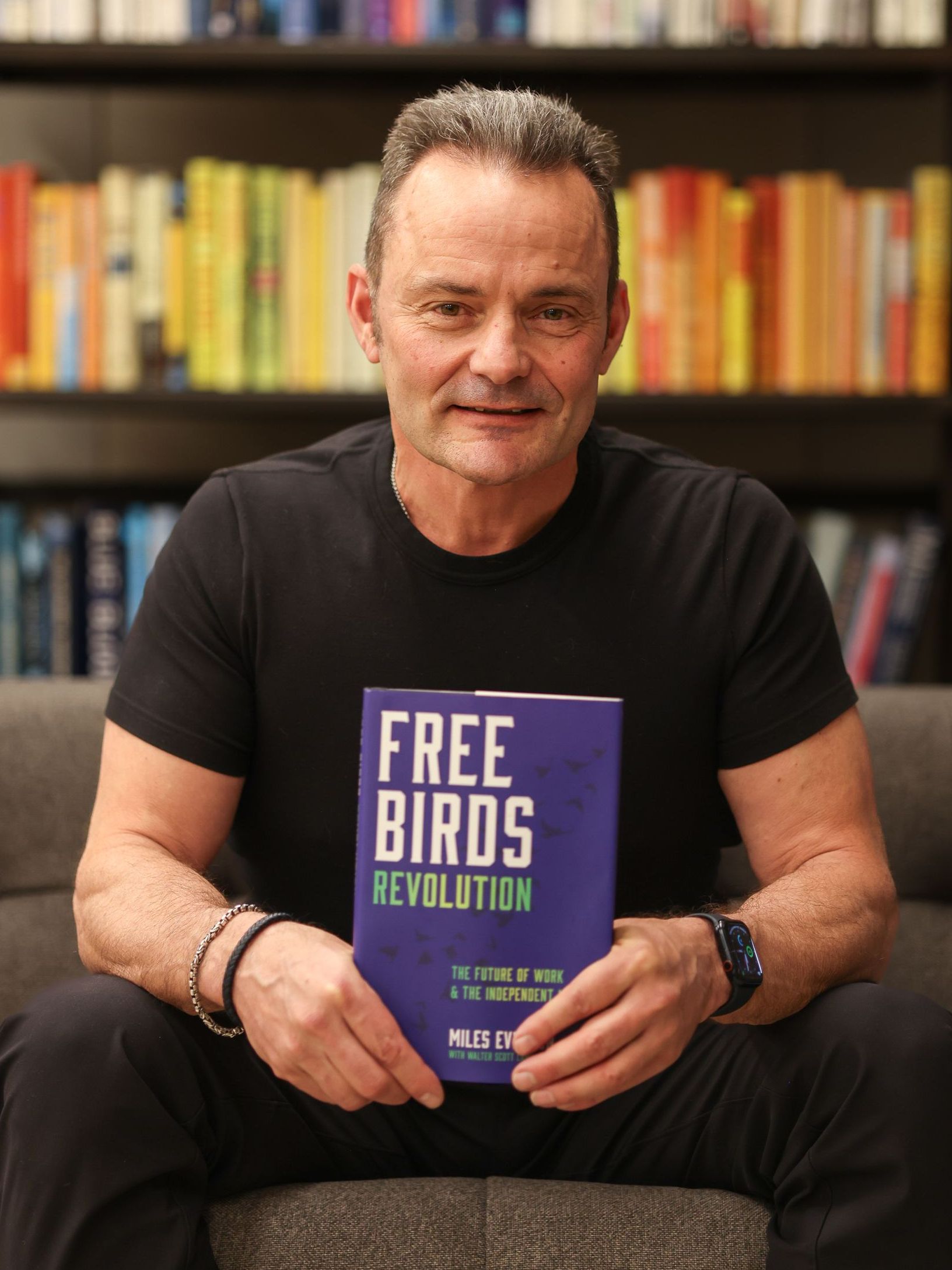
Miles Everson
CEO of MBO Partners and former Global Advisory and Consulting CEO at PwC, Everson has worked with many of the world's largest and most prominent organizations, specializing in executive management. He helps companies balance growth, reduce risk, maximize return, and excel in strategic business priorities.
He is a sought-after public speaker and contributor and has been a case study for success from Harvard Business School.
Everson is a Certified Public Accountant, a member of the American Institute of Certified Public Accountants and Minnesota Society of Certified Public Accountants. He graduated from St. Cloud State University with a B.S. in Accounting.