The Blueprint of Giving: Here's the KHAN-nection between purpose and career strategy!
| From the desk of Miles Everson: Hi! Welcome to today’s “Return Driven Strategy (RDS)!” For those of you who are new to this term, RDS is a pyramid-shaped framework with 11 tenets and 3 foundations. When applied properly, these concepts help businesses and individuals achieve their professional and organizational goals. Today, let’s highlight this individual’s professional endeavors. Keep reading below to see how his ventures align with the principles of Career Driven Strategy (CDS), the counterpart of RDS when applied to people and their careers. |
The Blueprint of Giving: Here's the KHAN-nection between purpose and career strategy! Imagine you’re trying to help someone with math homework over the Internet… You record a few short lessons to make things easier. They’re simple—nothing fancy, just you, a digital blackboard, and your voice walking that person through algebra. Now, imagine those videos start changing millions of lives. Imagine world leaders, parents, and teachers calling your name not as a tutor, but as a global reformer of education. That’s the improbable story of Sal Khan, the man who didn’t just teach math; he also taught the world what happens when passion, purpose, and strategy collide.
Salman “Sal” Khan was born in Metairie, Louisiana in 1976, the son of immigrants from India and Bangladesh. His family wasn’t wealthy, but it was rich in one shared belief: Education could change everything . Khan’s curiosity became his compass. He excelled in school and earned three degrees from MIT —in mathematics, electrical engineering, and computer science—before heading to Harvard Business School for his MBA. … but while his résumé could fill pages, it was what happened outside the classroom that would make history. In 2004, while working as a hedge fund analyst, Khan began tutoring his cousin Nadia in math. To help her review lessons, he uploaded videos to YouTube —short, clear, and approachable. Soon, strangers started watching… then thousands… then millions. People from every corner of the world were learning algebra, biology, and history not from a corporate-backed institution but from a man teaching out of a closet in his home. By 2008, Khan made a bold move. He quit his finance job to launch Khan Academy, a nonprofit with an audacious mission: “To provide a free, world-class education for anyone, anywhere.” It was a leap of faith. He had no business plan, no investors, and no guarantee that it would work. However, he had something more powerful: Conviction. Living the Career Driven Strategy (CDS) Framework If you look closely, Khan’s journey mirrors the essence of Professor Joel Litman and Dr. Mark L. Frigo ’s CDS, a framework built on applying strategic, value-driven thinking to one’s career—much like how successful companies plan their growth. Let’s break it down:
Clearly, Khan’s story isn’t just about education but about career reinvention. It’s proof that a career driven by purpose, value creation, and ethical intent can outperform one driven by titles or salary. From the lens of Professor Litman and Dr. Frigo’s Career Driven Strategy, here’s what we can learn from him:
That’s what CDS is really about. It’s not just a roadmap for corporate leaders or ambitious professionals; it’s a guide for anyone who wants their work to matter. … because, as Khan shows us, when your career is driven by purpose and strategy, success becomes inevitable—not as an end goal, but as a byproduct of doing what truly matters. — If you’re looking to gain a better understanding of Return Driven Strategy and Career Driven Strategy, we highly recommend checking out “Driven” by Professor Litman and Dr. Frigo. Click here to get your copy and learn how this framework can help you in your business strategies and ultimately, in ethically maximizing wealth for your firm. Hope you found this week’s insights interesting and helpful. Stay tuned for next Tuesday’s Return Driven Strategy! The creator economy has spawned a digital-native career path that has started ballooned in popularity in recent years. Learn more about the influencer/creator economy in next week’s article! |


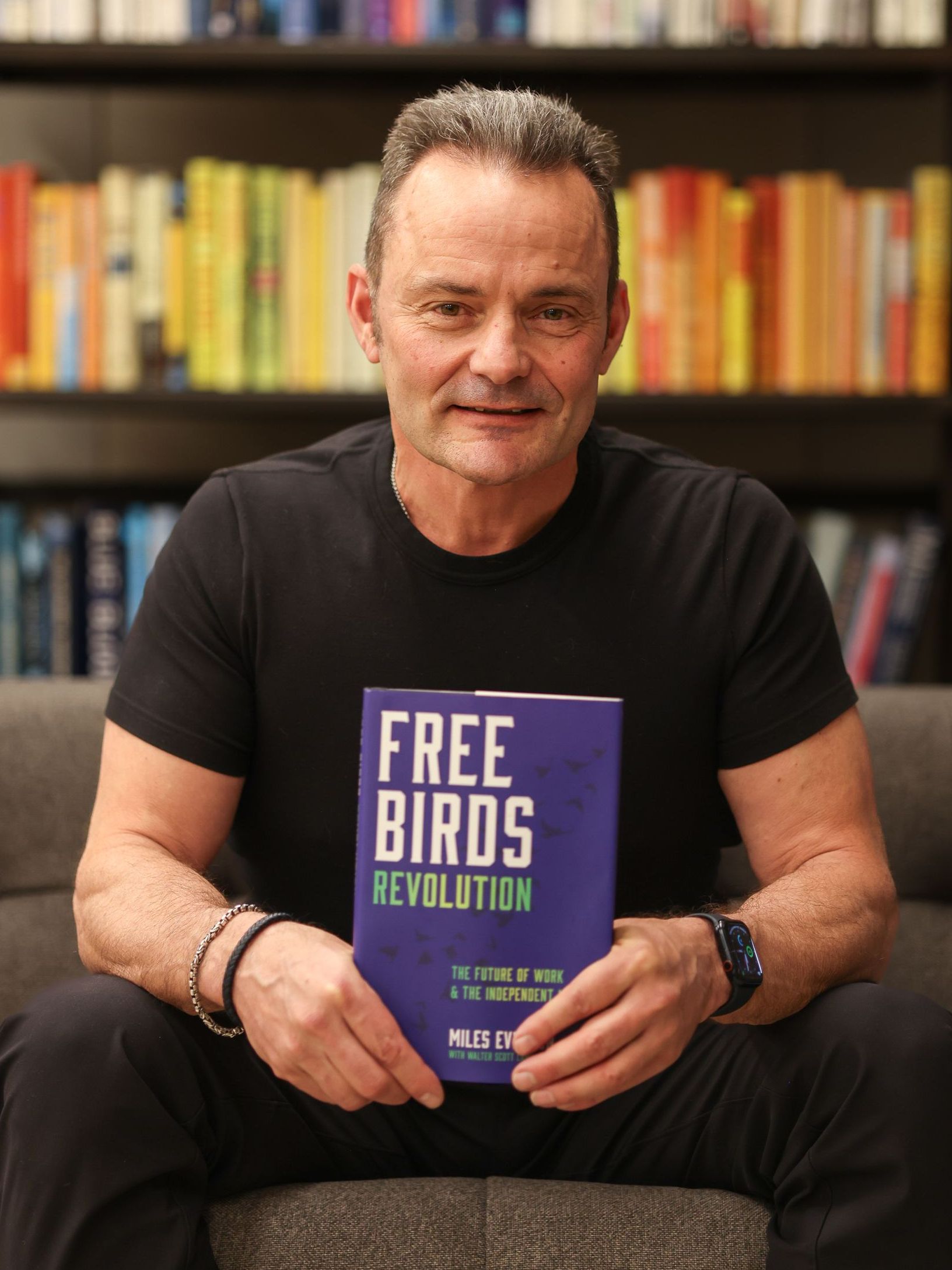
Miles Everson
CEO of MBO Partners and former Global Advisory and Consulting CEO at PwC, Everson has worked with many of the world's largest and most prominent organizations, specializing in executive management. He helps companies balance growth, reduce risk, maximize return, and excel in strategic business priorities.
He is a sought-after public speaker and contributor and has been a case study for success from Harvard Business School.
Everson is a Certified Public Accountant, a member of the American Institute of Certified Public Accountants and Minnesota Society of Certified Public Accountants. He graduated from St. Cloud State University with a B.S. in Accounting.