AI is reshaping work—but that doesn’t mean your career is at risk of being automated away. Here’s why!
|
|
| Today, we’ll talk about artificial intelligence and whether it’s coming for your job or not. Shall we begin? Continue reading below. AI is reshaping work—but that doesn’t mean your career is at risk of being automated away. Here’s why! For decades, artificial intelligence (AI) was viewed as a long-term theoretical project for scientists and a plot element for sci-fi writers. However, that perception has been upended over the past four years. Since the public release of ChatGPT in late 2022, the advancement of generative AI tools have proceeded at breakneck speeds. As a result, the hype surrounding AI’s potential to radically transform the jobs market has intensified to the point that many industry voices are speaking about its potential to eliminate a vast swath of white collar roles due to automation. In fact, Anthropic, the AI startup behind the popular AI tool Claude, recently released a study about the impact of AI on the labor market.
According to the report, computer programming, customer service, data entry, medical record, marketing, sales, financial and investment analysis, software quality assurance, information security analysis, and computer support specialists are the most exposed roles to AI. Since a significant number of job tasks involved in these white collar roles can be automated with AI, the professionals in these fields are at risk of being displaced should companies decide to replace human labor with AI automation. Given these findings, the assumption that AI is coming for human jobs starts to become feasible. However, is that truly the case? Are we entering an era of AI-driven layoffs? The short answer is no. There’s no question that AI is changing work as we know it. At their current state, the AI tools workers have access to are capable enough to complete repetitive tasks such as research, data retrieval, data encoding, and others. However, experts say AI has yet to fuel widespread job displacement. Unemployment in the U.S. (which currently stands at 4.4%) has been driven by trends such as corporate cost cutting measures and correction of COVID-era overhiring, among others. This observation is supported by Anthropic’s study as well. Researchers didn’t find an increase in unemployment among the most exposed roles that the research identified. However, there is evidence that employment for younger cohorts has slowed. Furthermore, the organizational adoption and implementation of AI tools have been mixed. McKinsey found that two-thirds of firms using AI solutions have yet to scale it across all layers of their organization. … and according to Omar Abbosh, CEO of Pearson —one of the biggest companies in the educational publishing space—there is: “Growing empirical evidence that poorly implemented AI simply increases work intensity—flooding organizations with output that still requires human attention, judgment, and correction.” As a result, he says that the AI-driven jobs apocalypse is unlikely to come as fast as others tend to assume. The bottom line? AI isn’t coming for your job yet. With AI-churned output overwhelming organizations, the need for human labor will continue to remain, if not totally surge altogether. Of course, this doesn’t mean you should be complacent. As the workplace becomes increasingly AI-native, workers who know how to work with it in creative and efficient ways will be the ones who will be preferred by employers. On the other hand, those who refuse to adopt AI in some shape or form in their workflows risk getting left behind by their peers. That’s why instead of succumbing to the doom and gloom brought by mainstream media narratives, focus on how you can elevate your professional skills with AI instead. Whether you like it or not, AI is here to stay and it will only intensify the need for human labor and intellect—and those who understand this are the ones who are poised to thrive in this age. For a daily version of this newsletter, please subscribe here. |


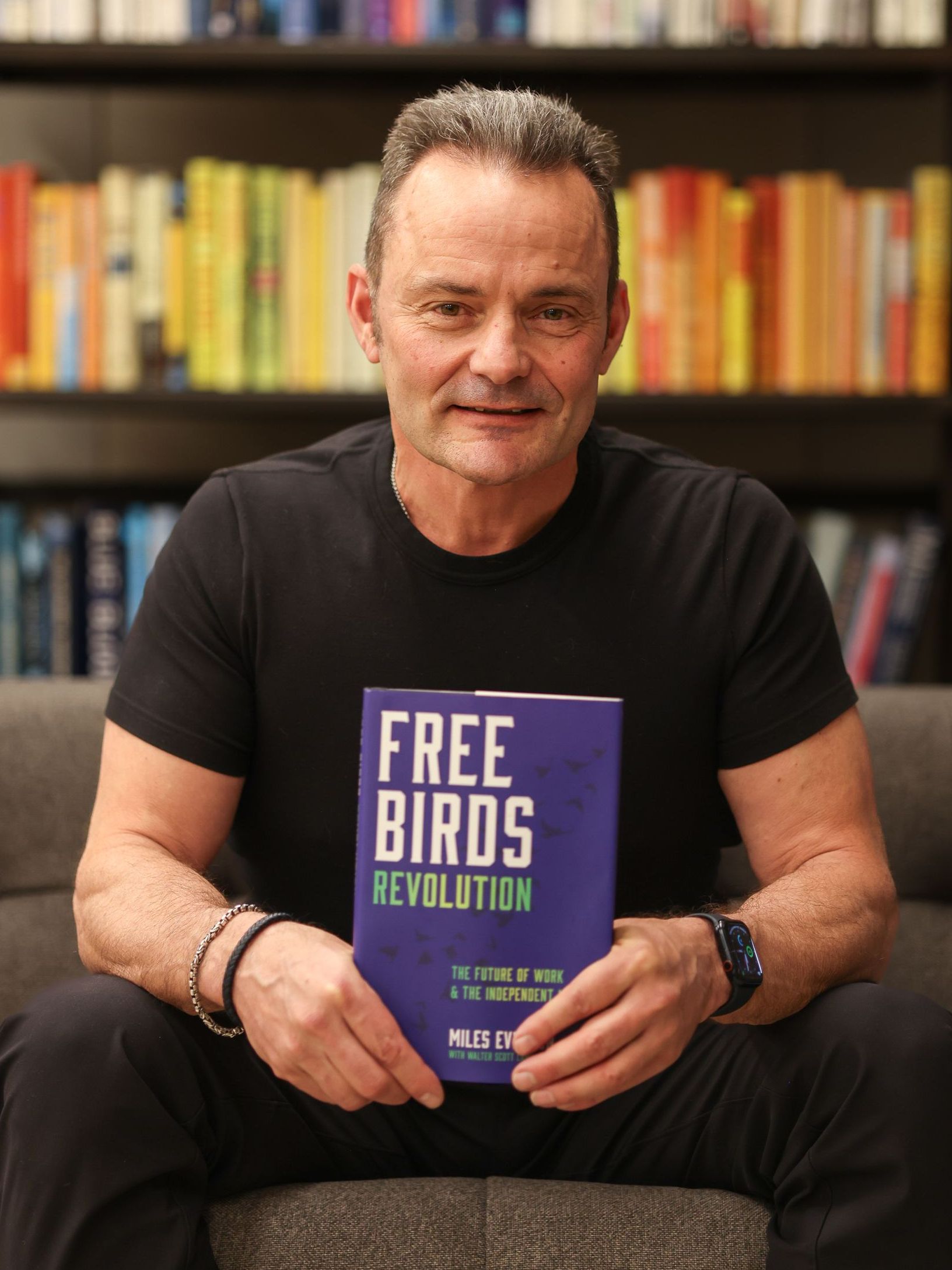
Miles Everson
CEO of MBO Partners and former Global Advisory and Consulting CEO at PwC, Everson has worked with many of the world's largest and most prominent organizations, specializing in executive management. He helps companies balance growth, reduce risk, maximize return, and excel in strategic business priorities.
He is a sought-after public speaker and contributor and has been a case study for success from Harvard Business School.
Everson is a Certified Public Accountant, a member of the American Institute of Certified Public Accountants and Minnesota Society of Certified Public Accountants. He graduated from St. Cloud State University with a B.S. in Accounting.