What Sydney Sweeney broke on the Internet, this global CEO broke on this clothing brand's valuation!
| From the desk of Miles Everson: Happy Wednesday! Welcome to “The Independent Investor!” In these articles, I write about and publish basic investing-related articles to help you achieve financial freedom and stability in your life. Today, let’s talk about this particular American clothing brand in terms of its status in the world of stocks and investing. Ready? Keep reading to know more! |
What Sydney Sweeney broke on the Internet, this global CEO broke on this clothing brand's valuation! Every so often, Wall Street behaves like it’s never seen a chart, never read an earnings release, and never heard a CEO speak on an earnings call. It gets swept up in noise, captivated by the latest cultural spark, headline scuffle, or celebrity cameo. In those moments, while everyone else is busy reacting, the smart money quietly listens. That is the environment Professor Joel Litman, Chairman and CEO of Valens Research and Chief Investment Officer of Altimetry Financial Research, addressed when he unpacked one of the market’s previous obsessions: A meme-stock phenomenon wrapped in denim, controversy, and surprise fundamental strength.
Don’t Let Your Jeans Become “Memes” Professor Litman is no stranger to market manias. Decades of dissecting corporate financials and uncovering distortions have taught him one enduring truth: Most meme stocks are terrible businesses wearing temporary hype. Only this time, he said, the story is different. American Eagle Outfitters, long viewed as a middle-of-the-road apparel retailer, suddenly found itself at the center of a cultural and political firestorm. An ad campaign featuring actress Sydney Sweeney—complete with the cheeky tagline, “Sydney Sweeney has great jeans” —became the spark. Critics accused the campaign of racism and even eugenics. Former President Donald Trump publicly praised the ad on Truth Social, further fueling the buzz. … and just like that, the meme-stock community pounced. Shares of AEO surged over 26% in two weeks in July 2025. At first glance, it had all the markings of a typical meme stock frenzy: Outrage → virality → retail FOMO → vertical stock chart. However, as Professor Litman emphasized, this one doesn’t fit the meme-stock mold. Why? It’s because unlike most meme darlings, AEO is NOT a failing company. For more than a decade, AEO has produced:
In other words, this is not a video-rental chain, a bankrupt car company, or a meme-stock zombie. It’s a functioning retailer with recognizable brands and dependable profitability. Yet, Professor Litman noted that outside the meme echo chamber, investors at that time remained deeply skeptical. The company’s valuation metrics at the peak of the meme’s virality revealed a deeper disconnect between perception and fundamentals, with AEO’s Uniform price-to-book ratio back then trading at 0.8 times. To investment professionals, that statistic raised eyebrows: A Uniform P/B below 1 typically signals that the market sees bankruptcy-level risk. However, AEO has traded at or above 1 for the past 15 years, even through retail cycles and recessions. Tariffs—often cited as the reason for pressure—don’t justify such an extreme discount. Many apparel companies handle the same cost headwinds without trading like distressed assets. What’s more? Professor Litman then walked through AEO’s Embedded Expectations Analysis (EEA) in August 2025, his team’s trademark method of reverse-engineering market pricing to uncover investor assumptions. Based on their analysis, here’s what the market believed:
In plain English: Investors thought AEO was about to permanently deteriorate. Professor Litman made it clear, though: Those expectations were incredibly pessimistic , bordering on irrational given the company’s long-term stability. He acknowledged that no one knows whether the Sweeney campaign will help meaningfully increase sales for AEO in the long run. It may or may not, but the ad did accomplish something crucial in retail:
Meanwhile, the stock remains absurdly cheap. The business remains profitable and expectations are basement-level low. For Professor Litman, this is the ideal setup for a surprise upside! His key points for investors?
As Professor Litman put it, the market has become so distracted by a single advertisement that it’s pricing AEO as if bankruptcy is on the horizon… even though fundamentals tell a very different story. The Sweeney ad may have ignited the stock price, but Professor Litman’s analysis reveals a deeper insight: Sometimes, the loudest narrative hides the most lucrative mispricing. In a world where memes come and go, disciplined investors can still win—especially when the market forgets to do its homework. Hope you’ve found this week’s insights interesting and helpful. Stay tuned for next Wednesday’s The Independent Investor! Artificial intelligence (AI) tech used to be an easy sell. Learn more about AI’s shift from buzzword to business tool in next week’s article! |


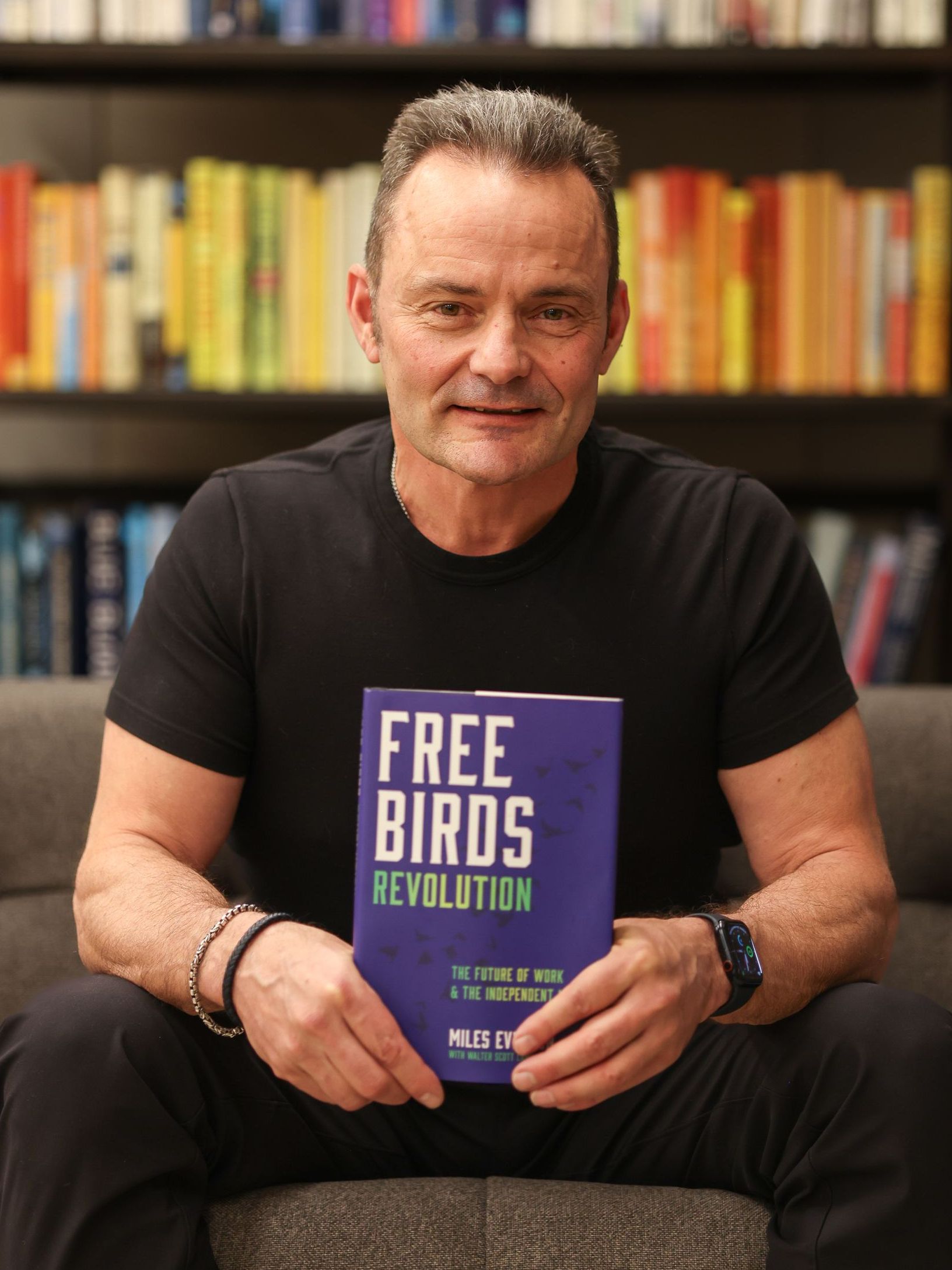
Miles Everson
CEO of MBO Partners and former Global Advisory and Consulting CEO at PwC, Everson has worked with many of the world's largest and most prominent organizations, specializing in executive management. He helps companies balance growth, reduce risk, maximize return, and excel in strategic business priorities.
He is a sought-after public speaker and contributor and has been a case study for success from Harvard Business School.
Everson is a Certified Public Accountant, a member of the American Institute of Certified Public Accountants and Minnesota Society of Certified Public Accountants. He graduated from St. Cloud State University with a B.S. in Accounting.