A little caution can do more good than harm in the stock market. Here’s why!
|
|
| Curious? Keep reading below! A little caution can do more good than harm in the stock market. Here’s why! 2025 was a solid year for the American economy. Even though the S&P 500 Index got off to a rocky start, it ended the year up 16%. Gross domestic product (GDP) growth remained positive through the first three quarters, defying widespread recession fears. Likewise, consumer spending reached new highs, amounting to USD 21.2 billion as of September 2025. These types of outcomes normally fill investors with confidence. However, the tone in early 2026 has been negative. Many are worried that the good track record won't last much longer. While 2025 ended on a strong note, the path felt wobbly. The Federal government shutdown lasted a record 43 days. Meanwhile, unemployment has started rising over the past few months. So, it's normal to feel cautious about the economy. However, the recent shift in sentiment may be healthier than it looks.
Gallup ’s survey of Americans’ predictions for 2026 revealed that optimism for the year fell sharply across most of the 13 categories the survey firm tracks. The results in this survey showed a sharp decline compared to 2025. Take a look…
Employment expectations saw the steepest decline as the share of Americans expecting full or increasing employment dropped from 54% to 36%. Expectations also fell for economic prosperity from 44% to 30%. All of this makes sense. The labor market has softened after a long period of strength. Along with rising unemployment rates (4.6% in November 2025), Americans are seeing slower job growth and fewer job openings. Americans also expect taxes to rise and challenges in political cooperation to persist. Even stock market expectations have fallen. While most investors think equities will rise by year-end, the positive prediction for a rising market dropped from 66% to 55%. Many investors are also skeptical of the AI rally that powered much of the stock market last year. According to Professor Joel Litman, Chairman and CEO of Valens Research and Chief Investment Officer of Altimetry Financial Research, and his team, the 10 largest stocks in the S&P 500 make up more than 35% of the index. Many of those stocks are big AI-related companies, like Nvidia and Alphabet. It’s no surprise many are worried. However, Professor Litman and his team haven’t seen any breakdown in AI growth yet. Professor Litman also says that from a market perspective, skepticism can be stabilizing. This is because it shows there’s a mix of bullish and bearish approaches, which tends to send the market higher. According to Professor Litman, the wall of worry is sturdier than euphoria. Said another way, major market downturns rarely emerge when investors are cautious. They tend to crop up when there is an overwhelming abundance of optimism. A cautious market offers more flexibility as it's less dependent on perfect outcomes, positioning it to be able to handle ups and downs. So far, the foundation of the U.S. economy remains intact. Consumers are still spending money, and the AI rally is forging ahead despite concerns about a potential bubble. In that sense, Professor Litman says a little worry may be doing more good than harm . Investors shouldn’t panic when there is negative sentiment as this serves as a stabilizing force for the stock market. Hope you’ve found this week’s insights interesting and helpful. Stay tuned for next Wednesday’s The Independent Investor! The world of investing often rewards confidence… but sometimes, it confuses confidence with invincibility. Learn more about the “catch” with this card’s refresh in next week’s article! |


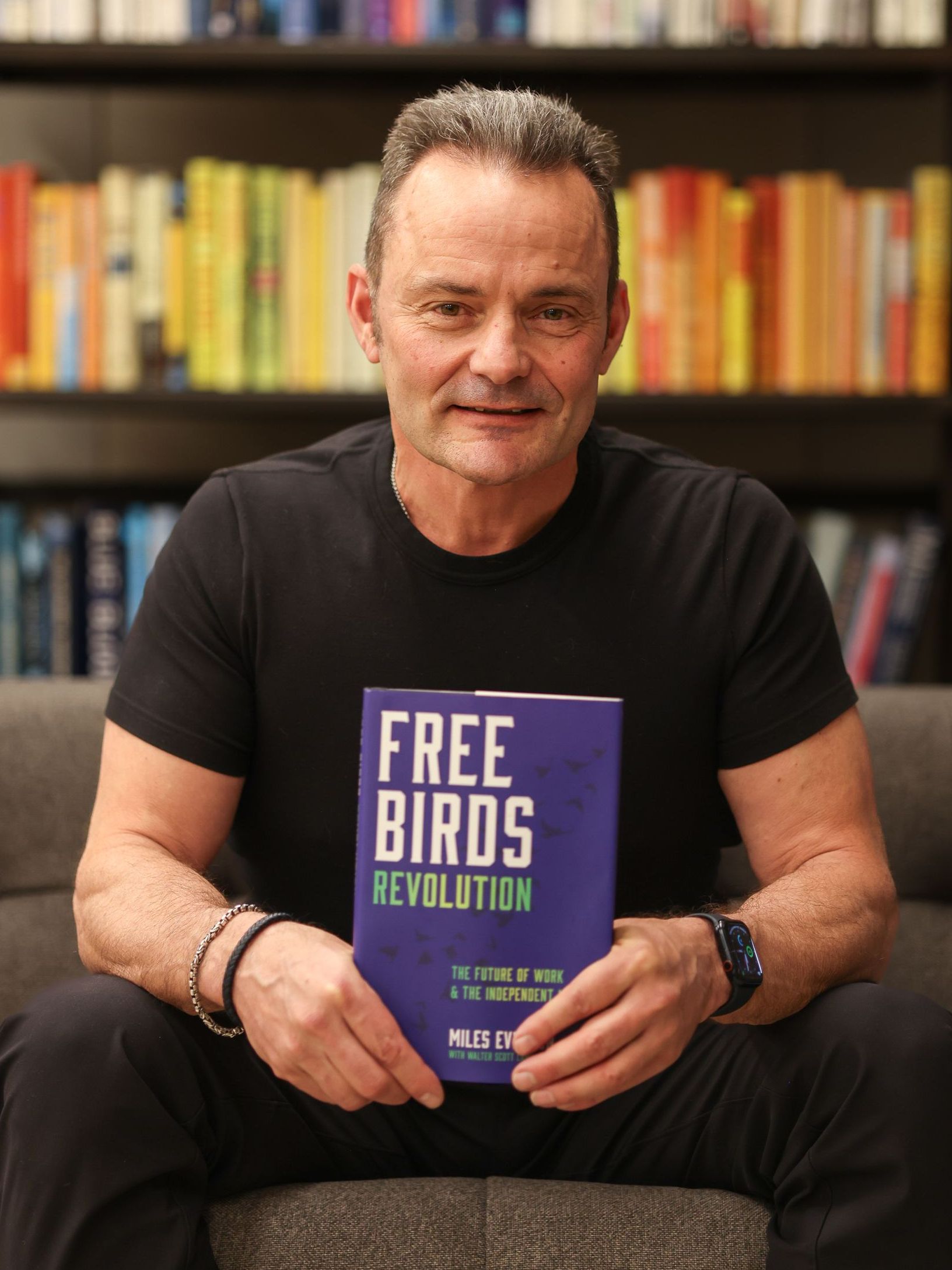
Miles Everson
CEO of MBO Partners and former Global Advisory and Consulting CEO at PwC, Everson has worked with many of the world's largest and most prominent organizations, specializing in executive management. He helps companies balance growth, reduce risk, maximize return, and excel in strategic business priorities.
He is a sought-after public speaker and contributor and has been a case study for success from Harvard Business School.
Everson is a Certified Public Accountant, a member of the American Institute of Certified Public Accountants and Minnesota Society of Certified Public Accountants. He graduated from St. Cloud State University with a B.S. in Accounting.