Mickey's master plan? Get inside "the happiest stream on Earth!"
| From the desk of Miles Everson: Good morning! I hope you’re having a great Tuesday. I’m thrilled to share with you another aspect of Return Driven Strategy (RDS), a pyramid-shaped framework with 11 tenets and 3 foundations. When applied properly, these principles help businesses and even individuals achieve their personal and organizational goals. Today, let’s focus on RDS’ tenets 2 and 3 in light of this particular business. |
Mickey's master plan? Get inside "the happiest stream on Earth!" Have you ever walked into a room full of people talking and immediately knew who owns the conversation? They’re not necessarily the loudest. In fact, they don’t need to be. They just understand what people want and deliver it better than anyone else. That’s REAL power. Did you know that’s a similar scenario when a certain storytelling giant entered the streaming battlefield? The room was already noisy. Netflix ruled the throne. Amazon Prime was gaining ground. HBO Max , Peacock , and others were jostling for attention. Then, Disney+ walked in—cool, collected, and completely prepared. Within months, it became a platform that captured people’s attention too.
From Magic Kingdom to Streaming Kingdom Launched in November 2019, Disney+ wasn’t just another streaming service trying to compete. It was a cultural juggernaut armed with decades of beloved content and a loyal fanbase. More importantly, it entered the market with a plan. Disney+ bundled the power of its legacy and newly acquired intellectual properties— Disney , Pixar , Marvel , Star Wars , and National Geographic —into one sleek, family-friendly platform. Instead of chasing trends, it doubled down on timeless value: great stories, unforgettable characters, and immersive worlds. What made Disney+ rise above the rest wasn’t just its content; it was also how it delivered it. Examples:
… but behind the polished surface was a laser-focused strategy. That’s where the Return Driven Strategy (RDS) framework comes in… The RDS framework, developed by Professor Joel Litman and Dr. Mark L. Frigo to help organizations create sustainable value, includes several core tenets. Disney+ is a masterclass in executing Tenet 2 and Tenet 3. The RDS framework, developed by Professor Joel Litman and Dr. Mark L. Frigo to help organizations create sustainable value, includes several core tenets. Disney+ is a masterclass in executing Tenet 2 and Tenet 3. Let’s take a look at it… Tenet 2: Fulfill Otherwise Unmet Customer Needs Let’s face it: Before Disney+, fans of Disney’s rich universe were left juggling multiple platforms to watch their favorite content. Some Marvel films were on Netflix. Star Wars movies might be on TV or DVD. Classic Disney animations? Maybe you bought them, maybe you didn’t. In short, it was fragmented. Disney+ identified a gap that nobody had fully closed: A centralized, high-quality, family-safe hub for all things Disney. This wasn’t just about streaming; it was also about creating an emotional home for fans across generations. Parents could revisit childhood favorites with their kids. Fans could finally binge every Marvel movie in timeline order. Nature lovers got access to stunning Nat Geo documentaries. By fulfilling this unmet need, Disney+ didn’t just serve customers but also delighted them. What’s more? This tenet also extends to convenience! With offline viewing, tailored recommendations, and cross-device streaming, Disney+ made access effortless. It didn’t just ask, “What do people want to watch?” It instead asked, “How do people want to experience our stories?” That kind of insight is where real loyalty begins. Tenet 3: Target and Dominate Markets Disney didn’t dip its toe into the streaming pool; it cannonballed. From day one, it was clear Disney+ had one goal: Win the streaming wars… so here’s what it did:
See? By understanding where audiences were underserved and moving swiftly to capture those needs, Disney+ didn’t just compete—it conquered. It didn’t try to please everyone everywhere. It chose the markets and segments where it could lead, and did exactly that. That’s Tenet 3 in action! The impact of such strategies was nothing short of remarkable:
… all in just a few years! Amazing, right? So, what can we learn from Disney+?
In a world full of noise, Disney+ proves that strategy speaks louder than hype. By understanding what people really needed—and delivering it in an unbeatable way—Disney+ didn’t just survive the streaming wars; it thrived. So, whether you’re building a business, launching a product, or planning a marketing campaign, remember this: Don’t just show up louder. Show up smarter. … and like Disney+, own the room. — If you’re looking to gain a better understanding of Return Driven Strategy and Career Driven Strategy, we highly recommend checking out “Driven” by Professor Litman and Dr. Frigo. Click here to get your copy and learn how this framework can help you in your business strategies and ultimately, in ethically maximizing wealth for your firm. Hope you found this week’s insights interesting and helpful. Stay tuned for next Tuesday’s Return Driven Strategy! The American household appliances market is one of the most competitive spaces in the country. Simply said, customers have so many options to choose from for their appliance needs. Yet despite this, SharkNinja has carved a place for itself in this highly competitive market. Learn more about the impact of branding in next week’s article! |


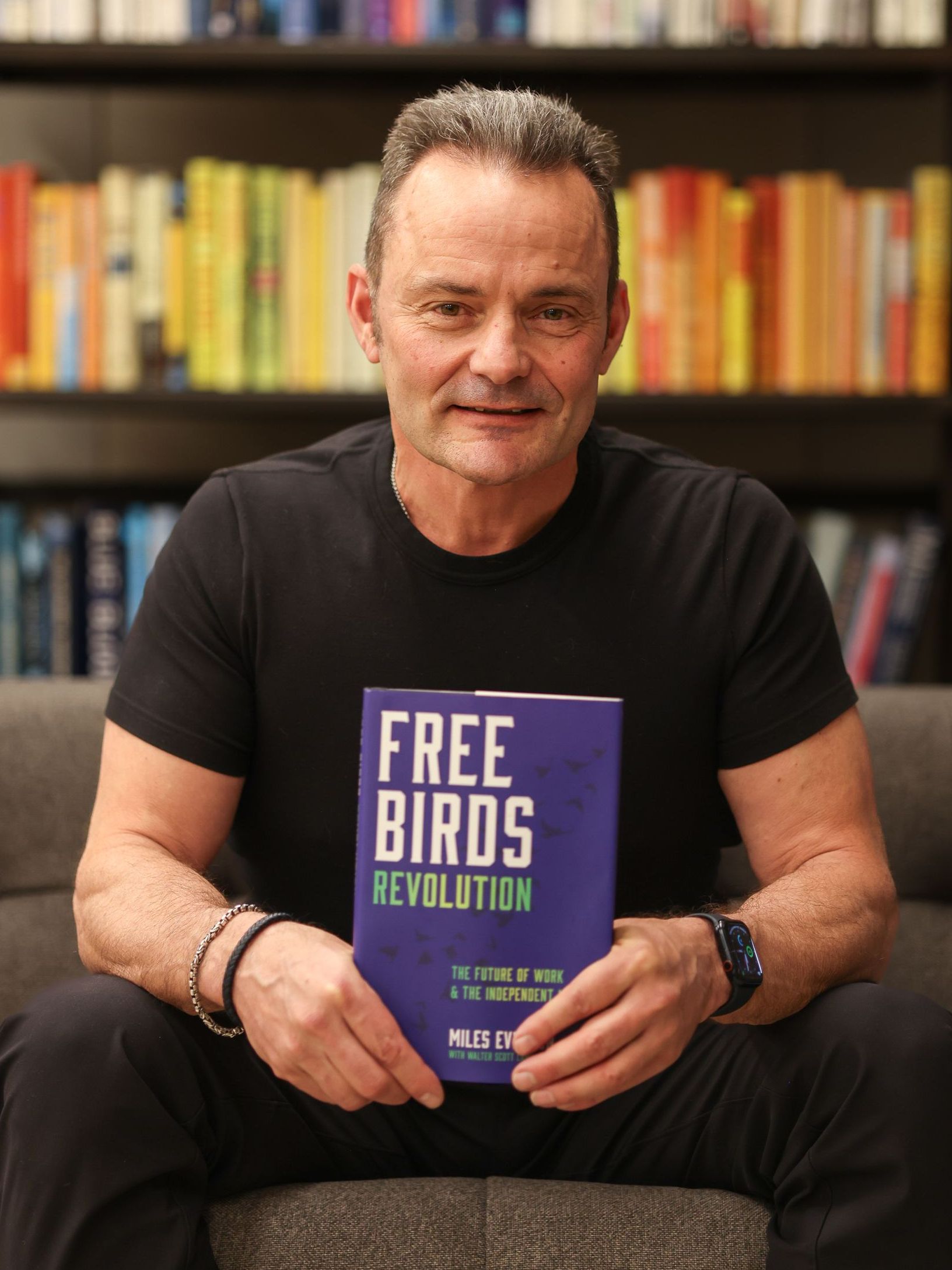
Miles Everson
CEO of MBO Partners and former Global Advisory and Consulting CEO at PwC, Everson has worked with many of the world's largest and most prominent organizations, specializing in executive management. He helps companies balance growth, reduce risk, maximize return, and excel in strategic business priorities.
He is a sought-after public speaker and contributor and has been a case study for success from Harvard Business School.
Everson is a Certified Public Accountant, a member of the American Institute of Certified Public Accountants and Minnesota Society of Certified Public Accountants. He graduated from St. Cloud State University with a B.S. in Accounting.