The trend is your friend… until it bends. This is why you shouldn't get stuck trading eggs!
|
|
| For this article, let’s focus on the “illusion of momentum.” Are you ready? Continue reading below to know more. In reflecting on market behavior and investor psychology, Professor Joel Litman , Chairman and CEO of Valens Research and Chief Investment Officer of Altimetry Research, often points to a simple but dangerously incomplete truth investors cling to: “The trend is your friend.” It’s a phrase that has guided traders for decades, popularized by legends like commodities trader Ed Seykota. … and for good reason, momentum investing, when executed well, can be incredibly powerful. Seykota turned modest capital into staggering wealth by leaning into trends early and riding them with discipline. His systems, rooted in data rather than emotion, proved that markets often move in sustained directions longer than most expect. However, as Professor Litman emphasizes in his research and commentary, this widely accepted wisdom has a critical second half—one that many investors either forget or ignore: “The trend is your friend… until the end, when it bends.”
The Dangerous Comfort of a Rising Market Markets have once again demonstrated their ability to reward momentum. Stocks that surged in prior months continue to attract capital, reinforcing the belief that winners will keep winning. However, Professor Litman cautions against this seductive narrative. While trends feel like confirmation, they are often just momentum echoing itself. In fact, Valens Research data shows that once a stock has doubled, its probability of doubling again is no better than a coin flip. The implication is stark: What feels like a “sure thing” is often just statistical noise wrapped in confidence. Yet, many investors continue to pile in—effectively “trading eggs,” to borrow from the early career of Seykota—focusing narrowly on what’s already moving rather than questioning whether or not the movement is sustainable. Where Professor Litman diverges from traditional momentum thinking is in his insistence that not all trends are created equal . Surface-level metrics, like reported earnings, headline growth, or traditional accounting ratios, can often obscure more than they reveal. Companies can appear strong on paper while underlying economic performance is quietly deteriorating. This is where Valens Research’s proprietary framework, Uniform Accounting , becomes central to the conversation. Uniform Accounting strips away distortions in traditional financial reporting, offering a clearer view of a company’s real economic productivity. According to Professor Litman, this clarity is what allows investors to answer the only question that truly matters in a momentum-driven market: “Is the trend still intact, or has it already begun to bend?” One of the most dangerous moments in any market cycle is not the crash; it’s the prelude to it, or the period where prices continue to rise even as fundamentals begin to weaken. Professor Litman highlights that many investors miss this transition because they are conditioned to trust what they can see: price action, analyst upgrades, and positive sentiment. The thing is, by the time the “bend” becomes visible on a chart, the opportunity to exit cleanly has often passed. This is why simply following trends is no longer enough to outperform. At best, it keeps investors aligned with the broader market. At worst, it exposes them to sudden reversals with little warning. Avoiding the “Egg Trader” Trap For Professor Litman, the path to outperformance in modern markets is not about chasing every rally but about selectivity. It’s about identifying which companies have the underlying strength to sustain their momentum, and which are merely benefiting from temporary enthusiasm. This distinction is where sophisticated investors separate themselves from the crowd. After all, in a market where capital flows quickly and narratives shift even faster, the edge no longer comes from access to information; it comes from interpreting that information correctly . — The story of Seykota’s early career serves as a powerful metaphor. Had he stayed confined to analyzing eggs and chickens (areas where he lacked conviction and insight), he likely would have remained just another analyst. Instead, he stepped back, questioned the system, and built a framework that allowed him to see patterns others couldn’t. Professor Litman’s message echoes that same spirit. Investors today must avoid getting stuck in narrow, surface-level analysis—chasing what’s already obvious and reacting to what’s already priced in. That is because the real opportunity lies not in following the crowd, but in recognizing when the crowd is about to be wrong. As markets evolve and complexity increases, one truth remains constant: Momentum can build wealth, but only awareness can preserve it. Professor Litman’s insights challenge investors to move beyond simplistic strategies and embrace a more nuanced approach—one that combines trend recognition with fundamental clarity. Besides, in the end, the difference between keeping up with the market and truly outperforming it comes down to a single, pivotal moment: Seeing the bend before everyone else does. Hope you’ve found this week’s insights interesting and helpful. Stay tuned for next Wednesday’s The Independent Investor! AI hyperscalers are spending billions of dollars on data centers to meet demand. However, there’s another bottleneck in today’s AI boom. Learn more about the problem AI is currently running into in next week’s article! |


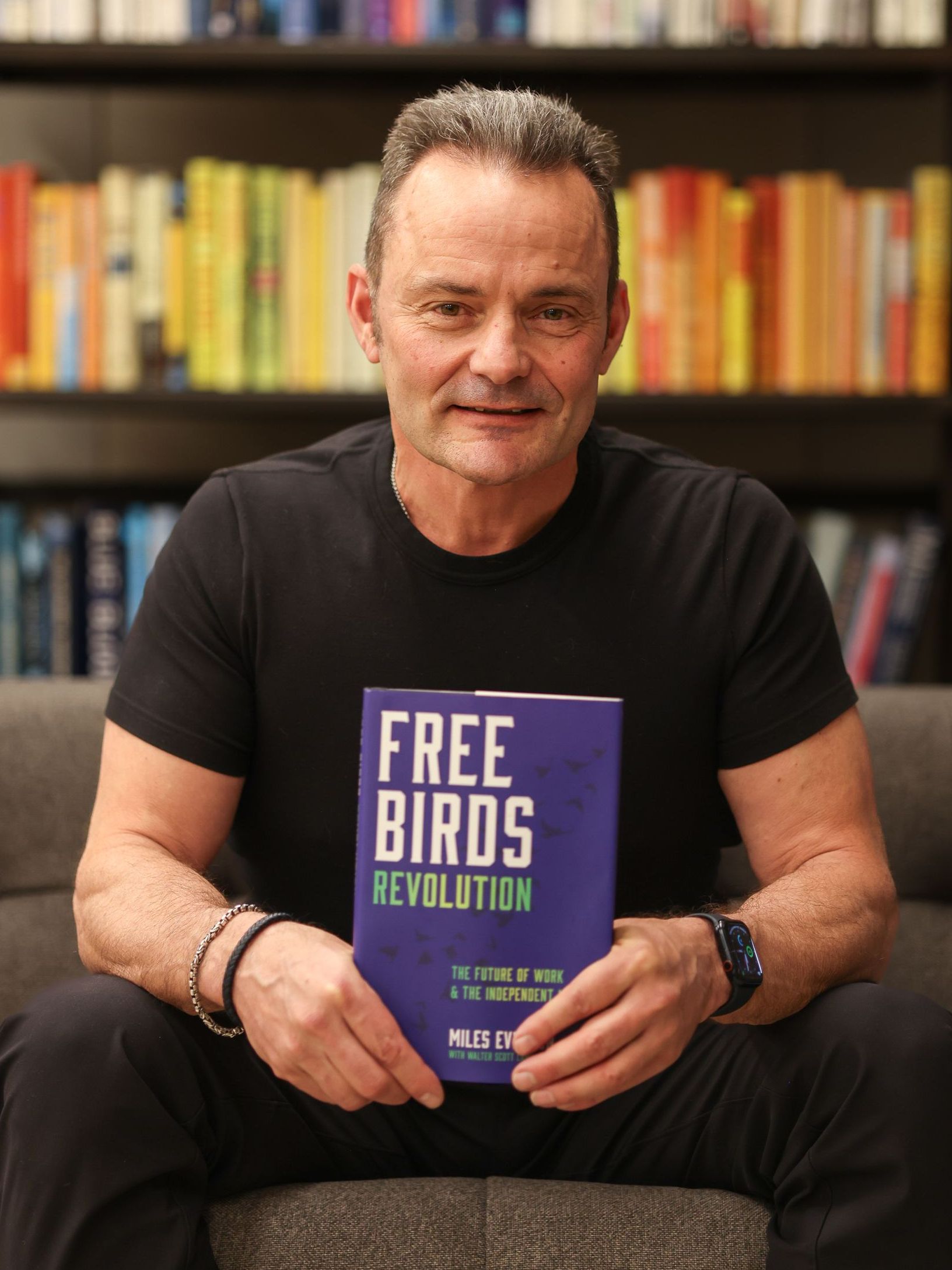
Miles Everson
CEO of MBO Partners and former Global Advisory and Consulting CEO at PwC, Everson has worked with many of the world's largest and most prominent organizations, specializing in executive management. He helps companies balance growth, reduce risk, maximize return, and excel in strategic business priorities.
He is a sought-after public speaker and contributor and has been a case study for success from Harvard Business School.
Everson is a Certified Public Accountant, a member of the American Institute of Certified Public Accountants and Minnesota Society of Certified Public Accountants. He graduated from St. Cloud State University with a B.S. in Accounting.