Investors punished this electric vehicle giant for spending too little on AI…
|
|
| Curious? Continue reading below! Investors punished this electric vehicle giant for spending too little on AI… Big Tech has been on a massive spending spree as of late. As a result, the once-positive cash flows of these behemoths are turning negative after years of being capital-light businesses. Take Alphabet, Google’s parent company, for example. The tech giant recently broke a 22-year streak of positive free cash flow—the amount of actual money a business has after paying for everything it needs to operate and grow. During the second quarter of 2026, Alphabet spent USD 45 billion in capital expenditures. Most of the money spent went towards data centers and the company’s AI initiatives. As a result, the company’s free cash flow went to USD -5.9 billion. Additionally, the tech firm raised its full-year capital expenditure forecast to between USD 195 billion to USD 205 billion. Investors made their displeasure known, as Alphabet’s shares fell 7% in just a day. The stock has since recovered, but shows just how wary investors are of increased AI spending. However, Alphabet wasn’t the only stock that got negative backlash for AI-related spending. Electric vehicle giant Tesla saw investor backlash as well… but for a different reason. The company earmarked roughly USD 25 billion in AI-related capital expenditures for 2026. However, as of July, only USD 2.5 billion has been spent. In other words, instead of punishing the company for being a big spender, investors punished Tesla for spending too little on AI. Left Behind in the AI Spending Race
According to Professor Joel Litman, Chairman and CEO of Valens Research and Chief Investment Officer of Altimetry Financial Research, Tesla’s AI spend is a contrast with the rest of Big Tech. Alphabet, Amazon, Meta, and Microsoft are forecasted to collectively spend USD 725 billion in capital expenditures in 2026. Their stocks have faced pressure whenever investors feared their budgets were getting too large. Meta lost more than 11% in a single session in October 2025 after raising its capex guidance, and Microsoft hit a one-year low in June 2026 as its annual spending projections ballooned. Tesla shares faced the reverse problem. Its stock has fallen by roughly 21% year to date, the worst performer among the “Magnificent Seven” firms. Investors saw its restrained budget as a sign that product development was moving too slowly. Tesla's strategy extends far beyond the electric vehicles it built its business with. The company has committed USD 25 billion to AI this year alone, designed its own chip, and is retooling factories for robots. It's also trying to build fleets of robotaxis and an army of Optimus robots. Each of those projects needs billions of dollars of investment before bringing in a profit. Tesla was the only way public investors could buy into Musk's AI ambitions for years. So they had to put up with whatever he chose to do with it. The story changed when SpaceX went public in June and brought xAI under its roof. It has become a more direct home for Musk's largest AI plans. That said, the market still has high expectations for Tesla… and according to Professor Litman, that presents a problem for the company. A Company With High Expectations Tesla’s shares trade at around 167 times forward earnings, making it one of the most expensive stocks in the S&P 500. Professor Litman says that this makes Tesla an expensive stock that is still trying to scale its AI spending. What’s more? Investors expect Tesla to keep growing its returns in the next few years! We can see this through the Embedded Expectations Analysis (EEA) framework used by Professor Litman and his team. The EEA starts by looking at a company's current stock price. From there, they can calculate what the market expects from the company's future cash flows. We then compare that with our own cash-flow projections. In short, it shows how well a company has to perform in the future to be worth what the market is paying for it today. Tesla's Uniform return on assets (ROA) peaked near 30% in 2022, more than twice the 12% market average. Returns plummeted to just 6% by 2025. Yet, the market still expects Tesla’s Uniform ROA will skyrocket to 44% by 2030.
These expectations see Tesla heading towards record-high profitability levels. In other words, investors are pricing in a major recovery even though returns have declined significantly. All of this doesn’t mean Musk isn’t spending on AI. His capital is just going elsewhere. AI Ambitions Musk’s SpaceX raised around USD 100 billion through its initial public offering earlier this year and its subsequent bond sale. Professor Litman says this gave Musk a bigger pool of money for things such as orbital data centers and large-scale computing projects. SpaceX business also includes rockets, satellite connectivity, and AI infrastructure. Most of the capital raised in the SpaceX IPO is already going towards compute deals with Alphabet and AI startup Anthropic, while its bond proceeds are earmarked for AI infrastructure. Professor Litman says all of this spending will create winners across the AI industry. Chipmakers, server manufacturers, networking firms, and data-center suppliers will benefit from SpaceX's funding. He states all of those will play out long before Tesla proves its robotaxis and robots are worth investing in. Simply said, Tesla’s valuation assumes it’s the company that will anchor Musk’s AI ambitions. However, with SpaceX being Musk’s AI darling and capital expenditure among other Big Tech firms reaching new heights, it seems Tesla looks less likely to catch up in the AI spending race. Hope you’ve found this week’s insights interesting and helpful. Stay tuned for next Wednesday’s The Independent Investor! Markets can tolerate bad news. They can survive recessions, defaults, and even spectacular corporate failures. Learn more about this flashing red warning for Chinese real estate in next week’s article! |


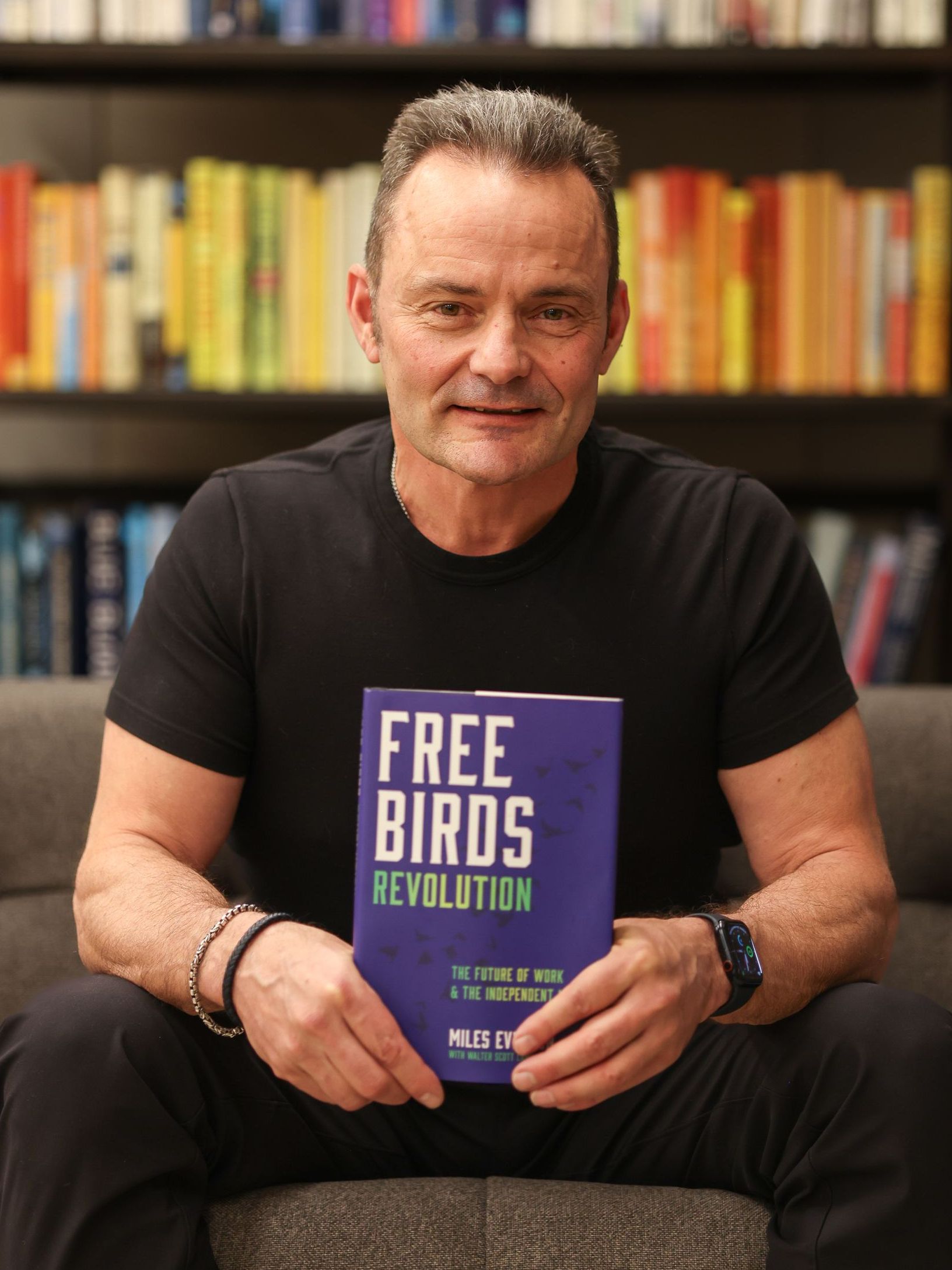
Miles Everson
CEO of MBO Partners and former Global Advisory and Consulting CEO at PwC, Everson has worked with many of the world's largest and most prominent organizations, specializing in executive management. He helps companies balance growth, reduce risk, maximize return, and excel in strategic business priorities.
He is a sought-after public speaker and contributor and has been a case study for success from Harvard Business School.
Everson is a Certified Public Accountant, a member of the American Institute of Certified Public Accountants and Minnesota Society of Certified Public Accountants. He graduated from St. Cloud State University with a B.S. in Accounting.