When TIME Breaks: Learn more about this campaign that turned confusion into compassion!
Today, let’s talk about a purposeful guerrilla marketing campaign. Keep reading below to know more. |
|
When TIME Breaks: Learn more about this campaign that turned confusion into compassion! Everyone checks the time without thinking. On their phone… On their wrist… On the wall of a subway station while rushing to somewhere else… However, imagine standing in a familiar place, staring at a clock, and feeling something quietly unravel. The hands are there, but what they mean no longer connects. Minutes stretch… Hours blur… Time slips out of sync with reality… This is where one of the most emotionally arresting guerrilla marketing campaigns in recent years begins—not with a message, a logo, or a call to action, but with a feeling most people have never experienced. Turning an Invisible Struggle Into a Public Experience Alzheimer’s disease affects over 10.42 million people in China, the highest number globally. Yet despite its prevalence, the disease remains deeply misunderstood, especially by those untouched by it. The emotional distance is vast. Statistics inform, but they rarely move people. Dentsu China, partnering with Jian Ai Elderly Charity Center and STDecaux, set out to close this empathy gap. The challenge wasn’t awareness alone but also understanding. “How do you make the public feel what Alzheimer’s patients experience every day?” The answer came from an unlikely place: The “Lost in Time” campaign .
The Clock Drawing Test (CDT) is a globally recognized method used to screen for early-stage Alzheimer’s. Here, patients are asked to draw a clock with a specific time. What seems simple actually reveals a complex breakdown of cognitive abilities—memory, spatial awareness, abstract thinking, mathematics, and temporal navigation. For Alzheimer’s patients, clocks often stop making sense. Numbers drift… Hands overlap… Time loses structure… Instead of explaining this medically, the campaign did something far more radical: It showed it. Dentsu transformed real clock drawings created by elderly Alzheimer’s patients into physical clocks and large-scale installations, bringing the distorted perception of time into the real world.
Launched on World Alzheimer’s Day (September 21, 2023) during China Brain Health Month, the campaign took over Shanghai’s Xujiahui Metro Station, a high-traffic public space where time is everything. Commuters encountered five abnormal clocks, each reflecting the altered reality of Alzheimer’s patients.
These weren’t abstract art pieces; they were faithful recreations of patient drawings—raw, imperfect, and deeply human. What else? The experience didn’t stop at observation!
Clearly, in a space usually dominated by ads shouting for attention, the installation whispered… and people stopped to listen. This is guerrilla marketing at its most refined: unexpected, contextually powerful, emotionally grounded, and impossible to ignore. Why the Campaign Worked So Powerfully What made “Lost in Time” extraordinary wasn’t just its execution but also its restraint.
Instead, it invited people to experience confusion before naming it. By using real patient artwork, the campaign avoided abstraction and leaned into authenticity. Every distorted clock was proof—not a metaphor—of how Alzheimer’s reshapes perception. The public didn’t just learn about the disease; they momentarily lived inside it. That emotional shift was where empathy started to form. The impact of the campaign was both emotional and measurable. Engagement & Reach :
Media & Cultural Impact :
Fundraising & Participation :
These results prove a crucial point: When people feel, they act. At its core, “Lost in Time” is a masterclass in innovation with purpose. By transforming a professional medical assessment into a public art experience, the campaign made early detection and brain health accessible without oversimplifying or sensationalizing the issue. It reframed Alzheimer’s not as a distant tragedy, but as a shared human concern. After all, time is something everyone thinks they understand… until they don’t. A Blueprint for Meaningful Guerrilla Marketing Overall, “Lost in Time” demonstrates what happens when creativity serves humanity instead of ego. It proves that guerrilla marketing doesn’t have to be loud to be disruptive, or shocking to be memorable. Sometimes, the most powerful campaigns don’t interrupt your day. They stop time, just long enough for you to see the world through someone else’s eyes. Once you’ve felt that, you don’t easily forget it. Hope you’ve found this week’s guerrilla marketing insight interesting and helpful. Stay tuned for next Thursday’s Gorillas of Guerrilla Marketing! Do you want to know how one brand turned its ad into a useful public safety sign? See it in next week’s article! |


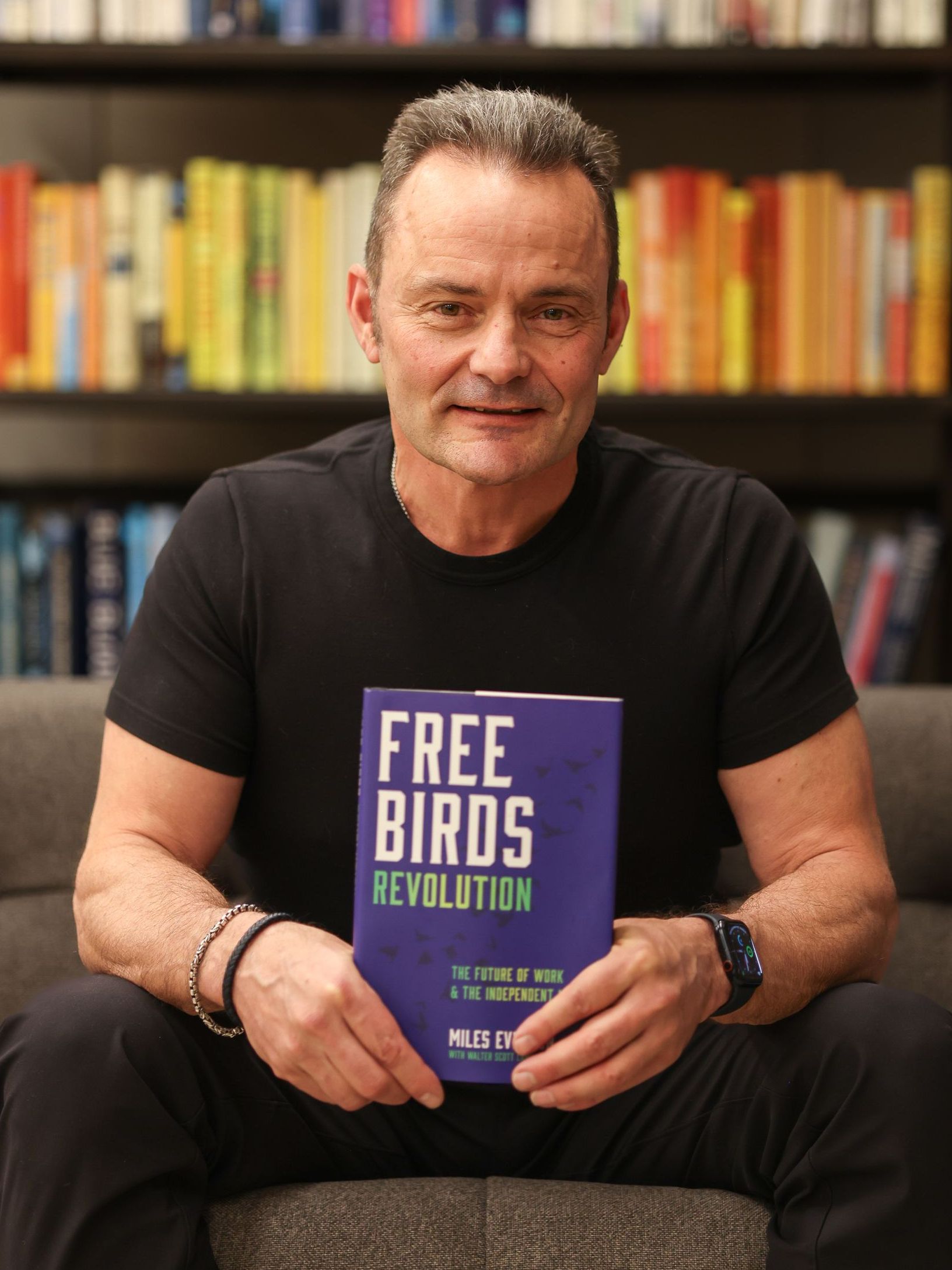
Miles Everson
CEO of MBO Partners and former Global Advisory and Consulting CEO at PwC, Everson has worked with many of the world's largest and most prominent organizations, specializing in executive management. He helps companies balance growth, reduce risk, maximize return, and excel in strategic business priorities.
He is a sought-after public speaker and contributor and has been a case study for success from Harvard Business School.
Everson is a Certified Public Accountant, a member of the American Institute of Certified Public Accountants and Minnesota Society of Certified Public Accountants. He graduated from St. Cloud State University with a B.S. in Accounting.