The Art of the Career Remix: Learn how this visionary engineered his legacy!
In this article, let’s talk about this framework through this individual’s professional endeavors. Read on to see how his ventures align with the principles of Career Driven Strategy (CDS), the counterpart of RDS when applied to people’s careers. |
|
Imagine spending years mastering equations and concrete structures, only to discover your true calling lies in the fluid art of fabric, culture, and rebellion. Most people would see that as a detour. However, Virgil Abloh saw it as a blueprint. While others followed predictable career paths, Abloh built bridges between worlds that were never meant to connect—engineering and art, luxury and streetwear, exclusivity and inclusion. His life wasn’t a linear climb but a creative ecosystem… and in that, he perfectly embodied what Professor Joel Litman and Dr. Mark L. Frigo call Career Driven Strategy (CDS) —a deliberate, values-driven way of building a career that creates authentic value, fulfills unmet needs, and leaves an enduring legacy.
Abloh was born in 1980 in Rockford, Illinois, to Ghanaian immigrant parents. His mother was a seamstress while his father managed a paint company. From her, he learned craftsmanship and detail. From him, precision and work ethic. He earned a degree in Civil Engineering at the University of Wisconsin–Madison and a master’s in Architecture at the Illinois Institute of Technology (IIT). Architecture didn’t just teach him design; it also taught him systems thinking. Abloh once said that architecture gave him “the ability to think in three dimensions,” not just physically but also conceptually. That mindset—of seeing connections others missed—would later define his approach to fashion. … but come to think of it: At its core, that’s exactly what the CDS framework promotes: Seeing your career not as a ladder, but as a strategic architecture where each move, skill, and experience builds toward a larger, purpose-driven design. From Engineering to Artistry In 2009, Abloh’s life took an unexpected turn when he interned at Fendi alongside Kanye West. There, two outsiders—one a rapper, the other an engineer—explored what fashion could be if it broke free from tradition. Most people would have hesitated to step into an unfamiliar world. Yet, Virgil approached it strategically, much like how Professor Litman and Dr. Frigo describe moving from “job-driven” to “career-driven.” Instead of focusing on his role at Fendi, Abloh focused on what that experience could build toward. He wasn’t chasing a title; he was shaping a vision. Soon after, he became Creative Director at Donda, West’s design agency, and worked on album art, stage design, and brand collaborations. Each project was more than a creative job; it was also a building block in his long-term strategy to fuse art, music, fashion, and culture into one cohesive language. This aligns perfectly with CDS’ principle of identifying and strengthening your “genuine assets.” For Abloh, those assets weren’t just skills but also his multidisciplinary lens, architectural training, and deep understanding of youth culture. Then, in 2013, Abloh launched Off-White, a Milan-based fashion label that defied categorization. His vision was to explore “the gray area between black and white,” where luxury meets streetwear. Off-White was the strategic result of years of positioning, experimentation, and audience understanding. Abloh knew exactly which unmet need he wanted to fulfill: Fashion for a generation that wanted both authenticity AND aspiration . According to Professor Litman and Dr. Frigo’s framework, success comes from fulfilling otherwise unmet needs, whether in companies or careers. Abloh did exactly that. He saw a gap between the polished exclusivity of luxury brands and the raw individuality of streetwear. Then, he filled it—not by conforming, but by creating something entirely new. Through Off-White, Abloh also mastered career branding. He turned his personal philosophy into a recognizable identity: quotation marks, zip ties, and diagonal stripes. Every element was symbolic, strategic, and deeply intentional. He wasn’t just selling clothes; he was also communicating ideas. In 2018, Abloh made history as the “first Black artistic director of Louis Vuitton’s (LV) menswear division.” It was a monumental achievement but also a logical next step in his career strategy. His approach at LV mirrored the strategic execution phase of the CDS model: Aligning your values and assets with an opportunity that magnifies them . He didn’t abandon his streetwear roots; rather, he elevated them within a global luxury context. His first LV collection redefined what “luxury” could mean—blending hip-hop references, diverse models, and emotional storytelling into couture. This move illustrates another key CDS insight: A career-driven professional doesn’t just climb but also redefines the ladder . Abloh didn’t assimilate into the luxury fashion world; he transformed it from within. Authenticity and Ethical Value Creation Professor Litman and Dr. Frigo emphasize that true CDS focuses not only on financial success but on ethical value creation. … and Abloh embodied that to the end. Despite his fame, he stayed deeply connected to his community, mentoring young designers, especially people of color who felt shut out of high fashion. He launched scholarships, collaborated with Nike ’s “POST-MODERN” initiative, and consistently used his platform to amplify underrepresented voices. Even while battling a rare cancer privately, he continued to design, innovate, and uplift others—proof that his strategy wasn’t just career-driven, but also purpose-driven. — Abloh’s story is more than a creative success; it’s also a masterclass in career design. He treated his life as a work of art and his career as a carefully engineered structure. Every collaboration, every pivot, and every idea was intentional, rooted in clarity of vision and authentic purpose. His philosophy—that you can remix worlds, disrupt hierarchies, and create meaning through design—perfectly aligns with Professor Litman and Dr. Frigo’s CDS. After all, it’s not about chasing positions or prestige but about building a life that fulfills unmet needs, creates genuine value, and reflects who YOU truly are. As Abloh once said: “Everything I do is for the 17-year-old version of myself—to show him it’s possible.” That’s the essence of a career-driven life: Not just success and work but also significance and impact. Up to the end, Abloh didn’t just change fashion; he also changed the architecture of ambition itself. If you’re looking to gain a better understanding of Return Driven Strategy and Career Driven Strategy, we highly recommend checking out “Driven” by Professor Litman and Dr. Frigo. Click here to get your copy and learn how this framework can help you in your business strategies and ultimately, in ethically maximizing wealth for your firm. Hope you found this week’s insights interesting and helpful. Stay tuned for next Tuesday’s Return Driven Strategy! Artificial intelligence (AI) is reshaping the world of work at breakneck speeds. While it has fostered innovation, it has created a hard-to-solve dilemma. Learn more about this dilemma in next week’s article! |


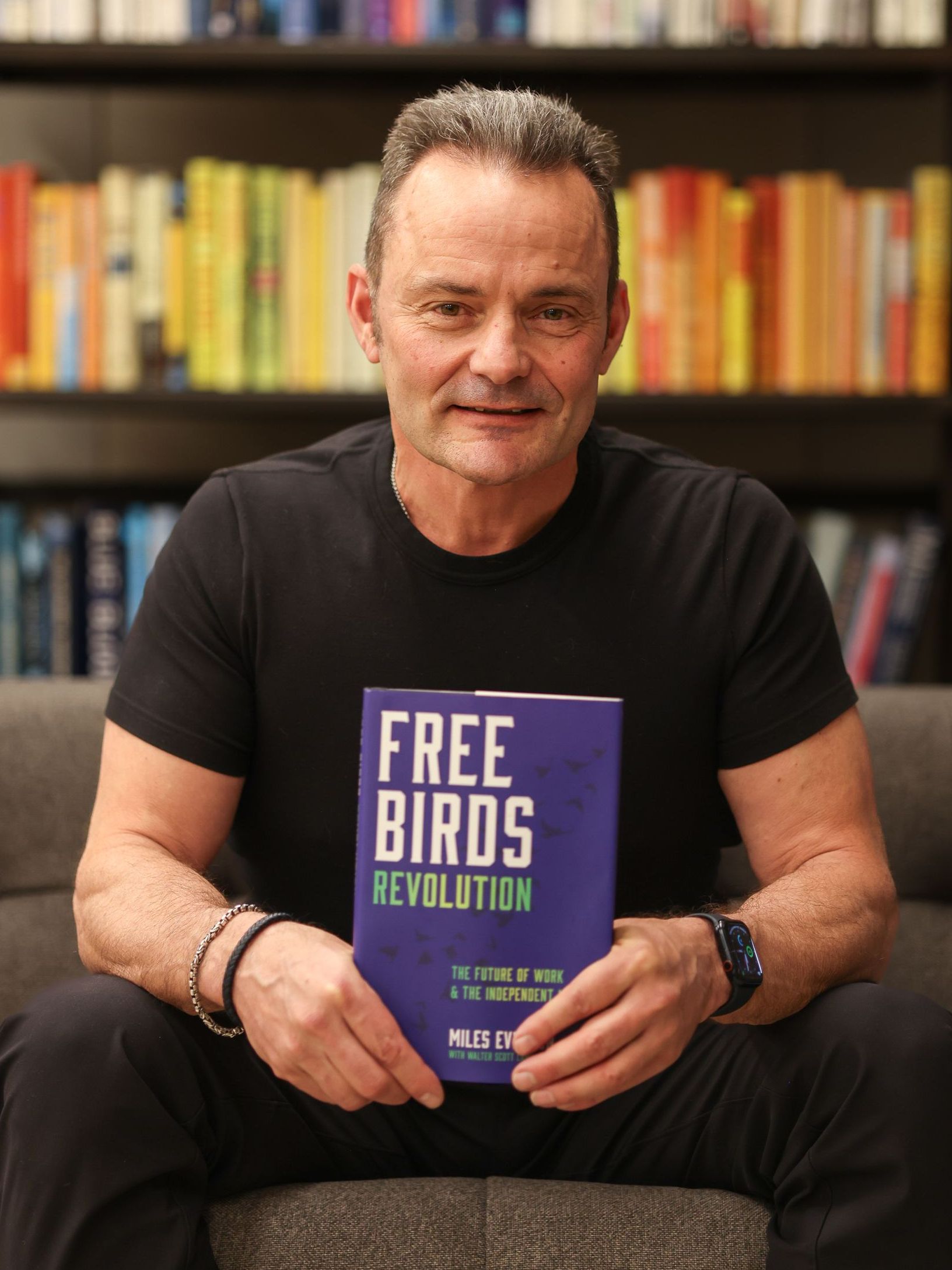
Miles Everson
CEO of MBO Partners and former Global Advisory and Consulting CEO at PwC, Everson has worked with many of the world's largest and most prominent organizations, specializing in executive management. He helps companies balance growth, reduce risk, maximize return, and excel in strategic business priorities.
He is a sought-after public speaker and contributor and has been a case study for success from Harvard Business School.
Everson is a Certified Public Accountant, a member of the American Institute of Certified Public Accountants and Minnesota Society of Certified Public Accountants. He graduated from St. Cloud State University with a B.S. in Accounting.