Why does this giant retailer's "Treasure Hunt Economy" model keep shoppers hooked?
| From the desk of Miles Everson: Hi! How are you? I hope you’re having a great Tuesday. I’m thrilled to share with you another useful insight for today’s “Return Driven Strategy (RDS)!” For those of you who may not know, RDS is a pyramid-shaped framework with 11 tenets and 3 foundations. When applied properly, these concepts help businesses and even individuals achieve their goals. In this article, we’ll focus on RDS’ 5th tenet: Innovate Offerings. Read on below to see how this tenet plays out through the lens of this business’ strategy. |
Why does this giant retailer's "Treasure Hunt Economy" model keep shoppers hooked? Imagine walking into a store where you don’t quite know what you’ll find. You came for groceries, but suddenly, there’s a kayak on display. … or maybe it’s a luxury handbag, a set of fine wines, or even a vacation package to Italy. Hmm. Interesting … At first, it feels random. Then you realize it’s all carefully designed to surprise you, delight you, and keep you coming back for more. That blend of consistency and unpredictability? It isn’t luck; it’s strategy. This kind of purposeful innovation is exactly what keeps a company not just afloat, but also thriving in hyper-competitive industries… and if you’re looking for a business that has mastered this art, one name stands tall: Costco Wholesale Corporation!
Founded in 1983 in Seattle, Washington, Costco has grown into one of the world’s largest retail giants, operating on a membership-only warehouse club model. Unlike traditional retailers that lure customers with endless product variety, Costco thrives on limited selection, bulk deals, and razor-thin markups. Today, it serves millions of members across the globe, with revenues that rival and even surpass other retail behemoths. However, Costco isn’t just about cheap prices or oversized packs of goods. The company is also about delivering consistent value, trust, and innovation in ways that go beyond the ordinary. Costco emerged at a time when discount retailing was already gaining momentum. What set it apart was its membership structure, which created both exclusivity and loyalty. Basically, members weren’t just shoppers—they were stakeholders, invested in the Costco experience through annual fees that provided significant recurring revenue. Over the decades, Costco expanded globally, opening warehouses in North America, Europe, and Asia, all while sticking to its simple, no-frills formula: efficiency , volume , and value . The company didn’t pour money into flashy displays or marketing campaigns. Instead, it built its reputation through word-of-mouth, employee satisfaction, and customer trust. What’s more? Costco’s impact goes well beyond its warehouses by:
Connecting Costco to Tenet 5 of Return Driven Strategy: Innovate Offerings Professor Joel Litman and Dr. Mark L. Frigo ’s Return Driven Strategy (RDS) identifies Tenet 5 as “Innovate Offerings.” This is all about continually evolving what you deliver to better meet unmet needs—not just changing for the sake of novelty, but innovating with purpose. Costco exemplifies this tenet in several powerful ways:
The BIGGER Lesson Clearly, Costco isn’t just a warehouse; it’s an innovation engine disguised as a retailer. By continually evolving its offerings while staying true to its promise of value, it has mastered Tenet 5 of Return Driven Strategy. The lesson for businesses? Innovation doesn’t always mean inventing the next “iPhone.” Sometimes, it’s about finding smarter, simpler, and more meaningful ways to meet customer needs—whether that’s through a bulk pack of avocados, a high-quality private label, or the thrill of finding a kayak in the middle of a grocery run. Always take note of these insights! … and if you’re looking to gain a better understanding of Return Driven Strategy and Career Driven Strategy, we highly recommend checking out “Driven” by Professor Litman and Dr. Frigo. Click here to get your copy and learn how this framework can help you in your business strategies and ultimately, in ethically maximizing wealth for your firm. Hope you found this week’s insights interesting and helpful. Stay tuned for next Tuesday’s Return Driven Strategy! AI is a transformational technology that enables professionals to acquire and process vast amounts of data with a simple prompt. However, it has also negatively impacted the talent cycle. Learn more about the impact of technological breakthroughs on the workforce in next week’s article! |


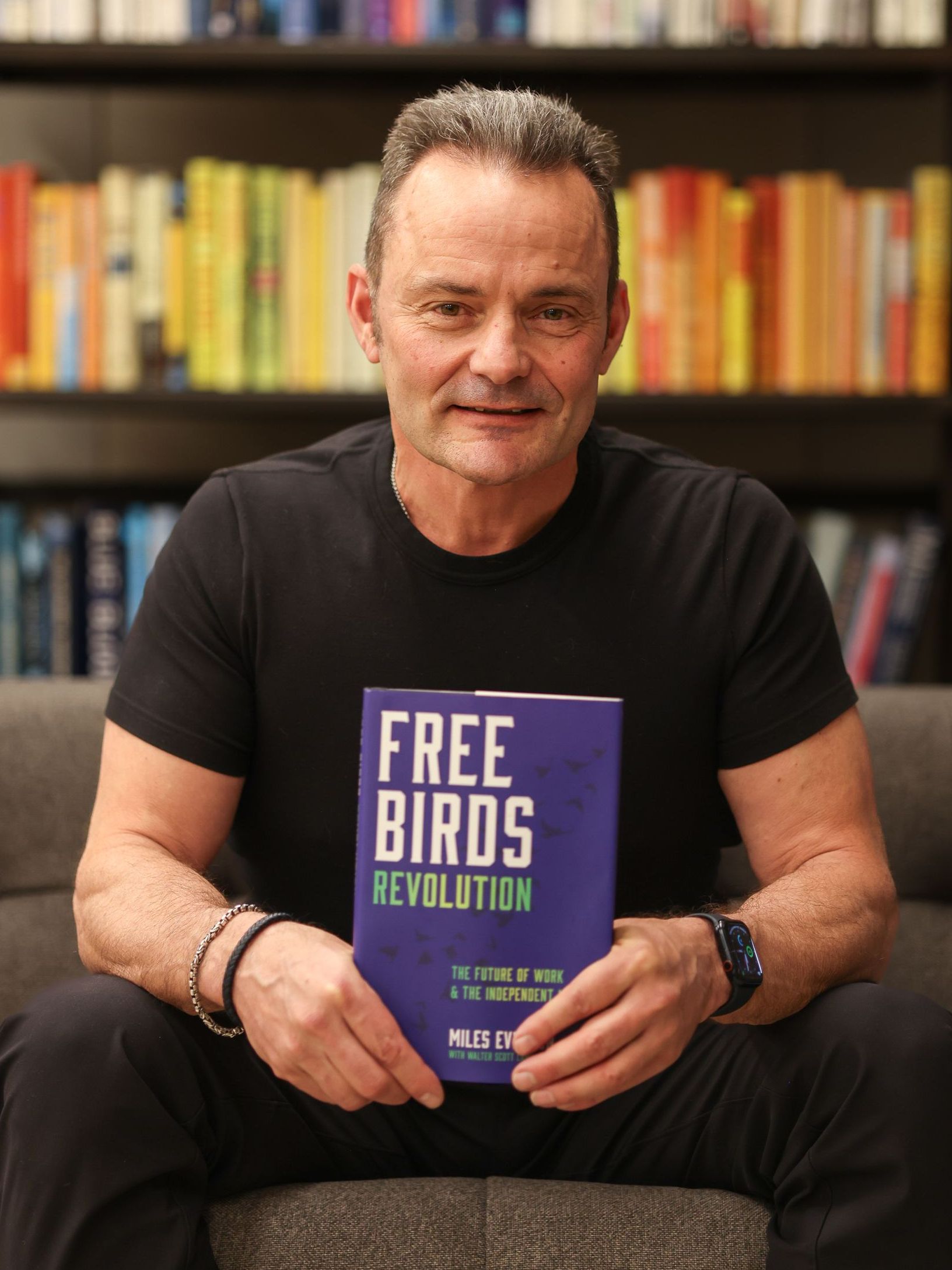
Miles Everson
CEO of MBO Partners and former Global Advisory and Consulting CEO at PwC, Everson has worked with many of the world's largest and most prominent organizations, specializing in executive management. He helps companies balance growth, reduce risk, maximize return, and excel in strategic business priorities.
He is a sought-after public speaker and contributor and has been a case study for success from Harvard Business School.
Everson is a Certified Public Accountant, a member of the American Institute of Certified Public Accountants and Minnesota Society of Certified Public Accountants. He graduated from St. Cloud State University with a B.S. in Accounting.